

Weight gain during menopause is one of the most frustrating shifts women experience. The same diet that worked at 35 stops working at 50. Belly fat appears that wasn’t there before. Energy drops and recovery slows.
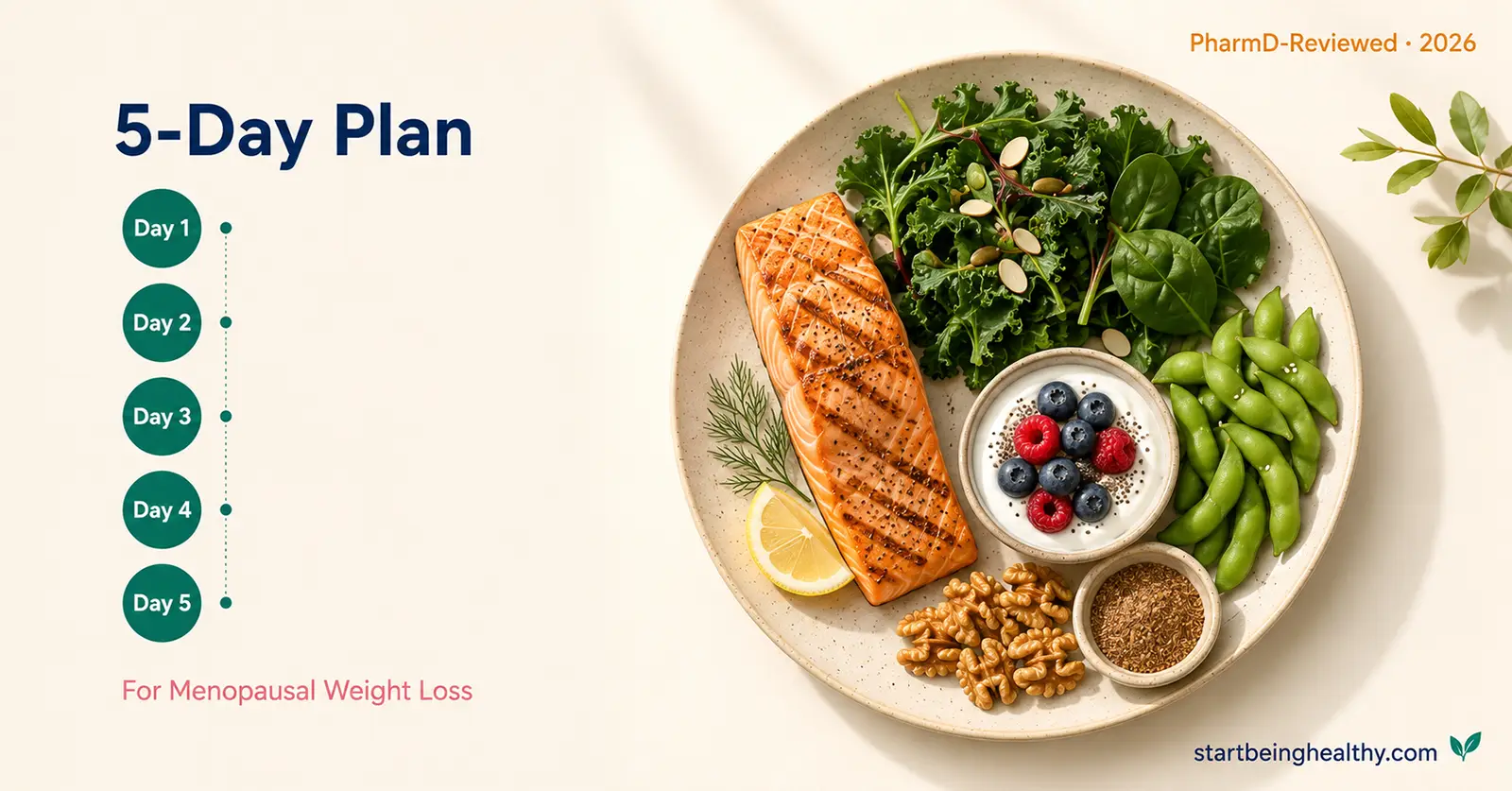
The good news: this is biological, not personal failure — and the right dietary approach can meaningfully change the outcome. This 5-day plan is built on the actual clinical evidence for what works during the menopausal transition. It is not a fad cleanse, a hormone reset gimmick, or a phytoestrogen miracle. It is a pharmacist’s evidence-based starting point.
This guide covers why menopausal weight gain happens, what the clinical research shows, a complete 5-day meal plan with protein and calorie targets, considerations for hormone replacement therapy and GLP-1 medications, and what to do after the 5 days.
Pharmacist’s Perspective — Faryal Faisal, PharmD
The most common mistake I see in menopausal weight loss is doing the same things that worked in your 30s — cutting calories aggressively, doing more cardio, eating less protein. This approach almost always backfires after 50 because it accelerates the muscle loss that is already happening from declining estrogen.
The single most important dietary intervention during menopause is not eating less. It is eating enough protein to preserve lean muscle mass. Muscle is your most metabolically active tissue — losing it slows metabolism permanently. Most women I counsel are getting 40–50 grams of protein per day. The clinical evidence supports 1.2–1.6 grams per kilogram of body weight during menopause — typically 90–120 grams daily for most women. This single change often produces more meaningful weight and body composition results than any calorie restriction or trendy diet.
The second priority is anti-inflammatory eating. Estrogen has natural anti-inflammatory effects, and declining estrogen during menopause raises baseline inflammation, which drives both visceral fat storage and cardiovascular risk. The Mediterranean dietary pattern remains the most evidence-backed approach.
This 5-day plan reflects both priorities. Use it as a starting point, not a finish line.
Why Menopausal Weight Gain Happens — The Real Science
Menopausal weight gain is driven by multiple converging factors, not just “slow metabolism.” Understanding each one is essential for targeting the right intervention.
1. Estrogen Decline and Visceral Fat Redistribution
Declining estrogen levels during perimenopause and menopause cause fat to redistribute from the hips and thighs to the abdomen. This shift to visceral fat (the deeper fat around abdominal organs) is metabolically dangerous because it directly drives insulin resistance, systemic inflammation, and cardiovascular disease risk.
Research published in Endocrine Reviews (2024) confirms that women in the menopausal transition gain an average of 1.5 pounds per year specifically as visceral fat — independent of overall weight changes. This is why women often notice their waist size increasing even when the scale stays the same.
2. Sarcopenia — Accelerated Muscle Loss
Estrogen plays a direct role in muscle protein synthesis. As estrogen declines, women lose muscle mass 2–3 times faster than in their reproductive years. This matters enormously because muscle is your most metabolically active tissue — losing 5 pounds of muscle can lower your resting metabolic rate by 50–75 calories per day, which compounds into substantial weight gain over years.
3. Insulin Resistance Develops Earlier
The same hormonal changes that drive visceral fat storage also reduce insulin sensitivity. Women who never had blood sugar problems may suddenly experience cravings, energy crashes after meals, and weight gain despite eating the same amount they always have.
Women who had PCOS or insulin resistance before menopause often experience particularly pronounced changes during the transition — for PCOS-specific intermittent fasting guidance, see our pharmacist’s PCOS fasting guide.
4. Sleep Disruption
Hot flashes, night sweats, and shifting circadian rhythms disrupt sleep quality. Poor sleep raises cortisol, increases ghrelin (the hunger hormone), reduces leptin (the satiety hormone), and impairs insulin sensitivity the next day — a perfect storm for weight gain.
5. Stress and Cortisol
Mid-life often coincides with caring for aging parents, demanding careers, and adolescent or adult children. Chronic stress elevates cortisol, which preferentially stores fat in the abdomen and disrupts blood sugar regulation.
What the Clinical Evidence Shows Actually Works
Below is a summary of the most well-supported dietary interventions for menopausal weight management, ranked by strength of evidence.
| Intervention | Evidence Quality | Typical Effect |
|---|---|---|
| Higher protein intake (1.2–1.6 g/kg) | Strong (multiple RCTs) | Preserves lean mass, increases satiety, modest weight loss |
| Mediterranean dietary pattern | Strong (33 RCT meta-analysis) | Reduces visceral fat, improves cardiometabolic markers |
| Resistance training (2–3x/week) | Strong | Preserves muscle mass, improves insulin sensitivity |
| Time-restricted eating (12–14 hr) | Moderate | Improves metabolic markers, modest weight loss |
| Reducing ultra-processed foods | Strong | Reduces inflammation, supports gut health |
| Soy phytoestrogens for weight loss | Weak | Minimal weight effect; modest hot flash benefit |
| Intermittent fasting (16:8 or longer) | Mixed | Use cautiously — can worsen sleep and cortisol if stressful |
| Calorie restriction below 1,400/day | Strong evidence of HARM | Accelerates muscle loss; rebounds weight gain after stopping |
The plan below reflects the strongest evidence — high protein, Mediterranean pattern, anti-inflammatory food choices, and adequate (not severely restricted) calories.
Daily Targets for the 5-Day Plan
| Target | Amount | Why It Matters |
|---|---|---|
| Daily calories | 1,500–1,700 | Modest deficit without triggering muscle loss |
| Protein per meal | 25–35 g | Optimal for muscle protein synthesis at this age |
| Total daily protein | 90–120 g | 1.2–1.6 g per kg body weight |
| Fibre | 25–35 g | Insulin sensitivity, satiety, gut health |
| Water | 2.5 L (10 cups) | Hot flashes are worse when dehydrated |
| Calcium | 1,200 mg | Bone protection (postmenopause RDA) |
| Vitamin D | 800–2,000 IU | Bone, immune, mood support |
| Omega-3 | 2 servings fatty fish/week | Anti-inflammatory, cardiovascular protection |
The 5-Day Menopause Diet Plan
Each day below provides approximately 1,500–1,700 calories with at least 90 grams of protein. Adjust portion sizes up or down based on your size, activity level, and hunger. The plan emphasizes anti-inflammatory foods, slow carbohydrates, and protein at every meal.
Day 1 — Foundation
| Meal | What to Eat | Protein |
|---|---|---|
| Breakfast | Greek yoghurt (200g) with 1/2 cup berries, 1 tbsp ground flaxseed, 30g walnuts | 22g |
| Mid-morning snack | 1 hard-boiled egg + 1 apple | 6g |
| Lunch | Grilled chicken breast (150g) over mixed greens, cucumber, tomato, 1/2 avocado, 1 tbsp olive oil, lemon | 40g |
| Afternoon snack | Carrot sticks + 3 tbsp hummus | 5g |
| Dinner | Baked salmon (150g) with 1/2 cup quinoa + steamed broccoli + 1 tsp olive oil | 35g |
Day 1 totals: ~1,620 cal · 108g protein · 28g fibre
Day 2 — Anti-Inflammatory Focus
| Meal | What to Eat | Protein |
|---|---|---|
| Breakfast | 3-egg veggie omelette (spinach, mushrooms, peppers) cooked in olive oil + 1 slice whole-grain toast | 24g |
| Mid-morning snack | Greek yoghurt (150g) with 1 tsp honey + cinnamon | 15g |
| Lunch | Lentil soup (1.5 cups) + side salad with feta (30g) + olive oil | 22g |
| Afternoon snack | 30g almonds + 1 pear | 6g |
| Dinner | Grilled chicken thighs (150g) with roasted Mediterranean vegetables + 1/2 cup brown rice | 32g |
Day 2 totals: ~1,580 cal · 99g protein · 30g fibre
Day 3 — Hormone Support & Bone Health
| Meal | What to Eat | Protein |
|---|---|---|
| Breakfast | Cottage cheese (1 cup) with 1/2 cup berries + 1 tbsp ground flaxseed + walnuts | 28g |
| Mid-morning snack | Edamame (1 cup) lightly salted | 17g |
| Lunch | Tuna salad (1 can tuna, light mayo, celery, onion) on whole-grain crackers + cucumber slices | 32g |
| Afternoon snack | Kefir smoothie (1 cup) with handful of berries | 10g |
| Dinner | Stir-fried tofu (200g) with bok choy, broccoli, garlic, ginger over 1/2 cup brown rice | 24g |
Day 3 totals: ~1,550 cal · 111g protein · 32g fibre
Day 4 — Mediterranean
| Meal | What to Eat | Protein |
|---|---|---|
| Breakfast | Smoothie: 1 cup kefir, 1 scoop whey/plant protein, 1/2 banana, spinach, 1 tbsp peanut butter | 35g |
| Mid-morning snack | 1 boiled egg + cucumber sticks | 6g |
| Lunch | Mediterranean bowl: chickpeas (1 cup), quinoa (1/2 cup), cucumber, tomato, olives, feta (30g), tahini dressing | 22g |
| Afternoon snack | Greek yoghurt (150g) + 30g pumpkin seeds | 16g |
| Dinner | Grilled mackerel (150g) with roasted asparagus + sweet potato | 30g |
Day 4 totals: ~1,640 cal · 109g protein · 29g fibre
Day 5 — Sustainability Practice
| Meal | What to Eat | Protein |
|---|---|---|
| Breakfast | Overnight oats: 1/2 cup oats, kefir, chia seeds, flaxseed, berries, 1 scoop protein powder | 32g |
| Mid-morning snack | 1 small apple + 2 tbsp almond butter | 7g |
| Lunch | Turkey and avocado lettuce wraps (4 wraps) with hummus, tomato, cucumber | 30g |
| Afternoon snack | 30g walnuts + 1 pear | 5g |
| Dinner | Sunday-style baked salmon (150g) + roasted Mediterranean vegetables + lentil salad (1/2 cup) | 38g |
Day 5 totals: ~1,610 cal · 112g protein · 33g fibre
Foods to Prioritize During Menopause
| Category | Best Choices | Why |
|---|---|---|
| Lean protein | Chicken, turkey, fish, eggs, Greek yoghurt, cottage cheese, tofu, lentils | Preserves muscle mass |
| Fatty fish | Salmon, mackerel, sardines (2-3x/week) | Omega-3 anti-inflammatory; heart protection |
| Leafy greens | Spinach, kale, Swiss chard | Calcium, vitamin K, magnesium for bone health |
| Whole grains | Oats, quinoa, brown rice, whole wheat | Slow carbs, fibre, B vitamins |
| Legumes | Lentils, chickpeas, beans, edamame | Plant protein + fibre + mild phytoestrogen |
| Fermented dairy | Kefir, Greek yoghurt | Calcium + probiotics for gut health |
| Nuts & seeds | Walnuts, almonds, flaxseed, chia | Healthy fats, vitamin E, calcium |
| Olive oil | Extra-virgin, 2-3 tbsp daily | Anti-inflammatory; cardiovascular protection |
| Berries | Blueberries, strawberries, raspberries | Anthocyanins, fibre, low glycemic |
Foods to Limit or Avoid
| Food | Why to Avoid |
|---|---|
| Refined sugar & sugary drinks | Worsens insulin resistance, drives belly fat storage, triggers hot flashes |
| Ultra-processed foods | Drives inflammation, displaces protein and fibre |
| Excess alcohol | Disrupts sleep, raises breast cancer risk, increases hot flashes |
| Refined grains (white bread, pasta) | Rapid glucose spikes accelerate insulin resistance |
| Trans fats | Increases cardiovascular risk (already higher post-menopause) |
| Excess caffeine | Worsens hot flashes and sleep quality for some women |
| High-sodium processed meats | Raises blood pressure and cardiovascular risk |
Hormone Replacement Therapy (HRT) and Diet
If you are on HRT (estradiol patches, oral estrogen, or combination therapy with progesterone), the dietary recommendations in this plan still apply — HRT does not replace the need for protein, anti-inflammatory eating, and resistance training. Some considerations:
- Calcium and vitamin D remain essential. HRT helps bone density, but adequate calcium (1,200 mg) and vitamin D (800-2,000 IU) are still required.
- Watch sodium intake. Some women experience fluid retention on HRT — reducing processed food sodium can help.
- Avoid grapefruit juice. Grapefruit can affect oral estrogen metabolism; if you use oral HRT, limit grapefruit consumption.
- Phytoestrogen-rich foods are not contraindicated. Soy, flaxseed, and legumes are safe in combination with HRT for most women — consult your physician if you have a history of hormone-sensitive cancers.
GLP-1 Medications and Menopause
Women in the menopausal transition are now the largest demographic seeking GLP-1 weight loss medications. If you are taking or considering Ozempic, Wegovy, Mounjaro, or Zepbound for menopausal weight gain, this dietary plan is fully compatible — but with specific considerations:
- Protein priority intensifies. GLP-1 medications suppress appetite, which can lead to under-eating. Hitting 90-120g protein daily becomes harder but more important — muscle loss compounds on top of menopausal sarcopenia.
- Calorie minimums matter. Do not drop below 1,400 calories per day on GLP-1 medications. Combined under-eating accelerates muscle and bone loss.
- Resistance training is non-negotiable. 2-3 sessions weekly during GLP-1 treatment to preserve muscle.
- Hot flash interactions. Some women report GLP-1 medications mildly worsen hot flashes initially; this typically improves after dose stabilization.
For a complete GLP-1-specific eating plan, see our pharmacist-approved Ozempic meal plan. For GLP-1 medication comparisons relevant to menopausal women, see our Mounjaro vs Ozempic comparison and Zepbound vs Wegovy guide. If you are a menopausal woman considering weight loss medications and want a script for having that conversation with your doctor, see our pharmacist’s guide to asking your doctor for weight loss pills — it includes the menopause-specific considerations to raise during your appointment.
Medication Interactions to Discuss With Your Pharmacist
Significant dietary changes during menopause can affect several common medications. Discuss these with your pharmacist before starting:
- Statins (atorvastatin, simvastatin, rosuvastatin) — increased grapefruit avoidance is important on this plan; ensure consistent calcium intake
- Levothyroxine (thyroid medication) — must be taken on an empty stomach, separated from calcium-rich foods and supplements by at least 4 hours
- Bisphosphonates (alendronate, risedronate) — taken on an empty stomach, separated from calcium and dairy by at least 30 minutes
- HRT (oral estrogen) — avoid grapefruit juice; consistent timing supports absorption
- Antidepressants (SSRIs) — may have mild appetite/weight effects; this plan supports steady satiety
- Metformin (if prescribed for PCOS or insulin resistance) — take with meals to reduce GI side effects
Exercise — The Non-Negotiable Companion
No menopause diet plan succeeds long-term without resistance training. Estrogen decline accelerates muscle loss; resistance training is the only intervention that meaningfully counteracts this. Minimum effective weekly program:
| Type | Frequency | Why It Matters |
|---|---|---|
| Resistance training | 2–3 sessions per week | Preserves muscle, improves insulin sensitivity, supports bone density |
| Walking | 30+ minutes most days | Cardiovascular health, mood, blood sugar regulation |
| Moderate cardio | 2 sessions per week | Heart health (post-menopause risk rises), VO2 max |
| Flexibility / yoga | 1–2 sessions per week | Joint mobility, stress reduction, sleep quality |
Even bodyweight resistance training — squats, lunges, push-ups, planks — produces meaningful results. You do not need a gym membership to start.
After the 5 Days — Building It Into a Sustainable Pattern
Five days is enough to feel the difference but not enough to drive lasting body composition change. The protein-priority Mediterranean pattern in this plan is designed to be sustained for months, not just days. To extend it:
- Pick three breakfast templates you enjoy and rotate them weekly
- Cook protein in bulk on Sundays (rotisserie chicken, hard-boiled eggs, baked salmon)
- Keep emergency protein options at home (Greek yoghurt, cottage cheese, canned tuna, edamame)
- Allow 20% flexibility for social meals and favourites — the 80/20 rule works in menopause too
- Track waist circumference weekly (more meaningful than scale weight during menopause)
- Reassess every 6 weeks — adjust calories and protein based on results
For a deeper anti-inflammatory framework that extends naturally from this 5-day plan, see our complete 21-Day Anti-Inflammatory Diet Plan with free PDF. For intermittent fasting considerations in menopause (mixed evidence — use with caution), see our 16:8 Intermittent Fasting Meal Plan for Women.
Frequently Asked Questions
Can you really lose weight in 5 days during menopause?
Five days is a starting framework, not a transformation window. Realistic 5-day results include 1–3 pounds of mostly water weight, reduced bloating, improved energy, and better blood sugar stability. Meaningful body composition changes during menopause take 8–12 weeks of consistent protein-focused eating combined with resistance training.
What is the #1 best diet for menopausal weight loss?
The Mediterranean dietary pattern, modified to include 1.2–1.6 grams of protein per kilogram of body weight, has the strongest evidence for menopausal weight management. It outperforms low-carb, low-fat, and phytoestrogen-focused diets in head-to-head studies for body composition, cardiovascular markers, and long-term sustainability.
How much protein do menopausal women really need?
Most clinical guidelines now recommend 1.2–1.6 grams of protein per kilogram of body weight daily for women over 50 — significantly more than the 0.8 g/kg general adult RDA. For a 70 kg (155 lb) woman, this means 85–112 grams of protein daily. Distribute it across 3-4 meals of 25-35g each for optimal muscle protein synthesis.
Does soy help menopausal weight loss?
Soy contains phytoestrogens that weakly mimic estrogen — clinical evidence shows modest benefits for hot flashes but minimal effect on weight loss itself. Whole soy foods (edamame, tofu, tempeh) are excellent protein sources for menopausal women, but expecting weight loss specifically from soy is not supported by evidence.
Should menopausal women try intermittent fasting?
Mixed evidence. Some women respond well to 12-14 hour overnight fasts; others find longer fasting (16:8 or beyond) worsens sleep, raises cortisol, and increases hot flashes. Start with a gentle 12-hour overnight fast (e.g., 7pm-7am) and assess your response over 2 weeks before extending. See our guide to 16:8 intermittent fasting for women for detailed protocols.
Can HRT make weight loss harder?
No — current evidence suggests HRT may make weight loss slightly easier by counteracting some of estrogen’s metabolic effects. However, HRT does not eliminate the need for dietary changes, protein priority, and exercise. Consult your physician about HRT individually; this diet plan is compatible with all common HRT regimens.
Is Ozempic or Wegovy a good option for menopausal weight gain?
Clinical evidence supports GLP-1 medications (Ozempic, Wegovy, Mounjaro, Zepbound) for menopausal weight management, particularly when waist circumference and cardiometabolic risk factors are concerning. They are most effective combined with the protein-priority, resistance training approach in this plan. See our detailed guide on asking your doctor for weight loss medications and Mounjaro vs Ozempic comparison.
How do I know if I am losing fat or just water weight?
Track waist circumference weekly at the navel — this is a better indicator of meaningful fat loss during menopause than scale weight. Visible changes in how clothes fit are also reliable. Avoid daily weighing during menopause; hormonal fluctuations cause large daily weight swings that have nothing to do with fat loss.
Key Takeaways
- Menopausal weight gain is driven by estrogen decline, muscle loss, insulin resistance, sleep disruption, and stress — not lack of willpower
- The single most important dietary intervention is adequate protein (1.2–1.6 g per kg body weight)
- The Mediterranean dietary pattern is the most evidence-backed eating approach for menopause
- Severe calorie restriction (below 1,400 daily) accelerates muscle loss and backfires long-term
- Resistance training 2–3 times weekly is non-negotiable
- GLP-1 medications can support menopausal weight loss but intensify the protein and resistance training requirements
- Discuss any significant dietary changes with your pharmacist — interactions with HRT, thyroid medications, statins, and bisphosphonates require attention
References
- Body Composition and Menopausal Transition — Endocrine Reviews, 2024
- Protein Intake and Muscle Health in Older Women — American Journal of Clinical Nutrition
- Mediterranean Diet and Inflammatory Markers — 33 RCT Meta-Analysis
- Resistance Training and Sarcopenia in Postmenopausal Women
- STEP 1 Trial — Semaglutide for Obesity (NEJM, 2021)
- SURMOUNT-5 Trial — Tirzepatide vs Semaglutide (NEJM, 2025)
- The North American Menopause Society — Clinical Position Statements
- Calcium Requirements in Postmenopausal Women — NIH Office of Dietary Supplements
- Vitamin D in Postmenopausal Women — NIH Office of Dietary Supplements
- What Is Menopause? — National Institute on Aging