

Most 16:8 intermittent fasting meal plans you find online were not designed for women. They were generic, gender-neutral templates that ignore the single most important variable affecting how a woman’s body responds to fasting: hormones.
This guide is different. It is a complete 7-day 16:8 intermittent fasting meal plan written and medically reviewed by a licensed pharmacist, built around what the 2026 clinical evidence actually shows about how women respond to time-restricted eating — including specific guidance for women with PCOS, perimenopause, menopause, and those taking medications that interact with fasting.
If you also take a GLP-1 medication for weight loss, see our companion articles on what to eat on Ozempic and semaglutide side effects week by week.
What Is 16:8 Intermittent Fasting?
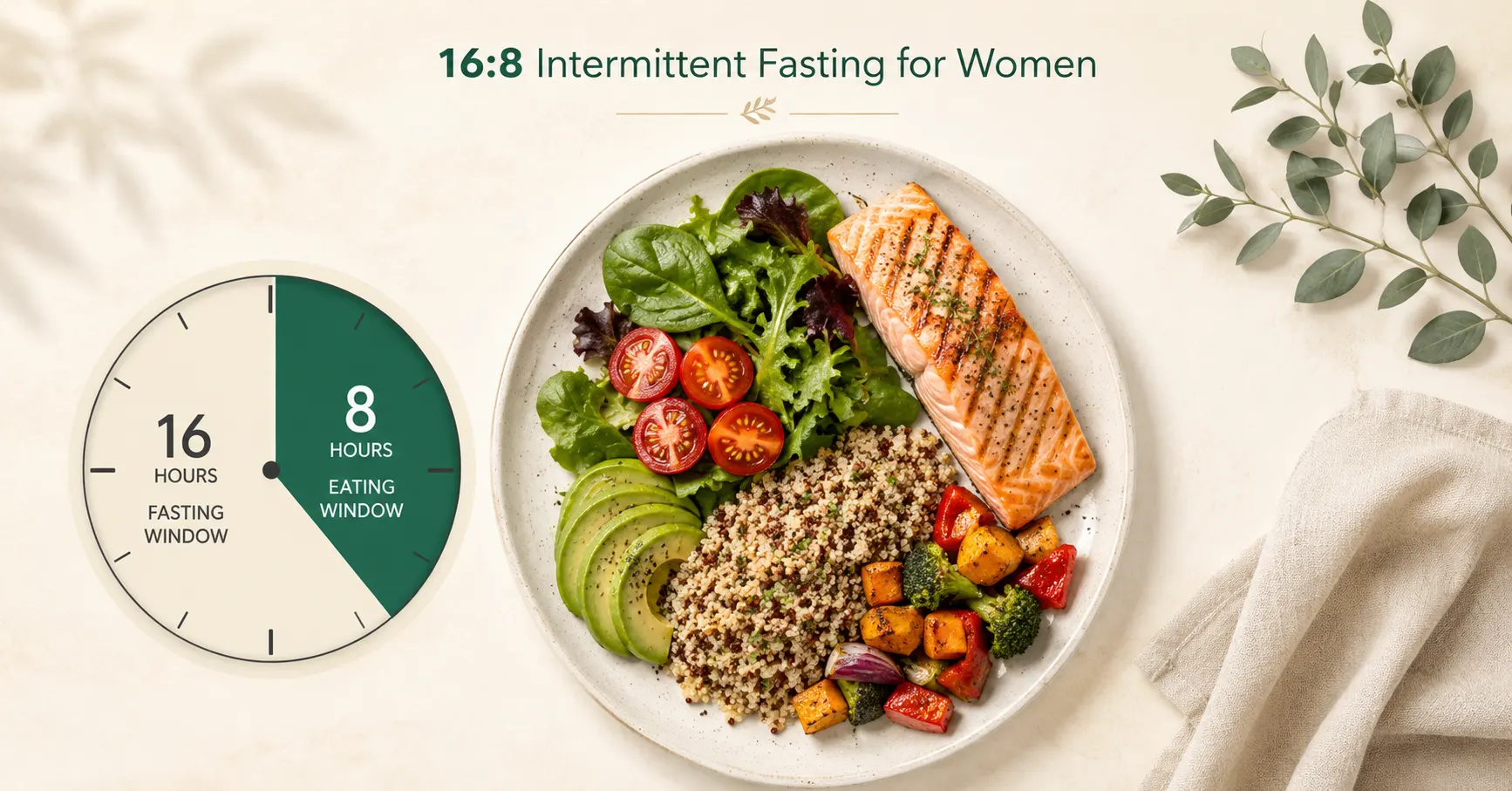
The 16:8 method is a form of time-restricted eating in which all daily food intake is consumed within an 8-hour window, followed by 16 hours of fasting (water, plain tea, and black coffee are permitted during the fasting window).
The most common eating windows are:
- 12:00 PM – 8:00 PM — most popular, skips breakfast
- 10:00 AM – 6:00 PM — earlier window, better aligned with circadian rhythm
- 9:00 AM – 5:00 PM — earliest window, often gentlest for women
Unlike calorie restriction, 16:8 fasting does not dictate what you eat — only when. However, what you eat during the eating window determines whether you lose weight, preserve muscle, balance hormones, or sabotage all three.
Why Women Need a Different Approach to Intermittent Fasting
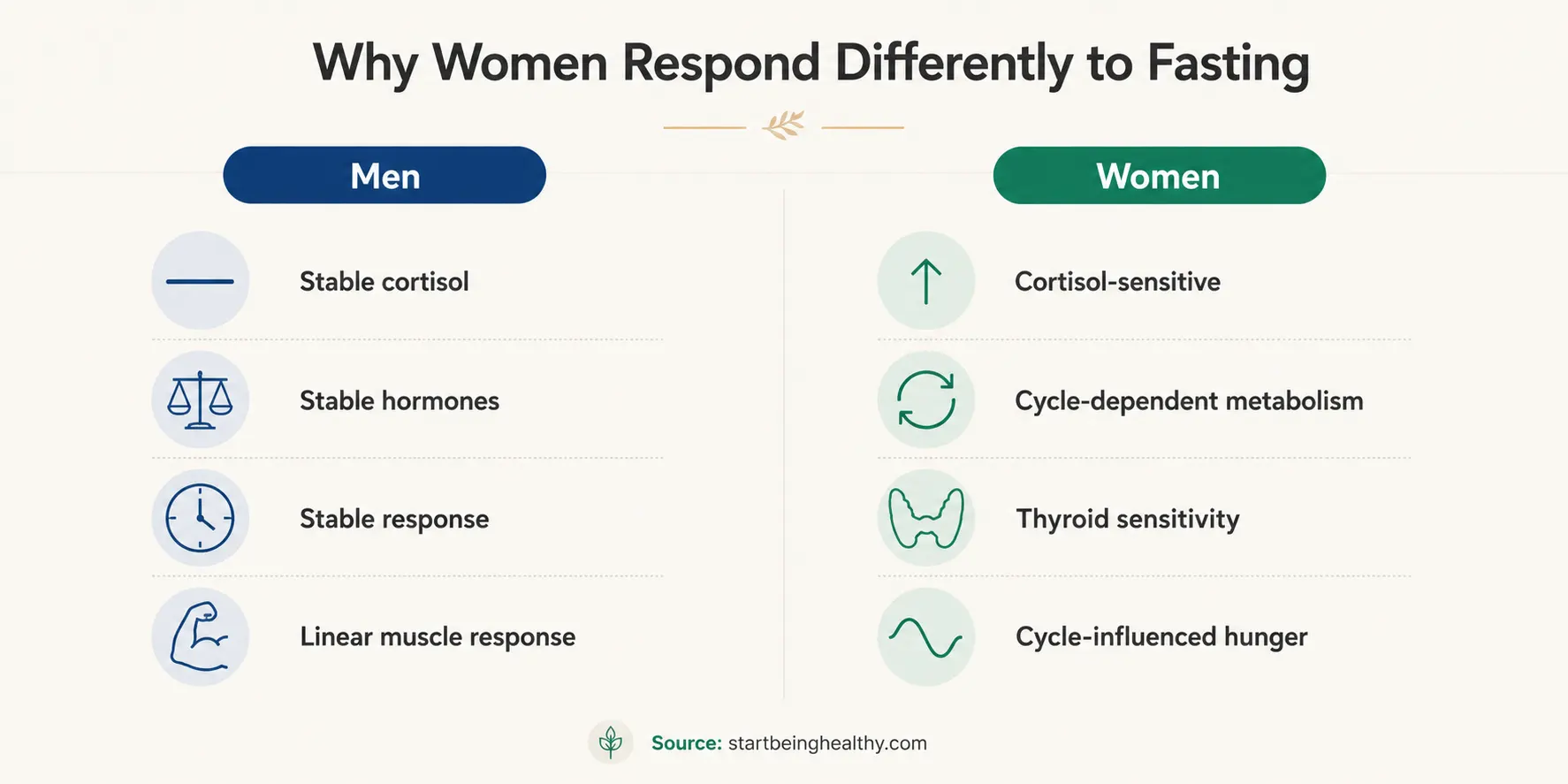
Most intermittent fasting research has been done on men. The studies that have included women — and there are now more than there used to be — show that women’s hormonal architecture creates real differences in how the body responds to extended fasting periods. Ignoring these differences is the main reason so many women feel worse, not better, when they start fasting.
Key differences relevant to a fasting meal plan:
- Cortisol sensitivity — women’s stress hormone response to fasting is more pronounced than men’s. Extended fasts can elevate cortisol, which paradoxically promotes belly fat storage in women
- Cycle-dependent metabolism — insulin sensitivity, hunger, and energy needs shift across the menstrual cycle, particularly in the luteal phase (the second half of the cycle)
- Thyroid sensitivity — prolonged or aggressive fasting can suppress T3 thyroid hormone, particularly in women already prone to thyroid issues
- Reproductive hormone effects — research shows fasting reduces androgens in premenopausal women (helpful for PCOS), but excessive fasting can disrupt menstrual cycles in lean or athletic women
- Protein and muscle needs — women are more prone to muscle loss during fasting if protein intake is inadequate
Pharmacist’s Perspective — Faryal Faisal, PharmD
The most common mistake I see in women starting 16:8 fasting is treating it as a calorie restriction tool rather than a metabolic alignment tool. Women who try to fast 16 hours AND restrict calories aggressively often experience period irregularity, hair loss, hair thinning, fatigue, and rebound bingeing. The goal of 16:8 for women is to eat enough nutrient-dense food within the eating window — not to eat as little as possible. If you are losing your period, losing hair, or feeling drained, the fast is doing too much work.
What the 2026 Research Says About IF for Women
Time-Restricted Eating Improves PCOS Hormones
A 2026 study published in Nature Medicine, led by University of Illinois Chicago researcher Krista Varady, randomised 76 pre-menopausal women with PCOS to either time-restricted eating (eating window 1:00 PM – 7:00 PM) or standard calorie counting for 6 months.
Key findings:
- Both groups lost ~10 lbs over 6 months — comparable weight loss
- Both groups experienced reduced testosterone
- Only the time-restricted eating group reduced the free androgen index — the active form of testosterone reaching tissues
- Time-restricted eating also improved HbA1c, a key diabetes risk marker
Source: UIC Today, March 2026; published in Nature Medicine (DOI: 10.1038/s41591-026-04316-7).
Time-Restricted Feeding Improves Fertility Markers in PCOS
A 2025 systematic review published in ScienceDirect analysed multiple trials of time-restricted feeding in women with PCOS. Results across studies:
- 33–40% of participants reported normalised menstrual cycles after time-restricted feeding
- 9% reduction in testosterone
- 26% reduction in free androgen index
- Significant improvements in insulin sensitivity
- Increased sex hormone-binding globulin (SHBG)
Caution: IF May Reduce Estrogen in Already-Lean Women
A systematic review of fasting and reproductive hormones in PMC (2022) noted that fasting consistently decreases androgens (helpful for PCOS) but can also affect estrogen in some lean, premenopausal women. This is why fasting is generally not recommended for women who are underweight, athletes with low body fat, or those already struggling with cycle irregularity from low body weight.
The 4 Core Principles of 16:8 Fasting for Women
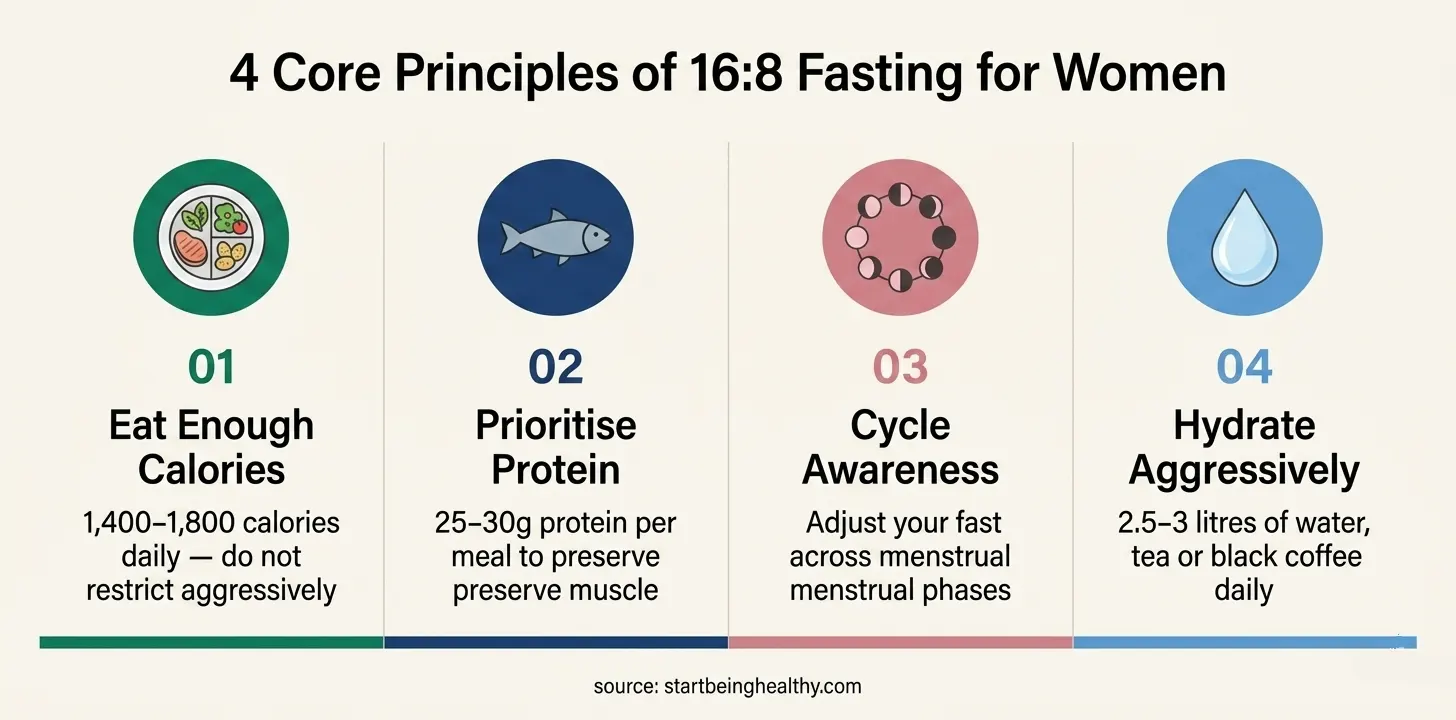
1. Eat Enough Calories — Do Not Restrict Aggressively
Combining a 16-hour fast with severe calorie restriction is the fastest path to hormonal disruption. Most women doing 16:8 should aim for 1,400–1,800 calories per day during the eating window, depending on body size, activity level, and goals. Going below 1,200 calories alongside fasting is what causes hair loss, cycle irregularity, and rebound weight gain.
2. Prioritise Protein at Every Meal
Protein preserves lean muscle during fasting periods, increases satiety, and supports stable blood sugar. Daily target:
| Body Weight | Daily Protein Target |
|---|---|
| Under 130 lbs (59 kg) | 70–90 g |
| 130–170 lbs (59–77 kg) | 90–110 g |
| Over 170 lbs (77 kg) | 110–130 g |
Aim for 25–30 g of protein at each main meal within the 8-hour window.
3. Adjust Around Your Menstrual Cycle
The most overlooked aspect of IF for women is cycle-aware adjustment. Your body’s tolerance for fasting changes across your cycle:
| Cycle Phase | Days (approx) | Fasting Tolerance | Recommendation |
|---|---|---|---|
| Menstrual | 1–5 | Variable | Listen to your body; shorten to 14:10 if fatigued |
| Follicular | 6–13 | Highest — best for fasting | Full 16:8 is well tolerated |
| Ovulatory | 14–15 | High | Full 16:8 typically fine |
| Luteal | 16–28 | Lower — appetite increases | Consider 14:10, slightly higher calories, more carbs |
This is the single biggest difference between successful long-term fasting for women versus rigid fasting that eventually backfires.
4. Hydrate Aggressively
During the 16-hour fasting window, water, plain tea, and black coffee are essential — not optional. Target 2.5–3 litres of fluid daily, with most consumed during the fasting period to support energy, prevent headaches, and curb false hunger cues.
The 7-Day 16:8 Intermittent Fasting Meal Plan for Women
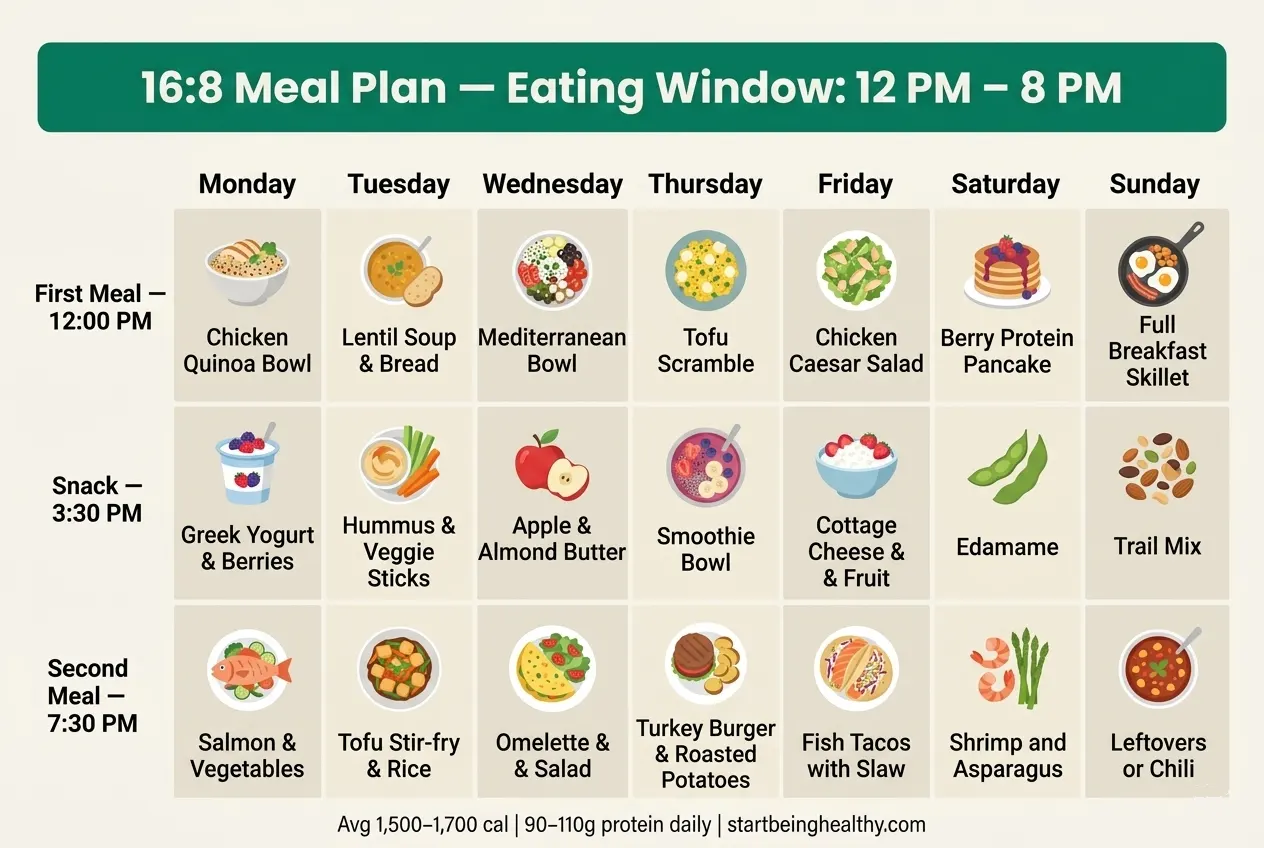
This plan uses a 12:00 PM – 8:00 PM eating window (most popular and easiest to maintain), with two main meals and one snack. It averages 1,500–1,700 calories and 90–110 g of protein per day. Shift the window earlier if you prefer (e.g. 10 AM – 6 PM) — the meals stay the same.
Day 1 (Monday)
- 12:00 PM — First meal: Grilled chicken bowl (4 oz chicken, ½ cup quinoa, leafy greens, cherry tomatoes, avocado, olive oil + lemon)
- 3:30 PM — Snack: Greek yoghurt (¾ cup) with mixed berries and chia seeds
- 7:30 PM — Second meal: Baked salmon (4 oz) with roasted vegetables and a small sweet potato
Day 2 (Tuesday)
- 12:00 PM: Lentil and vegetable soup + 1 slice whole grain toast with avocado
- 3:30 PM: Apple slices with 1 tbsp natural peanut butter + boiled egg
- 7:30 PM: Stir-fried tofu (5 oz) with broccoli, peppers, brown rice (⅓ cup cooked)
Day 3 (Wednesday)
- 12:00 PM: Cottage cheese (¾ cup) with sliced pear, walnuts, and cinnamon + 2 boiled eggs
- 3:30 PM: Hummus (3 tbsp) with carrot and cucumber sticks
- 7:30 PM: Grilled prawns (5 oz) over mixed greens with quinoa and tahini dressing
Day 4 (Thursday)
- 12:00 PM: Smoothie bowl — Greek yoghurt, frozen berries, spinach, flax seed, scoop of protein powder, granola topping
- 3:30 PM: Small handful of almonds + 1 boiled egg
- 7:30 PM: Baked chicken thigh (5 oz, skinless) with roasted Brussels sprouts and a small portion of lentils
Day 5 (Friday)
- 12:00 PM: Mediterranean bowl — quinoa, chickpeas, grilled chicken (3 oz), cucumber, olives, feta, olive oil
- 3:30 PM: Cottage cheese (½ cup) with sliced berries
- 7:30 PM: Baked white fish (5 oz) with herb-roasted vegetables and a small portion of wild rice
Day 6 (Saturday)
- 12:00 PM: 3-egg vegetable omelette with spinach, mushrooms, feta + 1 slice whole grain toast
- 3:30 PM: Greek yoghurt with pumpkin seeds and a drizzle of honey
- 7:30 PM: Turkey and avocado bowl (4 oz lean turkey, brown rice, sautéed greens)
Day 7 (Sunday)
- 12:00 PM: Tofu scramble with bell peppers, onions, turmeric, served with sourdough toast and avocado
- 3:30 PM: Sliced cucumber with hummus + small handful of walnuts
- 7:30 PM: Lean beef stir-fry (4 oz) with mixed vegetables and cauliflower rice
Pharmacist’s Perspective — Faryal Faisal, PharmD
If your first meal is so large that you cannot fit in a snack and a proper second meal within the 8-hour window, scale the first meal down. Distributing protein across two main meals and one snack — rather than front-loading everything — produces better satiety, more stable energy, and better muscle preservation. The window is your structure, not a contest in how much you can eat at once.
What to Eat During the 8-Hour Window
Lean Proteins (Build Every Meal Around These)
- Eggs and egg whites
- Chicken or turkey breast (skinless)
- Fish — salmon, tuna, cod, sardines
- Eggs and egg whites
- Greek yoghurt and cottage cheese
- Lentils, chickpeas, beans
- Tofu, tempeh, edamame
- Whey or pea protein powder for shakes
Eggs are one of the most reliable break-fast foods — three boiled eggs provide 19g of protein with minimal carbs, making them ideal for women breaking a 16-hour fast. For the full calorie and nutrition breakdown by cooking method, see our guide to calories in 3 eggs.
Non-Starchy Vegetables (Half Your Plate)
Leafy greens, broccoli, cauliflower, courgette, mushrooms, bell peppers, asparagus, green beans, cucumber, tomatoes.
Complex Carbohydrates (Quarter of Your Plate)
Steel-cut oats, quinoa, brown rice, sweet potatoes, whole grain bread (small portions), beans.
Healthy Fats (Small Amounts)
Extra-virgin olive oil, avocado, nuts (walnuts, almonds), seeds (chia, flax, pumpkin), olives, fatty fish.
Fruits (Best Choices)
Berries, apples, pears, citrus, kiwi. Higher-sugar fruits (mango, banana, grapes) are best consumed earlier in the eating window.
For a fully aligned anti-inflammatory eating pattern that pairs well with 16:8, see our 21-Day Anti-Inflammatory Diet Plan.
What to Drink During the 16-Hour Fasting Window
| Drink | Permitted During Fast? |
|---|---|
| Plain water | ✅ Yes — encouraged |
| Sparkling water (plain) | ✅ Yes |
| Black coffee | ✅ Yes (1–2 cups max) |
| Plain herbal tea (peppermint, chamomile, ginger) | ✅ Yes |
| Green or black tea (unsweetened) | ✅ Yes |
| Coffee with milk or sugar | ❌ No — breaks the fast |
| Bone broth | ⚠ Breaks the fast technically but useful for women struggling with energy |
| Diet soda | ⚠ Caloric impact is zero but may increase hunger and cravings |
| Fruit juice, smoothies | ❌ No — breaks the fast |
16:8 Fasting and Special Populations
Women with PCOS
The 2026 PCOS evidence is genuinely promising — but most studies used a shorter eating window (1 PM – 7 PM, equivalent to 18:6, not 16:8). If you have PCOS:
- Start with a 14:10 window for 2 weeks, then progress to 16:8 if tolerated
- Prioritise protein and low-glycaemic foods in the eating window
- Track your menstrual cycle and energy carefully — adjust if cycles become irregular
- Discuss with your doctor, particularly if you take metformin or hormonal contraception
For a complete deep-dive on intermittent fasting specifically for PCOS — including the 4 PCOS phenotypes, GLP-1 medication considerations, metformin timing, and a 3-day 16:8 starter meal plan — see our pharmacist’s PCOS intermittent fasting guide.
Perimenopause and Menopause
Many women in their 40s and 50s find 16:8 particularly useful for managing insulin resistance and visceral fat that increases during perimenopause. However:
- Prioritise resistance training to preserve muscle and bone
- Increase protein to the upper end of the range (100–130 g daily)
- If hot flashes worsen during fasting, shift to an earlier eating window (9 AM – 5 PM)
- Discuss with your doctor if on hormone replacement therapy
For a more conservative menopause-specific approach that doesn’t require fasting windows, see our pharmacist’s menopause diet 5-day plan built specifically around the protein and anti-inflammatory needs of the menopausal transition.
Pregnancy and Breastfeeding
16:8 intermittent fasting is not recommended during pregnancy or while breastfeeding. Both require steady calorie and nutrient supply.
Women with a History of Disordered Eating
Time-restricted eating can be a trigger for restrictive eating patterns. If you have a history of anorexia, bulimia, binge eating disorder, or orthorexia, please consult a medical professional before starting any fasting protocol.
Medication Safety and 16:8 Fasting
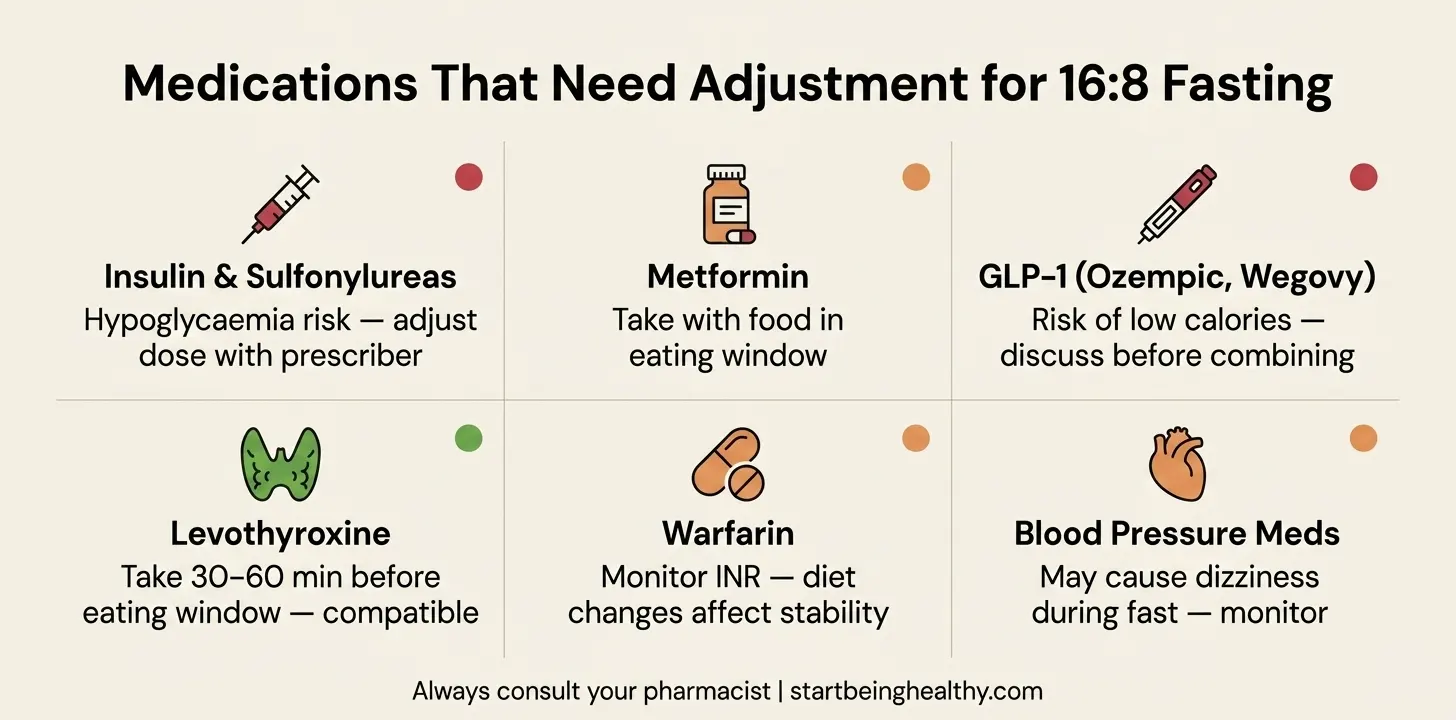
As a pharmacist, this is the section I most often wish patients had read before starting a fasting protocol. Several common medications require specific timing or dose adjustments when paired with intermittent fasting.
Diabetes Medications
- Insulin — significant hypoglycaemia risk during 16-hour fasts. Dose adjustments under medical supervision are typically required
- Sulfonylureas (glipizide, gliclazide, glibenclamide) — same hypoglycaemia risk; doses often need reducing
- Metformin — generally compatible with 16:8 if taken with food in the eating window. Some women experience worse GI side effects on an empty stomach
GLP-1 Medications (Ozempic, Wegovy, Mounjaro, Zepbound)
Combining GLP-1 medications with 16:8 fasting is possible but should be done carefully. Both reduce appetite, which can lead to dramatically low calorie intake, nutrient deficiencies, and muscle loss. Read our guides on what to eat on Ozempic and semaglutide side effects week by week.
Thyroid Medications (Levothyroxine)
Levothyroxine should be taken on an empty stomach, ideally 30–60 minutes before any food. Most women find this easy with 16:8 — take it first thing in the morning during the fasting window.
Blood Thinners (Warfarin)
Significant dietary changes can affect INR stability. Monitor INR more closely when starting any new eating pattern, including intermittent fasting.
Blood Pressure Medications
Some antihypertensive medications can cause dizziness when blood pressure drops during fasting periods. If you feel lightheaded during your fast, discuss with your prescriber.
Oral Contraceptives
16:8 fasting does not directly affect oral contraceptive absorption. If you take the pill at the same time each day, simply ensure it falls within your eating window (with a small amount of food if it normally bothers your stomach).
Common 16:8 Mistakes Women Make
- Combining IF with very-low-calorie restriction — the fastest path to cycle disruption and hair loss
- Skipping protein — leads to muscle loss and rebound hunger
- Drinking sugary or milky coffee during the fast — breaks the fast and adds hidden calories
- Doing 16:8 every day during heavy training — athletes may need more frequent eating windows
- Ignoring cycle phase — pushing 16:8 through the luteal phase often causes intense cravings, mood drops, and worse sleep
- Eating ultra-processed foods inside the window — defeats most of the metabolic benefits
- Not drinking enough water — causes headaches, fatigue, and false hunger cues
- Continuing fasting through illness, pregnancy, or breastfeeding
Realistic Results: What to Expect
| Timeframe | Typical Outcome |
|---|---|
| Week 1–2 | Adjustment phase. Possible mild fatigue, hunger, irritability. 1–3 lbs typical loss (mostly water) |
| Week 3–4 | Hunger cues normalise. 0.5–1 lb per week weight loss typical |
| Month 2–3 | Steady fat loss, improved energy, smaller waist measurements. 4–8 lbs total loss common |
| Month 6+ | ~10 lbs total loss is typical for women per the 2026 PCOS trial data |
| Year 1+ | Sustainable for many women if combined with adequate protein, strength training, and cycle awareness |
Frequently Asked Questions
Is 16:8 intermittent fasting safe for women?
For most healthy women, 16:8 is safe and supported by 2026 clinical evidence — particularly for women with PCOS, perimenopausal women, and those with insulin resistance. It is not safe for women who are pregnant, breastfeeding, underweight, have a history of disordered eating, or take medications such as insulin and sulfonylureas without medical adjustment. Cycle-aware adjustments make it more sustainable.
What should women eat during the 8-hour window?
Build each meal around 25–30 g of protein from lean sources (chicken, fish, eggs, Greek yoghurt, lentils, tofu). Fill half the plate with non-starchy vegetables, a quarter with complex carbohydrates (oats, quinoa, sweet potato), and add small amounts of healthy fats (olive oil, avocado, nuts). Total daily calories of 1,400–1,800 work for most women.
Can I drink coffee during the 16-hour fast?
Yes — plain black coffee is permitted and does not break the fast. Avoid milk, sugar, sweeteners, or creamers, as these add calories and break the fast. Limit to 1–2 cups daily to avoid jitters or sleep disruption.
Will 16:8 disrupt my menstrual cycle?
For most healthy-weight women with regular cycles, 16:8 does not disrupt menstruation. However, if you are underweight, athletic with low body fat, severely restrict calories alongside fasting, or push 16:8 daily through your luteal phase, cycle irregularity can occur. The 2026 PCOS data actually shows time-restricted eating improved menstrual regularity in 33–40% of PCOS participants — so the relationship is nuanced.
How long until I see weight loss results on 16:8?
Most women see 1–3 lbs of initial weight loss in the first 2 weeks (mostly water). Sustainable fat loss of 0.5–1 lb per week typically begins in week 3–4. The 2026 PCOS trial reported an average 10-lb loss over 6 months — realistic for most women.
Should I do 16:8 if I have PCOS?
Recent 2026 evidence is genuinely promising. Time-restricted eating has been shown to reduce testosterone, free androgen index, and improve HbA1c in women with PCOS — outcomes that standard calorie counting did not match. Start with a 14:10 window for 2 weeks before progressing to 16:8. Discuss with your doctor, especially if you take metformin or hormonal contraception.
Can I do 16:8 while taking Ozempic or Wegovy?
It is possible but requires care. Both GLP-1 medications and fasting suppress appetite, which can lead to dangerously low calorie intake, nutrient deficiencies, and muscle loss. Many women on GLP-1s do well with a more moderate 14:10 window plus our structured GLP-1 meal plan. Discuss with your prescriber before combining.
What is the best 16:8 schedule for women working a 9-to-5 job?
The most common practical schedule is 12:00 PM – 8:00 PM — skip breakfast, lunch becomes your first meal, dinner is finished by 8 PM. This works well for office hours, social life, and family dinners. Women with evening workouts often prefer this schedule. Earlier eating windows (e.g. 9 AM – 5 PM) align better with circadian rhythm but require dinner before 5 PM, which is impractical for many.
Key Takeaways
- 16:8 fasting works for women — but the eating window matters more than the fasting window
- Adequate calories and protein are non-negotiable — restrict food too much and your hormones, hair, and energy suffer
- Cycle-aware fasting (gentler in the luteal phase, full 16:8 in the follicular phase) is more sustainable than rigid daily fasting
- 2026 PCOS evidence is genuinely supportive — improves testosterone, free androgen index, and HbA1c
- Several medications need adjustment — discuss with your pharmacist before starting
- Pregnant, breastfeeding, or eating-disordered women should not fast
- The 7-day meal plan is a starting framework — adapt portions to your size, activity, and goals
References
- Cienfuegos S, et al. Time-restricted eating versus daily calorie restriction in pre-menopausal women with PCOS. Nature Medicine. 2026. https://today.uic.edu/study-intermittent-fasting-positively-affects-female-hormones-in-pcos/
- Velissariou M, et al. The impact of intermittent fasting on fertility and reproductive outcomes in women with PCOS — systematic review. Endocrine and Metabolic Science. 2025. https://www.sciencedirect.com/science/article/pii/S2589936824000732
- Cienfuegos S, Corapi S, Gabel K, et al. Effect of intermittent fasting on reproductive hormone levels in females and males — systematic review. Nutrients. 2022. https://www.ncbi.nlm.nih.gov/pmc/articles/PMC9182756/
- Effect of intermittent fasting on anthropometric measurements, metabolic profile, and hormones in women with PCOS — systematic review and meta-analysis. PMC. 2025. https://www.ncbi.nlm.nih.gov/pmc/articles/PMC12348862/
- Sturm M. Intermittent fasting for women: hormones, cortisol & menstrual cycle. Denver Sports and Holistic Medicine. 2026. https://denversportsandholisticmedicine.com/blog/fasting-for-women-hormones-cycle
- Jakubowicz D, et al. Effects of caloric intake timing on insulin resistance and hyperandrogenism in PCOS. Clinical Science. 2013. https://pubmed.ncbi.nlm.nih.gov/23688334/
- Time-restricted eating and metabolic health in women. NCBI Bookshelf. https://www.ncbi.nlm.nih.gov/books/NBK551568/