

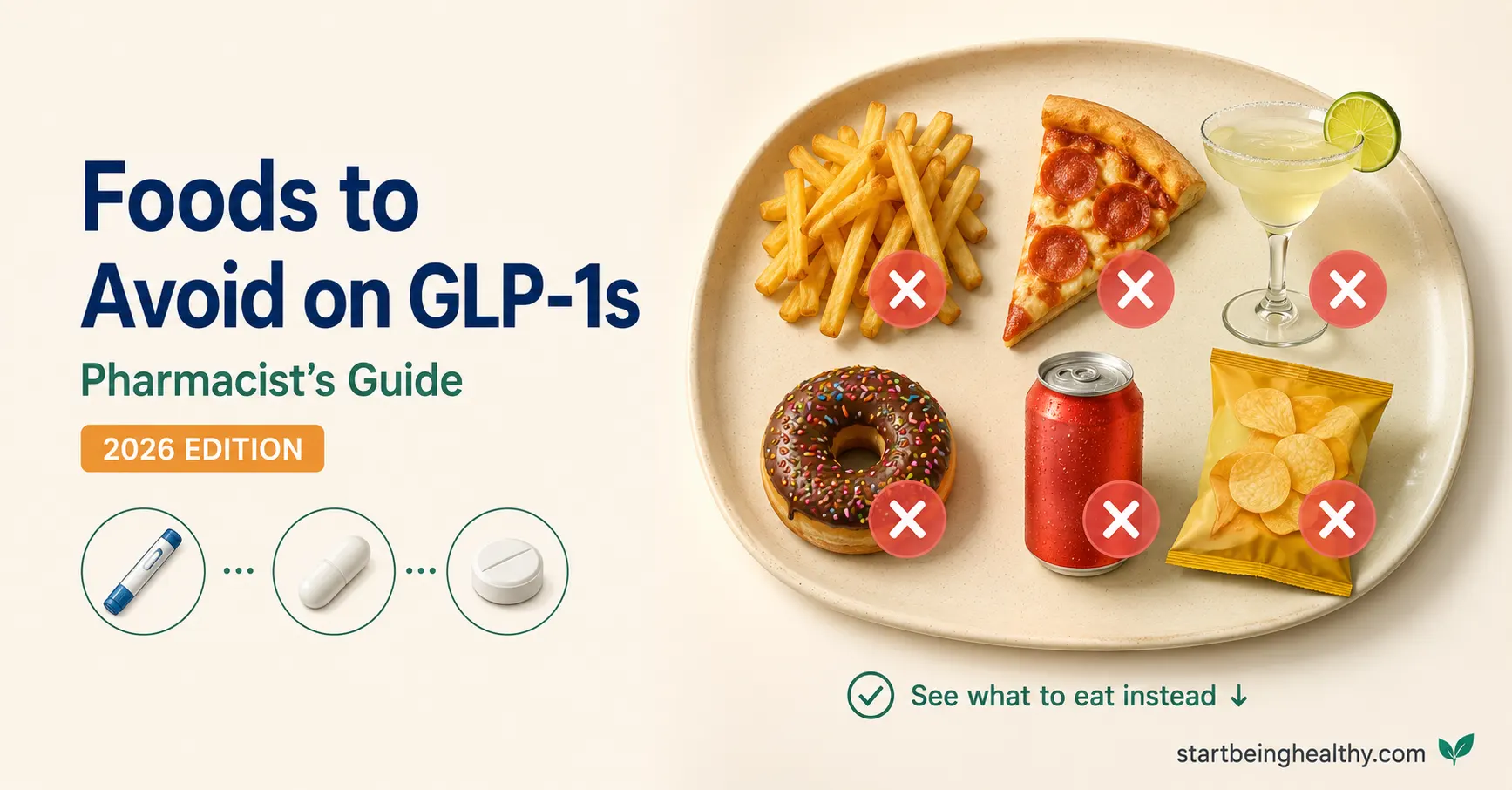
Quick answer: The main foods to avoid on GLP-1 medications (Ozempic, Wegovy, Mounjaro, Zepbound, Foundayo) are high-fat fried foods, sugary drinks and desserts, ultra-processed refined carbs, alcohol, and gas-producing foods like carbonated beverages. These worsen the most common side effects — nausea, reflux, bloating, and constipation — and can slow your weight loss results by interfering with the medication’s appetite-regulation effects.
Starting Ozempic, Wegovy, Mounjaro, Zepbound, or another GLP-1 medication changes how your body handles food — but most patients are never told exactly which foods will now cause problems. In pharmacy practice, the same complaint comes up week after week: severe nausea after a heavy dinner, reflux that will not settle, unexplained weight loss stalls, and occasional dangerous blood sugar drops. In nearly every case, the underlying issue is the interaction between GLP-1 medications and specific foods.
This pharmacist-written guide covers exactly which foods to avoid on Ozempic and other GLP-1 medications, why each one causes problems, and what to eat instead. The recommendations apply to all GLP-1 receptor agonists:
semaglutide (Ozempic, Wegovy, Rybelsus), tirzepatide (Mounjaro, Zepbound), liraglutide (Saxenda, Victoza), and orforglipron (Foundayo).
Pharmacist’s Perspective — Faryal Faisal, PharmD
The most common misconception I hear from patients is that “GLP-1s let you eat anything.” They do not. What GLP-1 medications actually do is slow gastric emptying and suppress appetite — which means when you do eat a food that does not agree with these mechanisms, the consequences are much more severe than they were before. A heavy meal that used to cause mild discomfort now causes hours of nausea. Alcohol that used to give a mild buzz can now trigger dangerous hypoglycaemia. Sugary foods that used to be forgiven by faster digestion now sit in the stomach and cause reflux.
The good news: most of these issues are entirely preventable if you know which foods to avoid. Patients who follow the guidance below routinely tell me their side effects are manageable and their weight loss is faster. Patients who ignore it often end up discontinuing the medication.
📄 Keep this as a printable reference card
Everything in this guide, plus a swap table (what to eat instead), trigger foods by side effect, and a daily checklist — condensed into a print-friendly PDF for your fridge or wallet.
Free · No email required · Written by Faryal Faisal, PharmD
Why Certain Foods Are Problematic on GLP-1 Medications
GLP-1 medications work through three main mechanisms — and each mechanism creates a specific food-interaction issue:
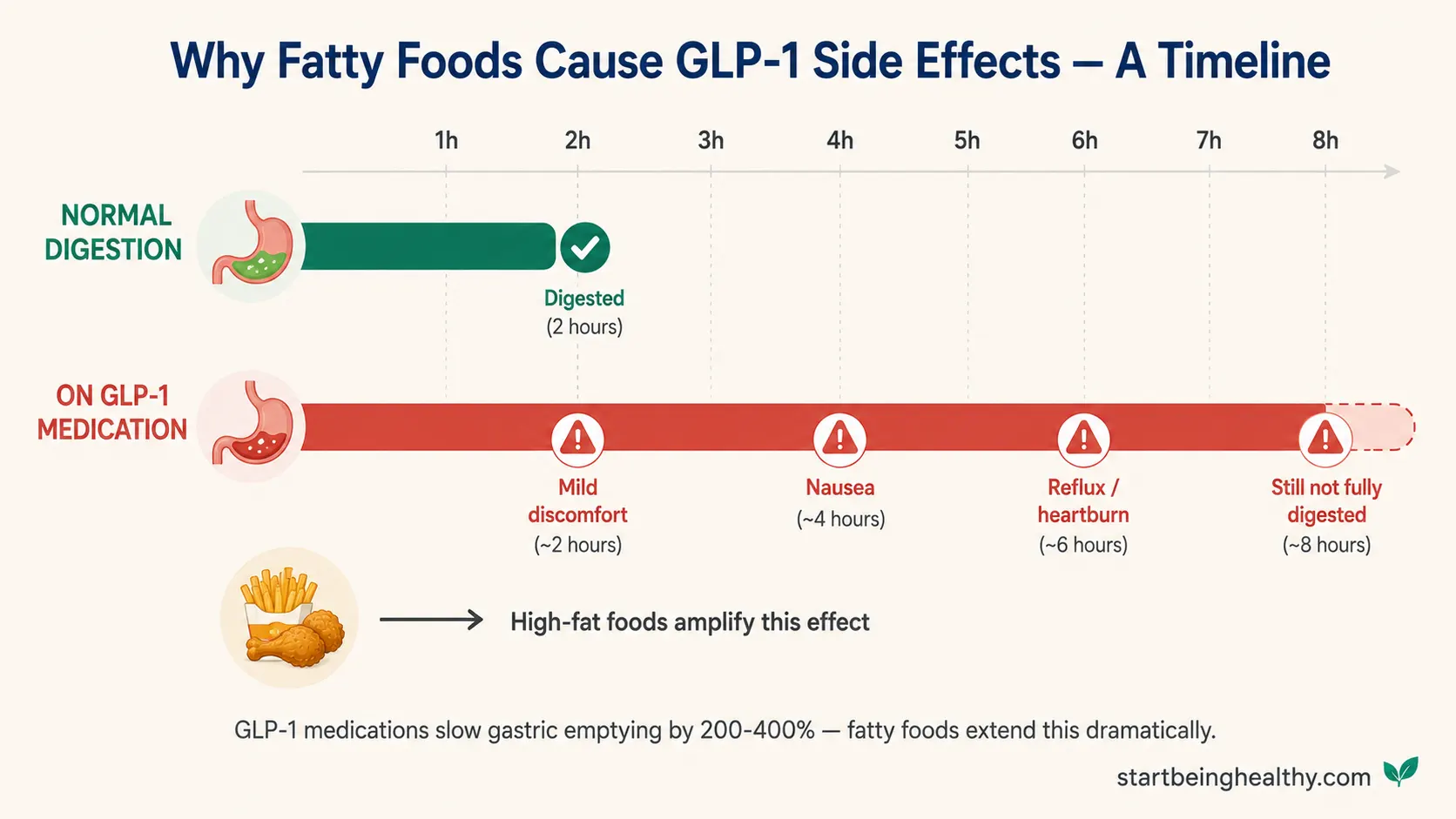
Delayed gastric emptying. Food remains in the stomach 2–4 times longer than normal. This is why appetite suppression works — you feel full longer. But it also means fatty foods sit and ferment, sugary foods produce prolonged blood sugar swings, and large volumes cause severe distension.
Enhanced insulin secretion. GLP-1s make your pancreas release more insulin in response to blood glucose. This is generally beneficial, but combined with foods that already produce rapid glucose spikes (or alcohol), it can create hypoglycaemia in some patients — particularly those also on insulin or sulfonylureas.
Central appetite suppression. The brain’s reward response to food is dampened. When you eat only 800–1,500 calories a day (common on GLP-1s), each calorie needs to be nutrient-dense. Filling limited appetite with ultra-processed foods creates measurable micronutrient deficiencies within weeks.
Category 1 — High-Fat and Fried Foods
This is the single most important category to limit. High-fat foods take the longest to digest under normal conditions — and GLP-1 medications already slow digestion by 200–400%. The result is prolonged nausea, vomiting, reflux, and abdominal heaviness that can last hours after a single meal.
Foods to Avoid or Limit
- Fried foods — French fries, fried chicken, onion rings, fried fish, tempura, and other deep-fried items are the #1 cause of severe GI symptoms in GLP-1 patients
- Fast food burgers and pizza — the combination of refined carbs and saturated fat is particularly bad
- Fatty cuts of meat — ribeye, pork belly, bacon, sausage, salami, and other high-fat meats
- Cream-based sauces and soups — alfredo, carbonara, cream of mushroom, cream-based curries
- Full-fat cheeses in large quantities — brie, cheddar chunks, cream cheese servings
- Butter or oil in large amounts — a piece of toast with a tablespoon of butter can trigger reflux
- Deep-fried desserts — doughnuts, churros, funnel cake
Why they cause problems: Fat takes longer to digest than protein or carbohydrate. On a GLP-1, this “longer” becomes “hours.” The food sits in the stomach, ferments, produces gas and acid, and either forces its way up (reflux) or triggers the body’s protective vomiting response.
What to eat instead: Lean proteins (chicken breast, turkey, white fish, tofu), moderate healthy fats (small amounts of olive oil, avocado, nuts), and steamed or grilled preparations instead of fried.
Category 2 — Sugary Foods and Refined Carbohydrates
Sugary and refined-carb foods work against GLP-1 medications on multiple fronts: they spike blood glucose (which the medication is trying to smooth), they provide calories without satiety, and in many patients they trigger the “dumping syndrome”-like response of nausea, sweating, and dizziness.
Foods to Avoid or Limit
- Sugary beverages — regular soda, sweetened iced tea, sports drinks, sweetened coffee drinks, sweet lemonade, energy drinks
- Fruit juice — even 100% juice; strips fibre, concentrates sugar
- Candy and confectionery — gummies, chocolate bars, hard candy
- Baked goods with high sugar content — doughnuts, cake, pastries, cookies, muffins
- White bread, white rice, white pasta — no fibre; rapid glucose absorption
- Sugary breakfast cereals — a bowl of frosted cereal can produce a glucose spike lasting hours on a GLP-1
- Sweetened yoghurts — often more sugar per serving than a candy bar
- Ice cream and frozen desserts — high sugar plus high fat is a double trigger
Why they cause problems: Rapid glucose absorption causes an insulin surge. On a GLP-1, this surge can overshoot and drop blood sugar too low — producing dizziness, weakness, and nausea. Sugar also has near-zero satiety impact, which wastes limited GLP-1 appetite on calories that do not nourish.
What to eat instead: Whole fruits (fibre slows sugar absorption), Greek yoghurt without added sugar (add fresh berries), oats, quinoa, whole-grain bread, sweet potato, brown rice in moderate portions.
Category 3 — Alcohol
Alcohol on GLP-1 medications is a category of its own because it interacts through multiple dangerous mechanisms simultaneously.
Why Alcohol Is Particularly Problematic
- Hypoglycaemia risk — Alcohol suppresses the liver’s ability to release stored glucose. Combined with a GLP-1’s enhanced insulin secretion, blood sugar can drop dangerously low — particularly overnight after evening drinking. In patients also taking insulin, sulfonylureas, or metformin, this can be life-threatening.
- Empty calories against limited appetite — a single glass of wine is 120–150 calories that produce zero satiety. On a 1,200 calorie/day GLP-1 intake, that is 10% of your daily calories spent on nothing nourishing.
- Dehydration — GLP-1 patients are already at risk of dehydration from reduced fluid intake and occasional vomiting/diarrhoea. Alcohol accelerates this.
- Delayed absorption unpredictability — because gastric emptying is slowed, alcohol absorption can be delayed 2–4 hours. The “delayed hit” catches many patients off guard — they feel fine, drink more, and become severely intoxicated later.
- Pancreatitis risk — GLP-1 medications carry a small pancreatitis risk. Heavy alcohol use increases that risk substantially.
Practical Guidance
If you choose to drink on a GLP-1 medication:
- Keep intake to 1 standard drink (5 oz wine, 12 oz beer, 1.5 oz spirits) maximum on any given day
- Never drink on an empty stomach — pair alcohol with a protein-containing meal
- Drink water before, during, and after — 1:1 ratio
- Never combine alcohol with insulin or sulfonylurea medications without extra caution
- Avoid sweetened cocktails (double impact: alcohol + sugar)
- Do not drink on the day of a dose increase — side effects are worst that week
The safest recommendation is to eliminate alcohol entirely during active weight loss on a GLP-1. Many patients find their tolerance is dramatically lower than before, making even one drink unpleasant.
Category 4 — Reflux-Triggering Foods
Delayed gastric emptying dramatically increases reflux risk. Foods that were previously fine may now cause significant heartburn.
Common Reflux Triggers on GLP-1s
- Very spicy foods — chilli-heavy dishes, hot sauce, curry with high capsaicin content
- Tomato-based sauces — pasta sauce, pizza sauce, tomato soup (particularly on an empty stomach)
- Citrus fruits and juices — oranges, grapefruit, orange juice
- Chocolate — relaxes the lower oesophageal sphincter
- Peppermint — including peppermint tea (also relaxes the LES)
- Carbonated beverages — even sugar-free ones increase pressure and reflux
- Coffee, particularly on an empty stomach — combines acid stimulation with LES relaxation
- Onions and garlic in large quantities — some patients report significant reactions
What to eat instead: Mild-flavour proteins, cooked vegetables (steamed, roasted), plain yoghurt, oats, bananas, ginger tea (actually helps reduce nausea).
Category 5 — Ultra-Processed Foods
This category is less about immediate symptoms and more about long-term nutrition. When your appetite is reduced to 1,000–1,500 calories per day, every calorie needs to earn its place. Ultra-processed foods take up stomach space without providing meaningful nutrition — leading to measurable micronutrient deficiencies within weeks of starting a GLP-1.
What to Limit
- Packaged snack foods — chips, cheese puffs, crackers, pretzels
- Processed meats — hot dogs, deli meats (unless nitrate-free), bologna, spam
- Instant noodles and ready meals — high sodium, low protein, low fibre
- Meal replacement bars marketed for weight loss — many are ultra-processed with sugar alcohols that cause GI symptoms
- Sugary or flavoured “coffee drinks” — Frappuccino-style drinks routinely exceed 400 calories with zero satiety
- Diet sodas in large quantities — while zero calorie, artificial sweeteners can trigger nausea in some patients
The nutritional deficiency risk is real. In one 2024 real-world study, 40% of GLP-1 patients had inadequate protein intake, and 25% had suboptimal vitamin D, B12, iron, or calcium within 3 months of starting therapy. When appetite is limited, every meal should be nutrient-dense — not filler. Inadequate protein and micronutrient intake are also two of the most common drivers of Ozempic weight loss plateaus — for the complete pharmacist’s protocol to break through stalled progress, see our Ozempic weight loss plateau fix guide.
Category 6 — Very High-Fibre Foods (Counterintuitive)
Fibre is generally good, but on GLP-1 medications, an abrupt increase in fibre can cause severe constipation, bloating, and abdominal pain — because gastric emptying is already slowed. This does not mean avoid fibre. It means introduce it gradually and pair it with adequate water.
Foods to Introduce Carefully (Not Avoid)
- Beans and lentils — start with 1/4 cup portions
- Cruciferous vegetables (broccoli, cauliflower, Brussels sprouts) — start steamed, small portions
- High-fibre cereals with more than 8g fibre per serving — start with half servings
- Fibre supplements (psyllium, methylcellulose) — start at 1/4 of recommended dose, increase gradually
- Whole grains added suddenly to a previously refined-carb diet
The rule: If you have added fibre in the last 24 hours, drink at least 500 ml of water in the following hour. Constipation is a top-3 cause of GLP-1 discontinuation and it is almost always preventable with hydration and gradual fibre introduction.
Special Considerations
Caffeine
Coffee is not universally problematic on GLP-1s, but two rules matter: (1) always with food, never on an empty stomach — coffee on an empty stomach triggers severe nausea in a majority of GLP-1 patients, and (2) limit to 2 cups per day. Excess caffeine plus reduced fluid intake can cause dehydration and headaches.
Grapefruit
Grapefruit does not directly interact with GLP-1 medications the way it does with statins or some blood pressure medications. However, if you are on other medications (particularly certain statins, calcium channel blockers, or immunosuppressants), grapefruit is a concern for those medications independent of your GLP-1.
Very Large Volumes of Water at Meals
Contrary to popular advice, drinking large volumes of water with meals on a GLP-1 can worsen nausea by adding to gastric distension. Sip water throughout the day; keep beverages at meals to 200–300 ml maximum. Hydrate primarily between meals, not with them.
What to Eat Instead — A Quick Framework
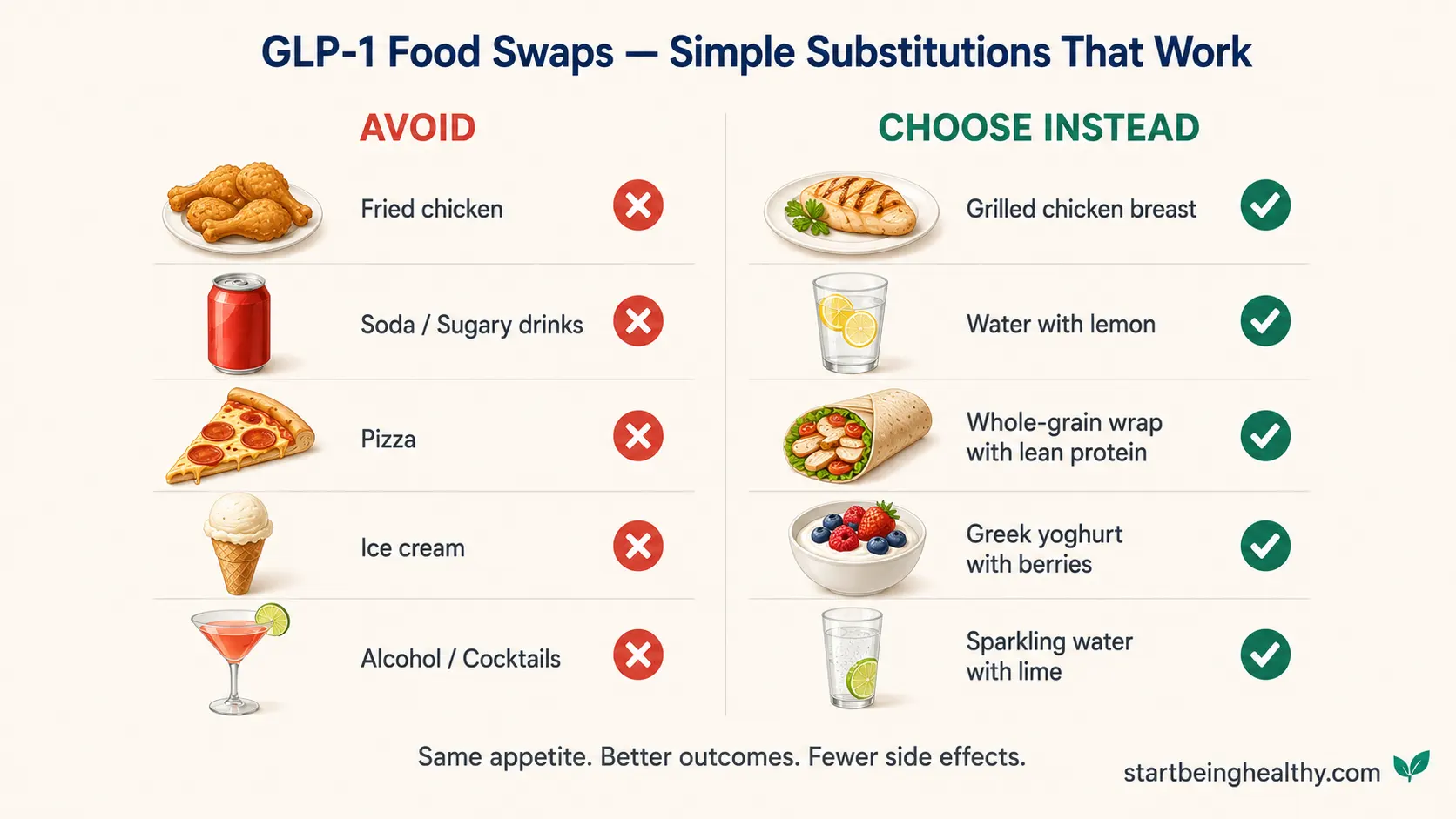
For every food to avoid, there’s a better alternative. Build your GLP-1 eating pattern around these principles:
| Avoid | Choose Instead |
|---|---|
| Fried chicken, French fries | Grilled chicken breast, roasted vegetables |
| Pizza, fast food burgers | Homemade whole-grain wrap with lean protein + salad |
| Ice cream | Greek yoghurt with berries |
| Soda, juice | Water, herbal tea, sparkling water without sweeteners |
| White bread, white pasta | Whole-grain bread, quinoa, brown rice (small portions) |
| Alcohol | Sparkling water with lemon or lime |
| Cream sauces | Olive oil + herbs, lemon juice |
| Sugary breakfast cereal | Steel-cut oats with berries and nuts |
| Processed snack bars | Boiled egg, small handful of almonds, apple with peanut butter |
| Fatty cuts of meat | Chicken breast, turkey, white fish, tofu, lean beef sirloin |
For a complete meal-by-meal framework built around these principles, see our pharmacist-approved Ozempic meal plan guide. For anti-inflammatory eating patterns that pair well with GLP-1s and address the low-grade inflammation associated with obesity, see our 21-day anti-inflammatory diet plan.
Pharmacist’s Perspective — Faryal Faisal, PharmD
My most important advice for patients starting any GLP-1 medication: do not restrict foods before you need to. Some people can tolerate mild fried foods; others cannot handle any. Some patients drink one glass of wine without incident; others get sick after a sip. Your body will tell you.
Keep a simple food diary for the first 4 weeks — write down what you ate and how you felt 2, 4, and 6 hours later. Patterns will emerge. Once you know your personal triggers, you can eat much more freely as long as you avoid those specific items. This individualised approach is far more sustainable than a blanket “avoid everything” list.
The one exception where I recommend everyone avoid completely: alcohol during dose escalation weeks and heavy fried food the night before a dose increase. Those two situations reliably cause the worst outcomes I see in practice.
Frequently Asked Questions
Can I drink coffee on Ozempic or Wegovy?
Yes, but always with food and never on an empty stomach. Coffee on an empty stomach triggers severe nausea in most GLP-1 patients. Limit to 2 cups per day, and if you experience heartburn, switch to lower-acid coffee varieties or reduce intake.
Is it safe to drink alcohol on GLP-1 medications?
Small amounts (1 standard drink) with food are generally safe for most patients, but risks include hypoglycaemia, delayed absorption (leading to over-drinking), dehydration, and increased pancreatitis risk. Patients on insulin or sulfonylureas should be particularly cautious. The safest approach during active weight loss is to avoid alcohol entirely.
Why do fried foods make me so sick on Ozempic?
Fat takes the longest of any macronutrient to digest. GLP-1 medications slow gastric emptying by 200–400%, so fatty foods sit in the stomach for hours instead of the normal 1–2 hours. This causes nausea, reflux, and vomiting. Even foods you tolerated before starting the medication may now cause severe symptoms.
Can I eat pizza on Wegovy?
Occasionally and in small portions, yes. Choose thin crust, limit cheese, avoid greasy meat toppings (pepperoni, sausage), and stop at 1–2 slices. Many patients find they can tolerate one slice with a salad far better than three slices alone.
Do I need to avoid sugar completely?
No, but limiting added sugars significantly is important. Small amounts of natural sugar in whole fruits are fine (fibre slows absorption). The bigger issue is sugary drinks, desserts, and refined-carb foods that cause blood sugar spikes and provide calories without satiety.
Are there specific foods to avoid on Mounjaro or Zepbound versus Ozempic?
No — the food-avoidance list is essentially identical across all GLP-1 medications (Ozempic, Wegovy, Mounjaro, Zepbound, Rybelsus, Saxenda, Foundayo). The mechanisms are similar, so the food interactions are similar. For a specific comparison of these medications, see our Mounjaro vs Ozempic and Zepbound vs Wegovy guides.
Can I have diet soda on GLP-1 medications?
In small amounts, usually yes. However, some patients report nausea from artificial sweeteners, particularly sucralose and aspartame. Carbonation can also worsen reflux. Water and unsweetened herbal teas are better choices for daily hydration.
Why am I getting constipated on Ozempic — should I eat more fibre?
Constipation is common on GLP-1 medications because gastric emptying and intestinal transit are both slowed. Adding fibre helps, but too much too fast causes bloating and pain. Increase fibre gradually over 2 weeks, drink at least 2 litres of water daily, and consider a magnesium supplement (with your doctor’s approval) which draws water into the intestine.
Are there any foods that actually help with GLP-1 side effects?
Yes. Ginger (fresh or tea) reduces nausea. Peppermint (in tea, not candy form) can settle mild GI upset (avoid if reflux is your main symptom). Bland foods like rice, toast, and bananas are often well-tolerated during the first weeks. Small, frequent protein-focused meals are far better than large occasional ones.
Is there a printable foods to avoid reference card I can download?
Yes — a free 7-page printable reference card is available at the top of this article. It includes the top 10 foods to avoid, a complete swap table (what to eat instead for each category), trigger foods organized by side effect (nausea, constipation, reflux, fatigue), and a daily checklist you can print and keep on your fridge. No email signup required.
Key Takeaways
- Fried and high-fat foods are the #1 cause of severe GI symptoms on GLP-1 medications — limit these strictly
- Sugary foods and refined carbs undermine weight loss goals and can trigger blood sugar swings
- Alcohol carries multiple risks including hypoglycaemia and delayed intoxication — safest to avoid entirely during active weight loss
- Reflux-triggering foods (spicy, citrus, tomato, chocolate, peppermint, coffee) may become problematic even if they were fine before
- Ultra-processed foods waste limited appetite on empty calories — every meal should be nutrient-dense
- Increase fibre gradually to prevent constipation — abrupt increases cause bloating and pain
- Coffee is okay in moderation but only with food, never on an empty stomach
- Individual triggers vary — keep a food diary for the first 4 weeks to identify your personal problem foods
- All GLP-1 medications (Ozempic, Wegovy, Mounjaro, Zepbound, Rybelsus, Foundayo) share essentially the same food-avoidance list
References
- Cleveland Clinic. Foods to Avoid While Taking Ozempic. 2024. https://health.clevelandclinic.org/ozempic-foods-to-avoid
- GoodRx. Top 5 Foods to Avoid While Taking Ozempic. 2026. https://www.goodrx.com/well-being/diet-nutrition/ozempic-foods-to-avoid
- Novo Nordisk. Ozempic Prescribing Information. 2026.
- Wilding JPH, et al. Once-weekly semaglutide in adults with overweight or obesity. N Engl J Med. 2021;384:989-1002. https://www.nejm.org/doi/full/10.1056/NEJMoa2032183
- Jastreboff AM, et al. Tirzepatide once weekly for the treatment of obesity. N Engl J Med. 2022;387:205-216.
- Mozaffarian D, et al. Nutritional priorities to support GLP-1 therapy for obesity. Journal of Nutrition. 2025.
- Almandoz JP, et al. Nutrition considerations with anti-obesity medications. Obesity. 2024.
- American Diabetes Association. Alcohol and diabetes management. 2025. https://diabetes.org/health-wellness/alcohol-and-diabetes
- National Institute of Diabetes and Digestive and Kidney Diseases. GLP-1 receptor agonists and gastrointestinal effects. NIH 2025.
- American Gastroenterological Association. Clinical practice guideline on the pharmacologic management of obesity. Gastroenterology. 2022.