

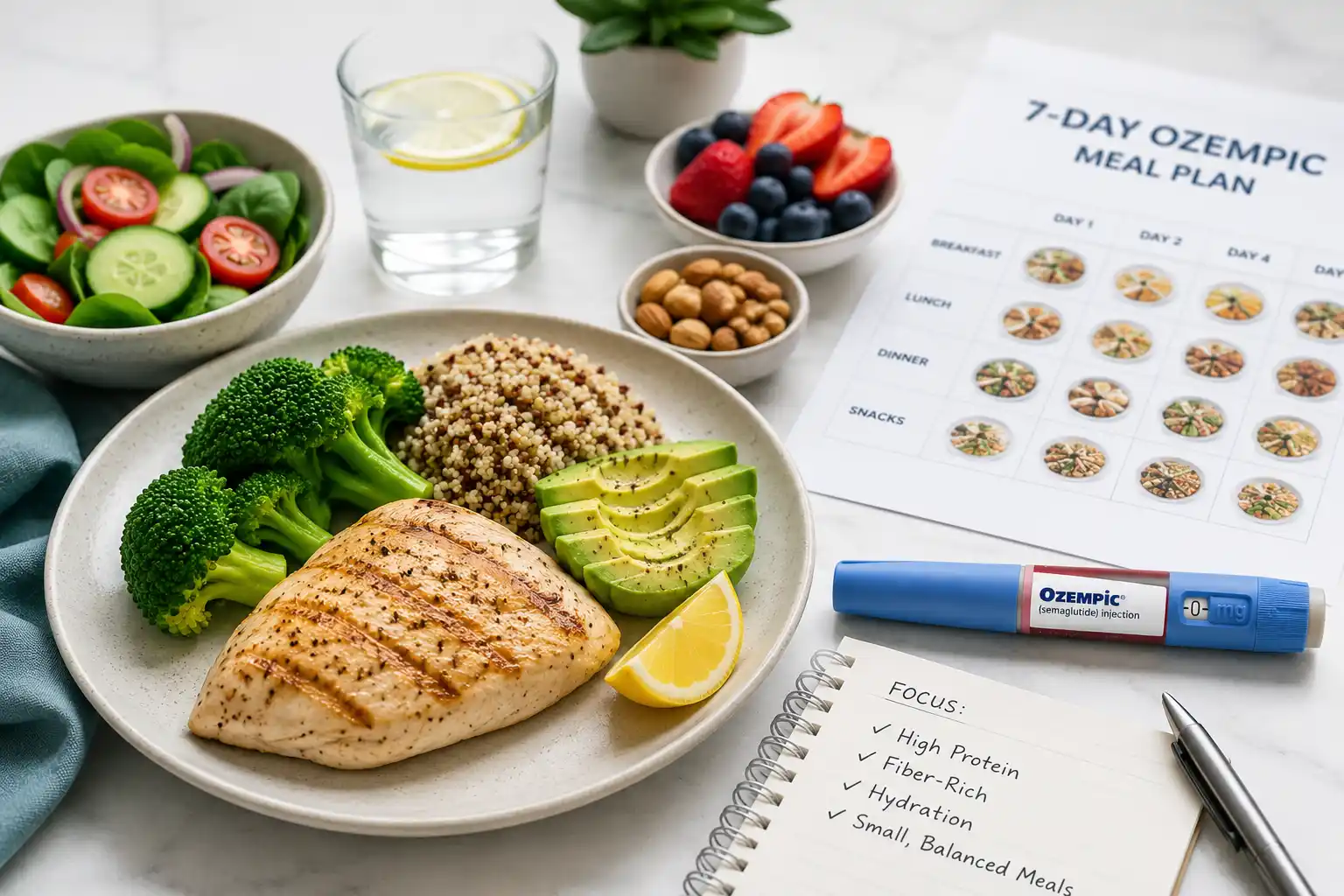
Quick answer: On Ozempic (and other GLP-1 medications), prioritize 25-30g of lean protein at every meal, non-starchy vegetables, healthy fats like avocado and olive oil, and 2-3 liters of water daily. Eat small frequent meals slowly, avoid high-fat greasy foods that worsen nausea, and limit refined carbs and alcohol. This approach protects muscle mass, minimizes side effects, and maximizes sustainable fat loss.
Starting Ozempic without a clear eating plan is one of the most common mistakes patients make. The medication does part of the work — but what you eat decides whether you lose weight steadily, suffer nausea for weeks, or end up regaining everything the moment you stop the injections.
This guide is a complete what-to-eat-on-Ozempic meal plan written and medically reviewed by a licensed pharmacist. You will get a 7-day meal plan, daily protein targets, an evidence-based food list, foods to avoid, hydration rules, and clinical strategies to manage nausea, constipation, and muscle loss — all the things that derail weight loss on semaglutide.
If you are still deciding between weight loss medications, our companion article — Mounjaro vs Ozempic for Weight Loss — compares the two head-to-head with clinical trial data.
This meal plan applies not just to Ozempic (semaglutide) but to all GLP-1 medications — Wegovy, Mounjaro, Zepbound, and the newer oral option Foundayo (orforglipron). The dietary principles are the same regardless of which specific medication you are on, though appetite suppression varies in intensity.
This meal plan focuses on what to eat. Equally important is what to skip — certain foods reliably worsen GLP-1 side effects, trigger nausea, and undermine weight loss on any of these medications. For the complete pharmacist’s list of foods to avoid on Ozempic, Wegovy, Mounjaro, and other GLP-1s — including the truth about alcohol, coffee, fried foods, and the delayed-absorption trap most patients don’t know about — see our pharmacist’s guide to foods to avoid on GLP-1 medications.
📄 Prefer this as a printable PDF?
Everything in this guide, plus a 30-day meal schedule, protein cheat sheet, and troubleshooting for nausea — condensed into a 10-page print-friendly PDF.
Free · No email required · Written by Faryal Faisal, PharmD
Why Diet Matters So Much on Ozempic
Ozempic (semaglutide) works by mimicking glucagon-like peptide-1 (GLP-1) — a gut hormone that slows gastric emptying, suppresses appetite, and reduces hunger signalling in the brain. Patients typically report a 24% average reduction in daily calorie intake on therapeutic doses.
That sounds excellent for weight loss — and it is. But it creates three immediate nutritional risks:
- Inadequate protein intake → muscle loss alongside fat loss, lowering metabolism long-term
- Dehydration → reduced thirst cues lead to worsening constipation, fatigue, and headaches
- Nutrient deficiencies → smaller portions mean less iron, B12, calcium, and fibre unless meals are planned
The STEP-1 clinical trial showed that participants on semaglutide who also followed a structured, reduced-calorie eating pattern lost an average of 14.9% of their body weight over 68 weeks. Those who relied on the medication alone, without nutrition guidance, consistently lost less.
Pharmacist’s Perspective — Faryal Faisal, PharmD
The single biggest mistake I see in patients starting Ozempic is treating it as a permission slip to skip meals. The drug reduces appetite — it does not reduce your body’s need for protein, fibre, vitamins, or fluids. Patients who skip meals lose muscle, develop deficiencies, and almost always regain weight when they eventually stop. A structured eating plan is not optional — it is the difference between sustainable weight loss and a yo-yo.
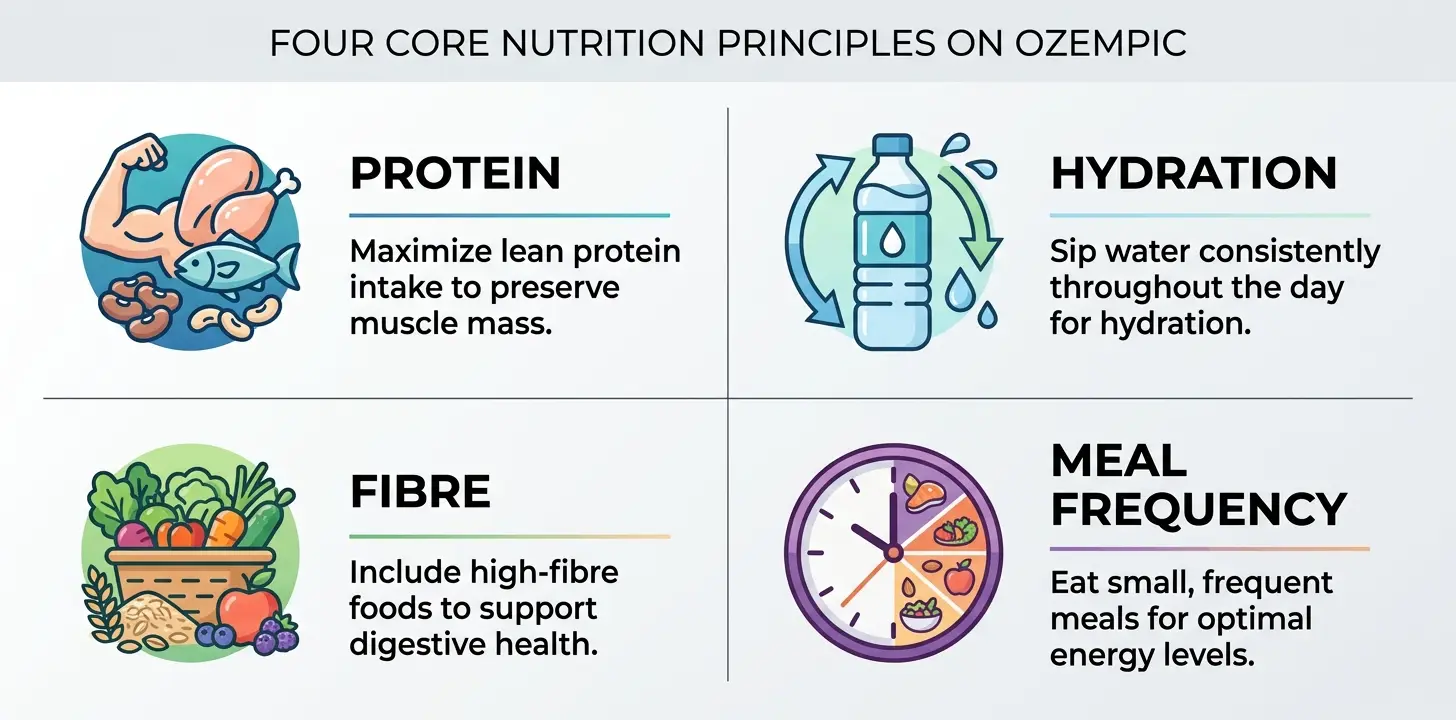
The 4 Core Nutrition Principles on Ozempic
1. Prioritise Protein at Every Meal
This is the single most important rule. Protein preserves lean muscle mass during rapid weight loss, increases satiety, and helps stabilise blood glucose.
Daily protein target on Ozempic:
| Body Weight | Recommended Daily Protein |
|---|---|
| Under 150 lbs (68 kg) | 80–100 g per day |
| 150–200 lbs (68–91 kg) | 100–130 g per day |
| Over 200 lbs (91 kg) | 130–160 g per day |
Aim for at least 25–35 g of protein at each main meal. Source: Protein recommendations during weight loss, PubMed.
2. Hydrate Constantly — Even When Not Thirsty
Ozempic blunts thirst cues just as it blunts hunger cues. Patients regularly become dehydrated without realising it, which dramatically worsens nausea, constipation, fatigue, and headaches.
Daily fluid target: 2.5–3 litres (84–100 fl oz) of water, herbal tea, or low-sodium broth. Carbonated drinks should be limited as bubbles aggravate bloating.
3. Get Enough Fibre — But Build It Up Slowly
Constipation is one of the most common Ozempic side effects. Adequate fibre prevents it, but adding too much too fast worsens bloating.
Target: 25–35 g of fibre daily, gradually built up. Best sources include oats, lentils, chia seeds, berries, broccoli, and pears.
4. Eat Small, Frequent Meals — Not Three Large Ones
Because Ozempic slows gastric emptying, large meals cause significant nausea and reflux. The clinical recommendation is 4–5 small meals per day rather than three traditional ones. Stop eating at the first feeling of fullness — pushing past it will trigger nausea within 20–40 minutes.
Best Foods to Eat on Ozempic
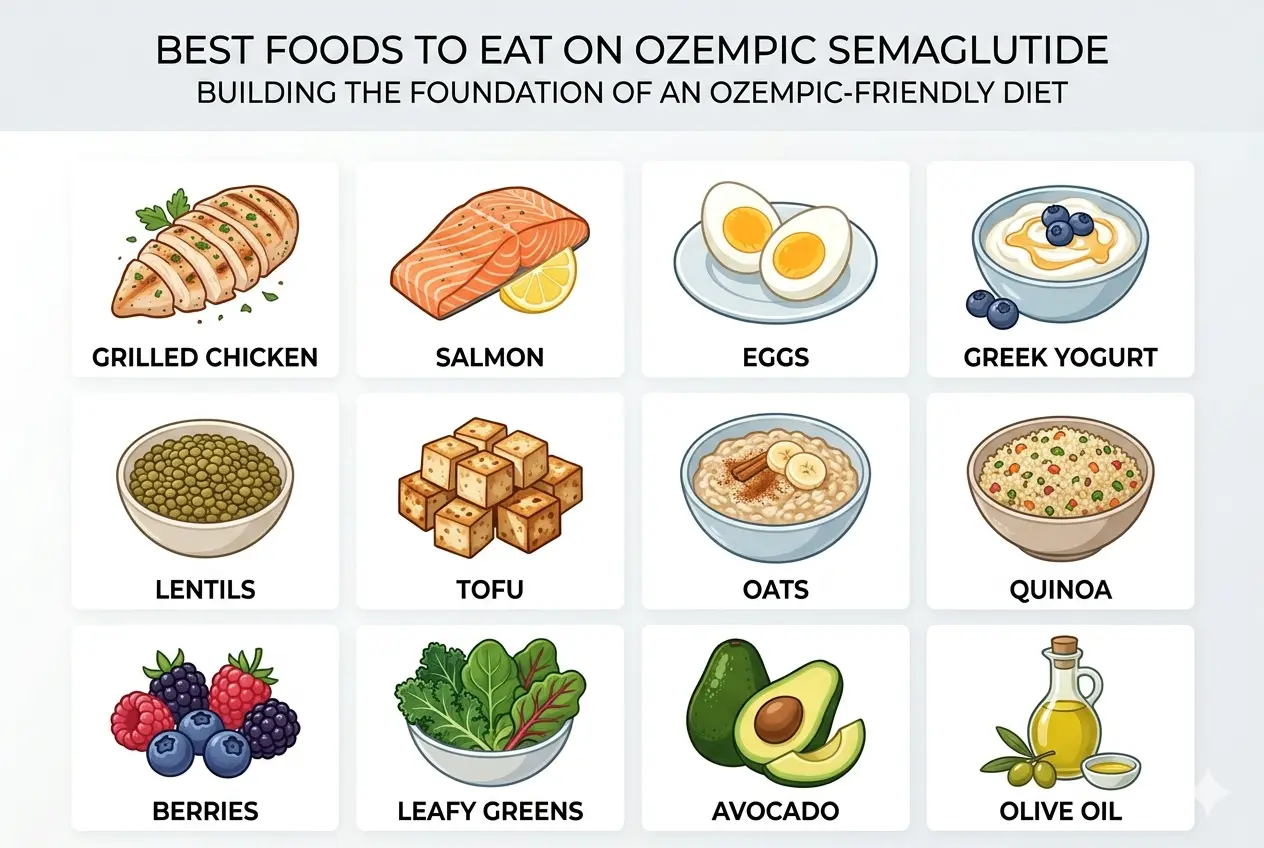
Lean Proteins (Build Every Meal Around These)
- Eggs and egg whites
- Skinless chicken or turkey breast
- Fish — salmon, tuna, cod, sardines (omega-3s also reduce inflammation)
- Eggs and egg whites
- Low-fat Greek yoghurt (15–20 g protein per cup)
- Cottage cheese (25 g protein per cup)
- Tofu, tempeh, edamame
- Lentils, chickpeas, black beans (also high in fibre)
- Whey or pea protein powder for protein shakes when nausea limits solid food
Three boiled eggs deliver 19g of complete protein for just 220 calories — a near-perfect match for Ozempic patients who need maximum protein in a low-volume meal. See the full 3-egg calorie breakdown by cooking method.
Non-Starchy Vegetables (Half Your Plate)
Cooked vegetables digest more easily than raw during the first weeks of treatment.
- Spinach, kale, rocket, romaine, chard
- Broccoli, cauliflower, courgette, mushrooms, bell peppers
- Asparagus, green beans, brussels sprouts
- Cucumber, tomatoes, carrots
Complex Carbohydrates (Quarter of Your Plate)
- Steel-cut or rolled oats
- Quinoa
- Brown rice
- Whole grain or sprouted bread (small portions)
- Sweet potatoes
- Less-ripe bananas (good source of resistant starch)
Fruits (Best Choices)
- Berries (lowest glycaemic load, highest antioxidants)
- Apples and pears (high fibre)
- Citrus — oranges, grapefruit (avoid grapefruit if on certain blood pressure or statin medications)
- Kiwi, plums, peaches
Healthy Fats (Small Amounts)
- Extra-virgin olive oil (1–2 tbsp per day)
- Avocado (¼ to ½ per day)
- Almonds, walnuts, pumpkin seeds (a small handful)
- Chia and flax seeds (1–2 tbsp daily)
If anti-inflammatory eating interests you, our 21-Day Anti-Inflammatory Diet Plan pairs extremely well with GLP-1 therapy.
Foods to Avoid (or Strictly Limit) on Ozempic
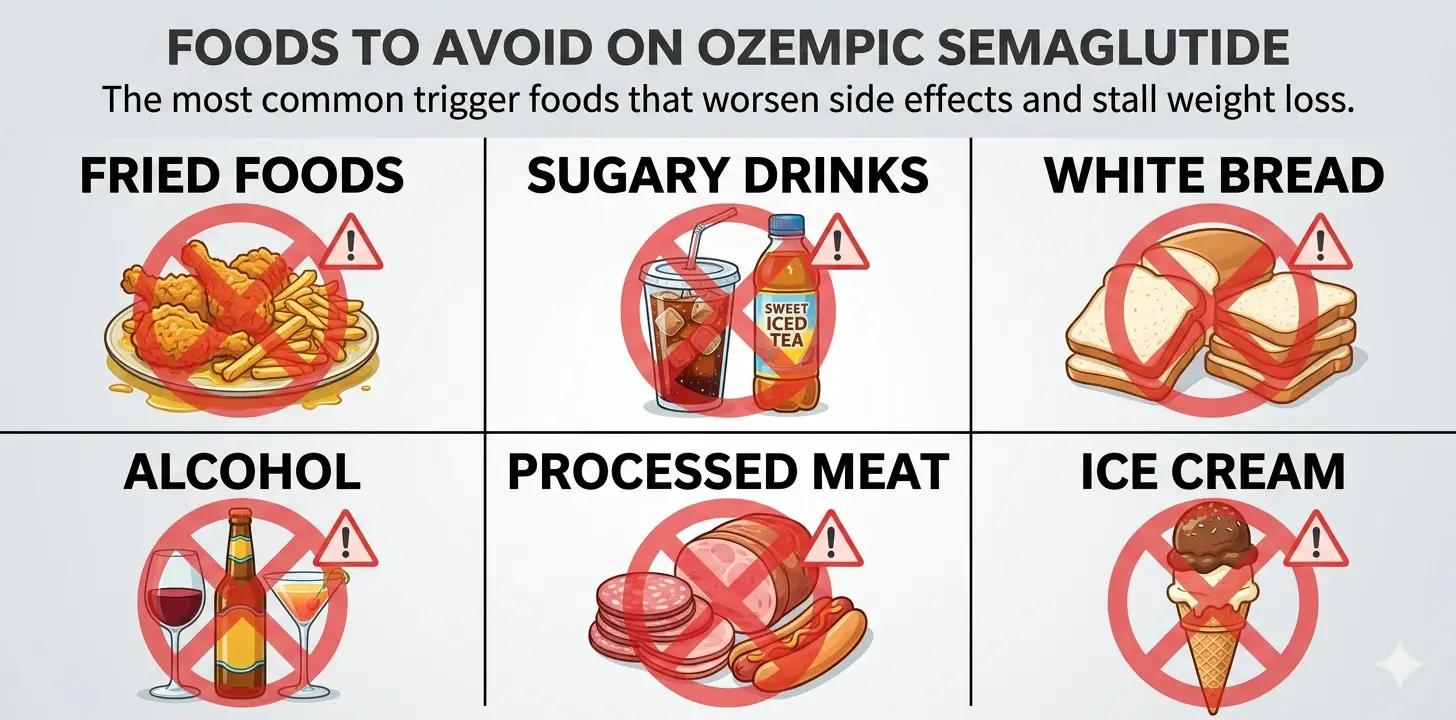
These foods worsen Ozempic’s gastrointestinal side effects and undermine its weight loss benefit. The first four categories are the highest-priority avoidances.
1. High-Fat Fried Foods — The #1 Nausea Trigger
Deep-fried chicken, chips, doughnuts, samosas, fried fish, and similar items take significantly longer to leave the stomach. Combined with Ozempic’s gastric-emptying delay, the result is severe nausea, reflux, and sometimes vomiting within 1–2 hours.
2. Ultra-Processed Foods and Added Sugar
Crisps, biscuits, breakfast cereals with added sugar, pastries, doughnuts, ice cream, and sugary drinks (regular soda, energy drinks, sweetened juice) spike blood glucose rapidly and trigger nausea. They also undermine the medication’s blood sugar benefit. The Healthline pharmacist guidance specifically lists added sugar as a trigger for digestive side effects.
3. Carbonated and Caffeinated Drinks (In Excess)
Carbonation causes bloating because the gas adds to the existing gastric distension. Excess caffeine on an empty stomach can intensify nausea. Limit fizzy drinks; cap coffee at 1–2 cups daily, ideally with food.
4. Alcohol
Alcohol tolerance significantly decreases on semaglutide. Even one drink can cause nausea, dehydration, and unpredictable blood sugar drops. It also irritates the stomach lining already affected by delayed gastric emptying. The safest approach is to avoid alcohol entirely during the first 8 weeks; if you do drink, limit to one small drink and never on an empty stomach.
5. Refined Grains and Large Portions of Starches
White bread, white rice, white pasta, and sugary cereal cause rapid blood sugar spikes and feel heavier in a slowed stomach. Choose smaller portions of whole-grain alternatives.
6. Spicy and Very Acidic Foods (For Sensitive Patients)
Not everyone is affected, but if you experience reflux or nausea, temporarily reduce very spicy curries, hot sauces, citrus juices, and tomato-heavy dishes during the first 4–8 weeks of treatment.
Sample 7-Day Ozempic Meal Plan
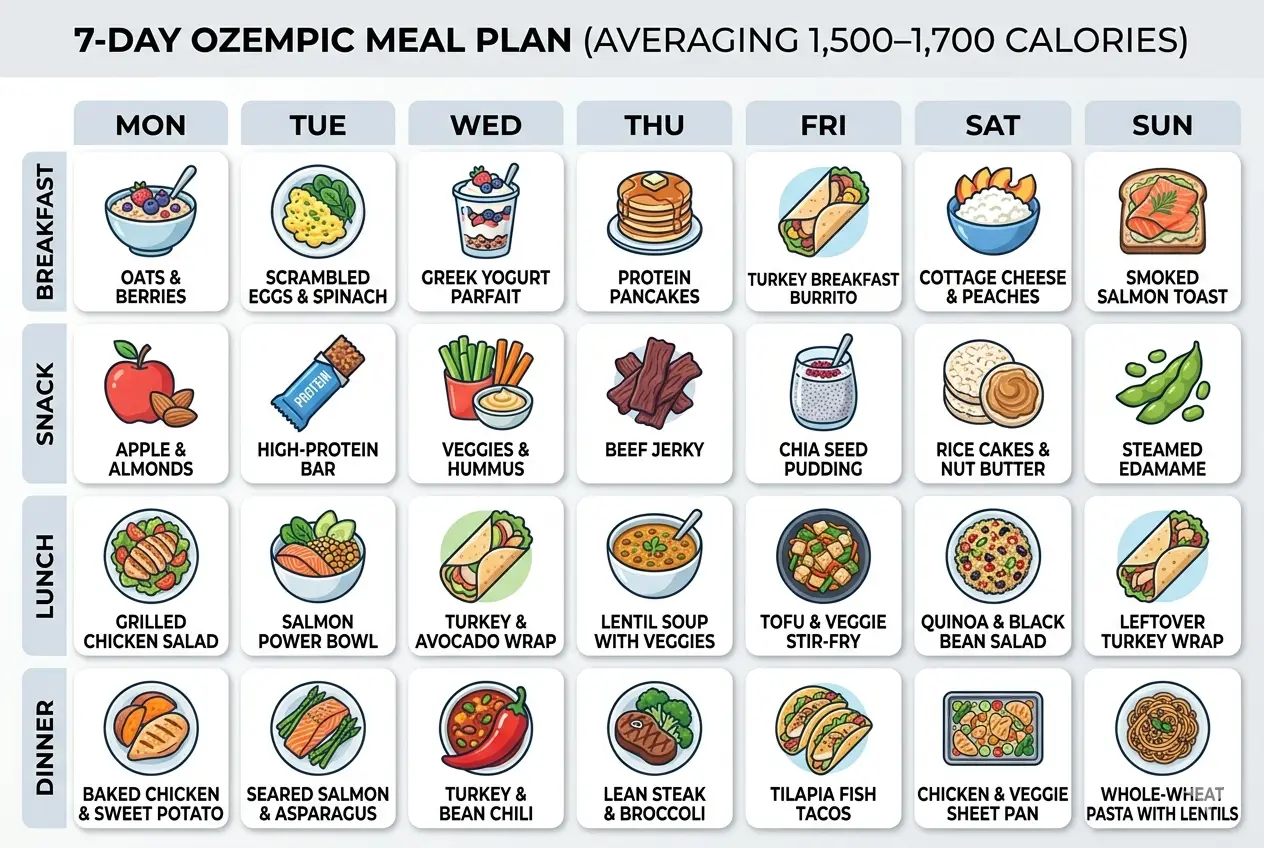
This plan averages approximately 1,500–1,700 calories with 100–120 g of protein per day. Adjust portions to your individual calorie needs as advised by your healthcare provider or dietitian.
Day 1 (Monday)
- Breakfast: Greek yoghurt (¾ cup) with mixed berries (½ cup), chia seeds (1 tbsp), and walnuts (1 tbsp) — ~28 g protein
- Snack: Boiled egg + small apple
- Lunch: Grilled chicken salad (4 oz chicken, mixed greens, cherry tomatoes, cucumber, olive oil + lemon dressing)
- Dinner: Baked salmon (4 oz) with quinoa (½ cup cooked) and steamed broccoli
Day 2 (Tuesday)
- Breakfast: 2-egg omelette with spinach, mushrooms, and feta cheese
- Snack: Cottage cheese (½ cup) with sliced pear
- Lunch: Lentil and vegetable soup + whole grain toast (1 slice)
- Dinner: Grilled prawns (4 oz) with sautéed courgette and brown rice (⅓ cup cooked)
Day 3 (Wednesday)
- Breakfast: Overnight oats (⅓ cup oats + ½ cup milk) with banana slices and 1 tbsp almond butter
- Snack: Protein shake (whey or pea, 25 g protein)
- Lunch: Chicken and chickpea bowl (3 oz chicken, ½ cup chickpeas, roasted vegetables, tahini)
- Dinner: Baked cod (4 oz) with sweet potato (small) and green beans
Day 4 (Thursday)
- Breakfast: Smoothie — Greek yoghurt, frozen berries, spinach, 1 tbsp flax seed, scoop of protein powder
- Snack: A small handful of almonds (15 nuts) + 1 hard-boiled egg
- Lunch: Turkey and avocado wrap (whole grain tortilla, 3 oz turkey, lettuce, tomato)
- Dinner: Tofu stir-fry (4 oz tofu) with broccoli, peppers, and brown rice (⅓ cup cooked)
Day 5 (Friday)
- Breakfast: Scrambled eggs (2) with smoked salmon (1 oz) and avocado (¼)
- Snack: Apple slices with 1 tbsp peanut butter
- Lunch: Mediterranean bowl (quinoa, grilled chicken, cucumber, olives, hummus)
- Dinner: Baked chicken thigh (skinless, 4 oz) with roasted Brussels sprouts and lentils (½ cup)
Day 6 (Saturday)
- Breakfast: Cottage cheese pancakes (3 small) topped with berries
- Snack: Greek yoghurt with cinnamon and pumpkin seeds
- Lunch: Tuna salad (canned in water, mixed with avocado instead of mayo) on whole grain crackers
- Dinner: Lean beef stir-fry (3 oz) with mixed vegetables and cauliflower rice
Day 7 (Sunday)
- Breakfast: Tofu scramble with bell peppers, onions, turmeric, and a slice of whole grain toast
- Snack: Cucumber slices with hummus (3 tbsp)
- Lunch: Grilled chicken Caesar salad (3 oz chicken, romaine, parmesan, light dressing)
- Dinner: Baked white fish (4 oz) with herb-roasted vegetables and a small portion of wild rice
Pharmacist’s Perspective — Faryal Faisal, PharmD
If you struggle to finish full meals due to fullness, do not force them down. Eat half, save the rest, and come back 90–120 minutes later. The 4–5 small meals approach is far more important than rigidly sticking to “three meals a day”. What matters is the total daily protein, fibre, and calorie intake — not when you consume them.
How to Manage Nausea While Eating
Nausea is the most common Ozempic side effect, affecting up to 20% of patients particularly in the first 4–8 weeks. The good news: it almost always improves dramatically once your body adapts. The following strategies are evidence-based and used routinely in clinical practice:
- Eat smaller portions, slower. Put your fork down between bites. Stop at first fullness.
- Choose bland, low-fat foods during a flare. The Wegovy and Ozempic manufacturer guidelines specifically recommend toast, crackers, plain rice, bananas, and broth.
- Eat foods cold or at room temperature. Hot food odours intensify nausea. Cold options (yoghurt, cottage cheese, smoothies, salads) tolerate much better.
- Avoid cooking smells. If possible, eat in a different room from where food was prepared, or have someone else cook during your worst weeks.
- Ginger. Fresh ginger tea, ginger sweets, or ginger capsules have measurable anti-nausea evidence. Source: Ginger for nausea, PMC.
- Stay upright for 30 minutes after eating. Lying down worsens reflux dramatically when gastric emptying is slowed.
- Hydrate between meals, not during. Drinking large volumes of liquid alongside solid food fills the stomach faster.
If nausea remains severe after 4 weeks at a stable dose, contact your prescriber — your dose escalation may need to be slowed. For a complete week-by-week breakdown of when nausea and other side effects typically peak and resolve, see our pharmacist’s semaglutide side effects timeline.
If you’re on Mounjaro or Zepbound instead, see our Mounjaro side effects week by week guide for the tirzepatide-specific nausea timeline and management strategies.
Preventing Muscle Loss on Ozempic
Rapid weight loss — which Ozempic produces — comes with a significant risk: 30–40% of weight lost on GLP-1 medications can be lean muscle mass if no countermeasures are taken. This is a real concern because muscle drives your basal metabolic rate. Lose muscle, and the moment you stop the medication, you regain weight rapidly.
The two non-negotiable defences against muscle loss:
- Hit your daily protein target without compromise. Even when appetite is suppressed, use protein shakes if necessary to reach 25–35 g per meal.
- Start resistance training within the first 2 weeks of beginning Ozempic. A minimum of 2 sessions per week of bodyweight or weighted resistance exercise is recommended. Walking is excellent for cardiovascular health and recovery, but it does not preserve muscle.
Pharmacist’s Perspective — Faryal Faisal, PharmD
Resistance training is the single most underused intervention for patients on weight loss medications. Many patients tell me they “will start exercise once they have lost some weight.” This is the wrong order. Resistance training from week one protects metabolism, prevents bone loss, and is what determines whether you maintain your results 2 years down the line. Start with 2 short 20-minute sessions per week — that is enough to make a measurable difference.
Muscle loss combined with metabolic adaptation is why many Ozempic patients hit a plateau between months 3-6 — this affects 60-70% of GLP-1 users. Protein optimization and resistance training address both root causes simultaneously. If your weight loss has stalled despite following this plan, see our pharmacist’s 7-step Ozempic weight loss plateau fix guide for the complete breakthrough protocol.
Managing Constipation
The slowed digestion that drives weight loss also slows movement through the colon. Constipation affects roughly half of new Ozempic patients. Evidence-based strategies:
- Fibre: 25–35 g daily, gradually increased. Best sources — oats, lentils, chia seeds, berries, broccoli, pears.
- Fluids: 2.5–3 litres daily. Without adequate water, added fibre worsens constipation.
- Magnesium citrate: 200–400 mg at night can help. Discuss with your prescriber first, particularly if you have kidney disease.
- Daily movement: Even a 20-minute walk after dinner significantly improves transit.
- Fermented foods: Yoghurt, kefir, sauerkraut, and miso provide probiotics that improve gut motility.
If constipation lasts more than a week despite the above, contact your prescriber.
What to Drink on Ozempic
| Drink | Recommendation |
|---|---|
| Water | 2.5–3 litres daily, sipped consistently |
| Herbal tea (ginger, peppermint, chamomile) | Excellent — particularly ginger for nausea |
| Coffee | 1–2 cups daily, with food preferred |
| Plain milk or unsweetened plant milk | Fine in moderation |
| Low-sodium broth | Excellent during nausea days |
| Carbonated drinks (sparkling water, fizzy juice, soda) | Limit — bubbles worsen bloating |
| Alcohol | Avoid in first 8 weeks; minimise long-term |
| Sugary drinks and energy drinks | Avoid entirely |
Supplements to Consider
Because food intake is reduced, deficiencies are common. Consider the following — but discuss each with your prescriber or pharmacist before starting:
- Multivitamin — covers baseline vitamin and mineral gaps
- Vitamin B12 — particularly relevant for vegetarians, vegans, and patients also on metformin. See our guide: Weight Loss Shots with B12 — Are They Worth It?
- Omega-3 (fish oil or algal) — anti-inflammatory and supports cardiovascular health
- Magnesium — supports muscle function and helps with constipation
- Whey or pea protein powder — practical when appetite is too low for full meals
- Electrolyte sachets — useful during nausea or low-appetite days
What NOT to Do on Ozempic
- Do not skip meals to “lose weight faster.” This causes muscle loss, deficiencies, and rebound weight gain.
- Do not eat past fullness. Nausea follows within 30–60 minutes.
- Do not rely on shakes and bars alone. Whole foods provide fibre, micronutrients, and satiety signals that processed products cannot replicate.
- Do not combine Ozempic with very-low-calorie diets (under 1,200 kcal). This is a frequent cause of gallstones, muscle loss, hair loss, and fatigue.
- Do not adjust your dose to “compensate” for poor eating. Stick to your prescriber’s escalation schedule.
Frequently Asked Questions
How many calories should I eat on Ozempic?
Most adults benefit from 1,200–1,700 calories per day on Ozempic, but the exact number depends on body weight, sex, activity level, and weight loss goals. Women typically lose at 1,200–1,500 calories per day; men at 1,500–1,800. Eat too little and you will lose muscle and develop deficiencies. A registered dietitian or your prescriber can calculate your individual target.
What is the best breakfast on Ozempic?
A high-protein, high-fibre breakfast prevents mid-morning hunger and minimises afternoon nausea. The best options are Greek yoghurt with berries and seeds, a 2-egg vegetable omelette, overnight oats with protein powder, or a smoothie blending Greek yoghurt, spinach, frozen berries, and flax seeds. Aim for 20–30 g of protein at breakfast.
Can I eat carbs on Ozempic?
Yes — but choose complex carbohydrates and watch portions. Whole grains (oats, quinoa, brown rice), sweet potatoes, lentils, beans, and fruit are excellent. Refined carbs (white bread, sugary cereal, white rice, pastries) cause rapid blood sugar spikes and slow weight loss. Aim for about a quarter of your plate to be complex carbs.
Should I count calories on Ozempic?
Not strictly. For most patients, the bigger priority is hitting daily protein and fibre targets, eating consistent small meals, and stopping at first fullness. If weight loss stalls after 8–12 weeks at a therapeutic dose, then a structured calorie count for 2–3 weeks can identify hidden gaps.
Can I drink alcohol on Ozempic?
It is strongly recommended to avoid alcohol during the first 8 weeks of treatment and to minimise it long-term. Alcohol tolerance decreases significantly on semaglutide; even small amounts can cause nausea, dehydration, and unpredictable blood sugar drops. Many patients report a natural loss of interest in alcohol — let that work in your favour.
What if I have no appetite at all on Ozempic?
Some appetite reduction is expected and beneficial. But if you are eating fewer than 1,000 calories per day or struggling to drink fluids, contact your prescriber. They may slow your dose escalation. In the meantime, use cold high-protein options (Greek yoghurt, cottage cheese, smoothies, protein shakes) that go down easily even without appetite.
What foods cause “Ozempic burps”?
The sulphurous burps some Ozempic patients describe are caused by foods stuck in slow-emptying stomachs — typically high-fat, high-protein meals such as red meat, eggs in excess, or fatty fried foods. Reducing portion size, choosing leaner proteins, and avoiding fried foods almost always resolves this. Apple cider vinegar (1 tsp in water before meals) helps some patients.
Can I follow a vegan diet on Ozempic?
Yes — a well-planned vegan diet works very well with Ozempic. Key priorities: lentils, chickpeas, black beans, tofu, tempeh, edamame, pea protein powder, quinoa, and nuts cover protein. Vegan patients must supplement vitamin B12 and should consider an algal omega-3 supplement. Read more in our anti-inflammatory diet guide which includes vegan adaptations.
Is there a printable meal plan PDF I can download?
Yes — a free 10-page printable meal plan PDF is available at the top of this article. It includes the complete 30-day meal schedule, a protein cheat sheet, foods to avoid, and pharmacist troubleshooting tips for common side effects. No email signup required.
Key Takeaways
- Protein is the priority — 25–35 g per meal, 80–160 g daily depending on body weight
- Hydration is non-negotiable — 2.5–3 litres of fluid daily, even without thirst
- 4–5 small meals work better than 3 large ones on Ozempic’s slowed gastric emptying
- Avoid fried, ultra-processed, fizzy, and alcoholic items — these worsen every common side effect
- Resistance training from week one protects against muscle loss and metabolic slowdown
- Fibre (25–35 g) prevents constipation — build up gradually with adequate water
- The medication does part of the work — diet and lifestyle determine the rest
References
- Wilding JPH, et al. Once-weekly semaglutide in adults with overweight or obesity (STEP-1). N Engl J Med. 2021;384:989–1002. https://www.nejm.org/doi/full/10.1056/NEJMoa2032183
- Friedrichsen M, et al. Effects of once-weekly semaglutide on appetite, energy intake, control of eating, food preference and body weight. Diabetes Obes Metab. 2021. https://pubmed.ncbi.nlm.nih.gov/33269530/
- Eating Healthy with T2D. Ozempic (Novo Nordisk) Lifestyle Guide. 2026. https://www.ozempic.com/lifestyle-tips/healthy-eating.html
- Gillette H. Food list when taking semaglutide and what to avoid (Reviewed by Alyssa Walton, PharmD). Healthline. 2026. https://www.healthline.com/health/diet-and-weight-loss/semaglutide-food-list
- Protein recommendations for older adults and during weight loss. PubMed. https://pubmed.ncbi.nlm.nih.gov/35134479/
- Marx W, et al. The effect of ginger (Zingiber officinale) on platelet aggregation: a systematic literature review. PMC. 2015. https://www.ncbi.nlm.nih.gov/pmc/articles/PMC4818021/
- Ozempic (semaglutide) Prescribing Information. Novo Nordisk. 2025. https://www.accessdata.fda.gov/drugsatfda_docs/label/2025/209637s035lbl.pdf
- GLP-1 receptor agonists — mechanism overview. StatPearls, NCBI Bookshelf. https://www.ncbi.nlm.nih.gov/books/NBK551568/
- Surles T. Ozempic diet: What to eat for weight loss (Reviewed by Houghton JP, MD, FACG). SingleCare. 2026. https://www.singlecare.com/blog/ozempic-diet/
- Chase D, RD. Semaglutide Diet Plan: The Complete Nutrition Guide. 2026. https://chase-wellness.com/blog/semaglutide-diet-plan