

The single biggest reason patients discontinue Mounjaro (tirzepatide) before it delivers meaningful weight loss is unmanaged side effects during the first eight to twelve weeks. In clinical practice, most of these side effects follow a predictable pattern — one that can be anticipated, prepared for, and largely managed if you know what is coming.
This guide is a complete week-by-week timeline of Mounjaro side effects, written and medically reviewed by a licensed pharmacist. It covers every phase from your first 2.5 mg injection through long-term maintenance at higher doses, with evidence-based management strategies for each stage.
If you are still deciding between medications, our companion guide Mounjaro vs Ozempic compares the two head-to-head with clinical trial data. If you have been prescribed Mounjaro for weight loss specifically, the brand you are taking may actually be Zepbound — same molecule (tirzepatide), different FDA-approved indication. This timeline applies to both.
What Is Mounjaro and How Does It Cause Side Effects?
Mounjaro is the brand name for tirzepatide, a first-in-class dual GIP and GLP-1 receptor agonist manufactured by Eli Lilly. It was FDA-approved in May 2022 for type 2 diabetes and produces significant weight loss as a secondary effect. Zepbound (also tirzepatide, same molecule) received FDA approval in November 2023 specifically for chronic weight management.
Tirzepatide works by mimicking two natural hormones — glucose-dependent insulinotropic polypeptide (GIP) and glucagon-like peptide-1 (GLP-1) — that regulate blood sugar, appetite, and gastric emptying. This dual mechanism is what makes Mounjaro more effective than single-hormone GLP-1s like Ozempic, but it is also what generates most of the side effects.
The mechanism matters because most Mounjaro side effects come from three predictable pharmacological effects:
- Delayed gastric emptying — food stays in your stomach longer, causing nausea, bloating, reflux, and early satiety
- Reduced gut motility — slower digestion causes constipation in most patients within the first month
- Central appetite suppression — the brain’s satiety signals are amplified, leading to dramatically reduced hunger, food noise, and cravings
Understanding these mechanisms lets you predict which side effects will hit when — and how to manage them without discontinuing the medication.
Mounjaro Dosing Schedule Overview
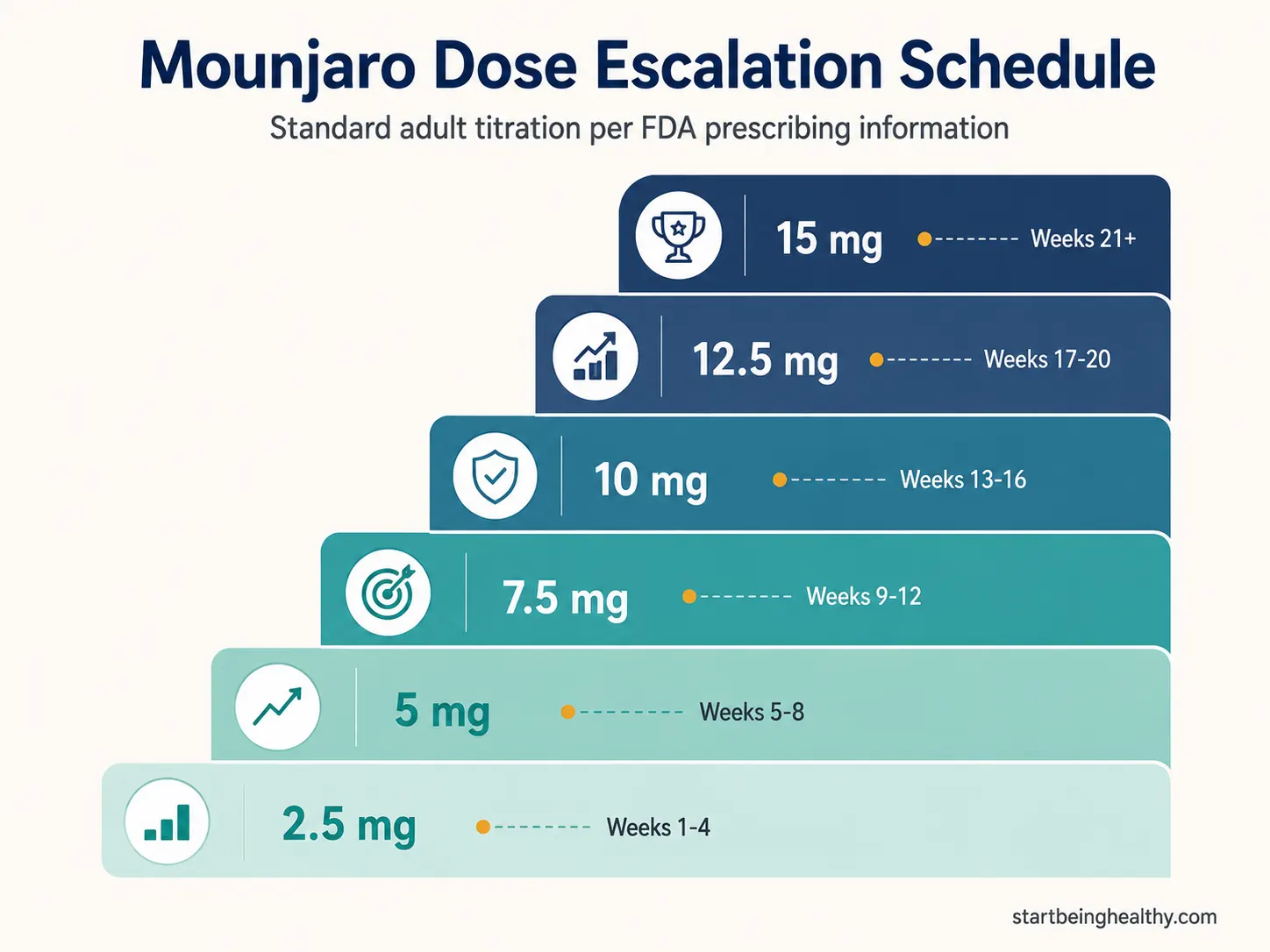
Mounjaro is titrated up gradually to allow your body to adapt to the medication. According to the FDA prescribing information, the standard dose escalation for adults is:
| Dose | Weeks on This Dose | Purpose |
|---|---|---|
| 2.5 mg | Weeks 1–4 | Starting dose (not therapeutic — tolerability only) |
| 5 mg | Weeks 5–8 | First therapeutic dose |
| 7.5 mg | Weeks 9–12 | Intermediate maintenance option |
| 10 mg | Weeks 13–16 | Standard maintenance dose |
| 12.5 mg | Weeks 17–20 | Higher maintenance option |
| 15 mg | Weeks 21+ | Maximum FDA-approved dose |
The critical rule: never increase your dose until you have completed at least four weeks at the current level. Rushing the titration is the single most common cause of severe, treatment-limiting side effects.
Week 1 — The First Injection
Most patients feel little to nothing during the first 24 hours after their initial 2.5 mg dose. The medication takes time to reach steady-state concentrations, which is why the starting dose is intentionally sub-therapeutic.
What You’ll Likely Experience
- Mild nausea (30–40% of patients) — typically appears 24–48 hours after injection, resolves within 3–4 days
- Reduced appetite — often noticeable within the first week, though most dramatic in weeks 2–4
- Injection site tenderness — mild redness or soreness at the injection site for 24–48 hours
- Mild fatigue — some patients report feeling more tired than usual as caloric intake decreases
What Should NOT Happen in Week 1
- Severe vomiting (more than 3 episodes)
- Severe abdominal pain
- Signs of allergic reaction (rash, hives, swelling)
- Difficulty breathing
If any of these occur, contact your prescriber immediately. Severe reactions to the 2.5 mg starting dose are uncommon but require medical evaluation.
Management Strategies for Week 1
- Take the injection on a day when you can rest if nausea appears
- Eat smaller, blander meals for the first 3 days after injection
- Stay hydrated — aim for at least 2 liters of water daily
- Avoid alcohol and high-fat meals for the first week
Weeks 2–4 — Adaptation Phase (Still on 2.5 mg)
This is the phase where most patients start to feel the medication working. Appetite suppression becomes noticeable, “food noise” (constant background thoughts about food) begins to quiet, and mild side effects settle into a pattern.
Common Side Effects
- Persistent mild nausea — usually manageable, most intense on injection day and the day after
- Early satiety — feeling full after very small amounts of food
- Constipation — appears in about 20–25% of patients by week 3
- Sulfur burps — a distinctive Mounjaro side effect where burps have a strong sulfur (“rotten egg”) smell, caused by delayed gastric emptying
- Mild fatigue — often related to reduced caloric intake more than the medication itself
What to Watch For
By the end of week 4, most patients tolerate 2.5 mg well. If you are still experiencing significant nausea, vomiting, or difficulty eating at week 4, discuss with your prescriber before escalating to 5 mg. Some patients benefit from staying at 2.5 mg for an additional 2–4 weeks to allow better adaptation. Slowing the titration when needed does not compromise long-term outcomes; the goal is sustained adherence, not fastest possible dose escalation.
Weeks 5–8 — First Therapeutic Dose (5 mg)
The jump from 2.5 mg to 5 mg is the first significant escalation and where many patients experience a temporary intensification of side effects. This is normal and expected.
What to Expect
- Nausea often returns for 1–2 weeks after the dose increase, even if it had resolved on 2.5 mg
- More pronounced early satiety — meals become 1/3 to 1/2 their previous size
- Constipation intensifies — up to 40% of patients experience it at 5 mg
- Reflux and heartburn — new for some patients, caused by slower stomach emptying
- Sulfur burps peak — often most noticeable at this dose
- First meaningful weight loss — typically 3–5% of body weight by week 8
GI Side Effect Management
The management strategies that work best in this phase, based on clinical evidence and the SURMOUNT-1 clinical trial adverse event data:
- Small, frequent meals — 4–6 mini-meals instead of 3 large ones
- Protein first — start meals with protein (Greek yogurt, eggs, chicken) rather than carbs
- Avoid trigger foods — high-fat, fried, or greasy foods dramatically worsen nausea
- Ginger and peppermint — mild but genuinely helpful for nausea in most patients
- Increase fiber gradually — chia seeds, ground flax, and psyllium help constipation without worsening bloating
- Stay hydrated — dehydration worsens nausea, constipation, and fatigue
For a complete list of foods that worsen GLP-1 side effects at this stage, see our pharmacist’s guide to foods to avoid on Ozempic and other GLP-1 medications — the recommendations apply to tirzepatide as well.
Injection Site Reactions
About 5–8% of patients experience localized injection site reactions — redness, itching, or small firm lumps at the injection site. These are almost always benign and resolve within 3–5 days. Rotating injection sites (abdomen, thigh, upper arm) reduces the likelihood.
Weeks 9–12 — Escalating to 7.5 mg
By week 9, many patients have adapted to 5 mg and are experiencing meaningful weight loss and appetite suppression. The escalation to 7.5 mg is optional — some prescribers move directly from 5 mg to 10 mg, while others use 7.5 mg as an intermediate step.
Side Effect Pattern at 7.5 mg
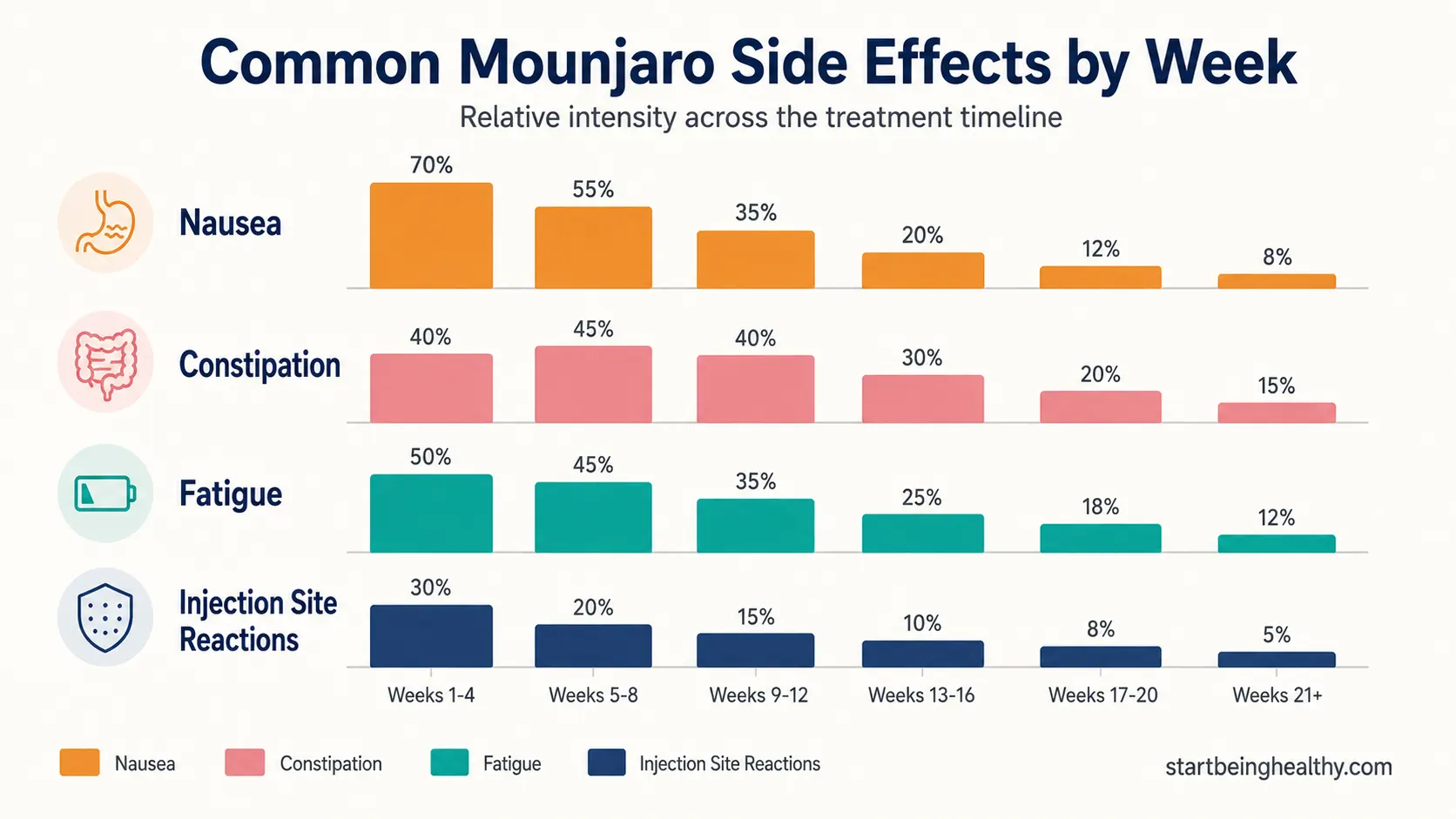
- Nausea plateaus or slightly reduces for most patients — the body has adapted to the mechanism
- Constipation remains an issue for 30–40% of patients
- Weight loss accelerates — typically 1–2 pounds per week during this phase
- Fatigue may increase — sometimes related to inadequate protein intake at reduced calorie levels
- Injection site reactions decrease — most patients have found their preferred injection technique by this point
New Considerations at Higher Doses
Starting at 7.5 mg and above, additional considerations emerge:
- Muscle loss risk increases — as weight loss accelerates, so does the risk of losing lean muscle mass. Adequate protein (0.8–1.2 g/kg body weight) becomes critical
- Hair thinning may begin — typically appears 2–4 months into treatment, usually related to rapid weight loss rather than the medication itself
- Nutrient deficiencies risk — smaller portions mean smaller amounts of vitamins and minerals; a multivitamin may be worth discussing with your prescriber
Weeks 13–16 — Standard Maintenance (10 mg)
For many patients, 10 mg is the standard maintenance dose that balances efficacy with tolerability. This is where the medication settles into its long-term pattern.
What Changes at 10 mg
- GI side effects stabilize — most patients report that nausea, if present, becomes predictable and manageable
- Weight loss continues steadily — typically 5–10% additional body weight loss during weeks 13–24
- Some patients experience a plateau — weight loss slows or temporarily stalls; this is different from a true plateau (see below)
- Appetite suppression may fluctuate — some patients report “food noise” returning intermittently
True Plateau vs. Normal Slowdown
Not all weight loss slowdowns are plateaus. A normal slowdown occurs as your body adapts to reduced calorie intake. A true plateau — no weight loss for 4+ weeks despite continued adherence — affects 60–70% of GLP-1 patients between months 3 and 6. If your weight loss stalls, our pharmacist’s 7-step Ozempic plateau fix guide covers the breakthrough protocol; the same interventions work for tirzepatide.
Weeks 17–20 — Higher Maintenance (12.5 mg)
The 12.5 mg dose is often used for patients who need additional efficacy or who have plateaued at lower doses. It is not necessary for everyone — many patients maintain excellent results at 10 mg indefinitely.
Side Effect Considerations at 12.5 mg
- Temporary side effect resurgence is common after the dose escalation — expect 1–2 weeks of increased nausea, constipation, or fatigue
- Weight loss re-accelerates if plateau was the reason for escalation
- Injection site reactions may return briefly as body adapts to higher dose
- Hypoglycemia risk increases slightly, particularly for patients also on insulin or sulfonylureas (only relevant for type 2 diabetes patients on Mounjaro, not Zepbound users without diabetes)
Weeks 21+ — Maximum Dose (15 mg) & Long-Term Maintenance
15 mg is the maximum FDA-approved dose. Most patients do not need to escalate this high, but for those with higher weight loss goals or metabolic resistance, it provides additional efficacy.
The Long-Term Pattern
By month 6 and beyond, most patients settle into a stable pattern:
- Minimal ongoing GI side effects — occasional nausea flares after fatty meals or large portions
- Constipation may remain a long-term issue — manageable with adequate fiber, water, and movement
- Weight loss slows progressively — from 1–2 pounds per week early to 0.5 pound per week by month 9
- Total weight loss at 72 weeks (SURMOUNT-1 trial data) — average 20.9% at 15 mg dose (New England Journal of Medicine, 2022)
- Appetite suppression stabilizes — most patients describe eating “normally” but naturally consuming much less
An important consideration at this stage: 15 mg is not automatically the goal for every patient. Many patients maintain excellent long-term results at 10 mg or 12.5 mg indefinitely. The right maintenance dose is the lowest one that provides meaningful, sustained results with tolerable side effects — not automatically the maximum.
Serious Side Effects — When to Call Your Doctor
While most Mounjaro side effects are mild and self-limiting, certain warning signs require immediate medical attention:
Contact Your Prescriber Immediately If You Experience:
- Severe abdominal pain that does not resolve — particularly upper abdominal pain radiating to the back, which may indicate pancreatitis (a known but rare side effect of GLP-1 medications, per FDA safety communications)
- Persistent vomiting — more than 24 hours of inability to keep fluids down risks dehydration and kidney injury
- Signs of allergic reaction — rash, hives, swelling of face/throat, difficulty breathing
- Symptoms of gallbladder issues — right upper quadrant pain, especially after fatty meals, along with nausea or fever (GLP-1 medications increase gallstone risk, per JAMA Internal Medicine, 2022)
- Sudden vision changes — for diabetic patients, rapid glucose reduction can temporarily worsen retinopathy
- Symptoms of hypoglycemia — shakiness, sweating, confusion, particularly if you are on other diabetes medications
Boxed Warning — Thyroid Cancer
Mounjaro carries an FDA boxed warning for thyroid C-cell tumors observed in rodent studies. Human risk is not established, but the medication is contraindicated in patients with:
- Personal or family history of medullary thyroid carcinoma (MTC)
- Multiple endocrine neoplasia syndrome type 2 (MEN 2)
Symptoms to report include a lump in the neck, hoarseness, difficulty swallowing, or shortness of breath.
Managing Common Side Effects — Evidence-Based Strategies
For Nausea (Most Common)
- Small, frequent meals instead of large ones
- Avoid high-fat, fried, and greasy foods
- Ginger (fresh, tea, or capsules) — clinically studied for nausea, safe with tirzepatide
- Peppermint tea
- Bland foods (rice, crackers, toast) on injection day
- Stay upright for 30 minutes after eating
- Cool foods often better tolerated than hot ones
For Constipation
- Gradually increase soluble fiber — chia seeds, ground flax, psyllium husk
- Drink at least 2–3 liters of water daily
- Regular movement — even 20 minutes of walking daily helps significantly
- Magnesium citrate (200–400 mg at bedtime) — often helpful, discuss with pharmacist
- Avoid excess dairy, which can worsen constipation for some patients
For Sulfur Burps
- Reduce sulfur-rich foods temporarily (eggs, cruciferous vegetables, red meat)
- Digestive enzymes with meals may help
- Simethicone (Gas-X) for symptomatic relief
- Peppermint or ginger tea after meals
For Fatigue
- Ensure adequate protein (aim for 0.8–1.2 g per kg body weight daily)
- Do not drop below 1,200 calories per day without medical supervision
- Check ferritin, vitamin B12, and vitamin D levels — deficiencies are common with reduced intake
- Prioritize sleep (7–9 hours) — sleep restriction worsens both fatigue and food cravings
For Muscle Loss Prevention
This is the most important long-term consideration. Rapid weight loss without resistance training can result in significant muscle loss — up to 40% of lost weight in some studies. The strategies that work, per current clinical evidence:
- Resistance training 2–3 times per week (this is non-negotiable for long-term outcomes)
- Adequate protein at every meal (20–30 g minimum)
- Distribute protein across the day — front-loading breakfast is often overlooked
- Consider tracking body composition (waist circumference, DEXA if available) — not just scale weight
For a complete meal-planning framework designed for GLP-1 users, see our pharmacist-approved meal plan for Ozempic and other GLP-1 medications — the protein and nutrient recommendations apply to Mounjaro users as well.
Injection Technique & Site Rotation
Mounjaro is a subcutaneous injection given once weekly. Proper technique reduces injection site reactions and improves consistent absorption:
Approved Injection Sites
- Abdomen (at least 2 inches away from the belly button)
- Front of the thigh
- Back of the upper arm (usually requires help from another person)
Site Rotation Strategy
Rotate sites weekly to prevent lipohypertrophy (fatty tissue changes at injection sites) and to reduce local irritation. A simple pattern:
- Week 1: Left abdomen
- Week 2: Right abdomen
- Week 3: Left thigh
- Week 4: Right thigh
- Repeat cycle
Injection Tips
- Let the pen come to room temperature for 30 minutes before injecting (reduces sting)
- Clean site with alcohol pad and let dry
- Inject at a 90-degree angle
- Hold the pen against skin for the full injection time (usually 5–10 seconds)
- Do not rub the site after injection
- Store unused pens in the refrigerator; a pen in use can be kept at room temperature (below 86°F) for up to 21 days
What to Do If You Miss a Dose
Per the official prescribing information:
- Less than 4 days late: Take the missed dose as soon as possible, then resume normal weekly schedule
- 4 days or more late: Skip the missed dose and resume on your next regular injection day
- Never take two doses within 3 days to make up for a missed injection
Frequently Asked Questions
Do Mounjaro side effects get better over time?
Yes, for most patients. The most intense GI side effects occur during dose escalations. Once you stabilize at a maintenance dose, side effects typically become mild and predictable. Most patients tolerate the medication well after 3–4 months.
How long do side effects last after each dose?
GI side effects (nausea, appetite suppression) are most intense in the 48–72 hours after injection and often resolve by day 4 or 5. This pattern is why many patients schedule their injection for a low-obligation day (often Friday or Saturday).
Are Mounjaro and Zepbound side effects the same?
Yes. Both contain tirzepatide (the same molecule) at the same doses. The side effect profile is identical. Only the FDA-approved indications differ — Mounjaro for type 2 diabetes, Zepbound for chronic weight management.
For a full comparison of Zepbound against the other main weight-loss GLP-1 (semaglutide/Wegovy), including SURMOUNT-5 head-to-head trial data, see our Zepbound vs Wegovy pharmacist comparison.
Should I stop Mounjaro if side effects are severe?
Do not stop the medication without discussing with your prescriber. Options include: slowing the titration, staying at your current dose longer, or in some cases, reducing back to a lower dose. Discontinuation should be a decision made with your prescriber based on the specific severity and pattern of side effects.
Can I drink alcohol on Mounjaro?
Alcohol on Mounjaro is not strictly prohibited but is generally discouraged. Reasons include increased nausea, dehydration risk, hypoglycemia risk (particularly for diabetic patients), and calorie displacement of protein intake. If you drink, limit to small amounts and never on empty stomach.
What is “food noise” and why does Mounjaro reduce it?
“Food noise” is the constant background awareness of food, cravings, and eating impulses that many people with obesity or metabolic dysfunction experience. Mounjaro’s dual GIP/GLP-1 mechanism directly affects the brain’s satiety centers, which quiets these signals. This effect is often more life-changing for patients than the weight loss itself.
Will side effects change if I switch from Ozempic to Mounjaro?
Yes. The dual GIP/GLP-1 mechanism of tirzepatide produces different side effect patterns than semaglutide alone. Some patients tolerate Mounjaro better than Ozempic; others find the reverse. Switching medications requires restarting at the lowest dose of the new medication, per current clinical practice.
What happens if I stop Mounjaro?
Side effects resolve within 1–2 weeks of discontinuation, but so does appetite suppression. Weight regain averages 14% within 6 months of stopping tirzepatide, per the SURMOUNT-4 trial. For most patients, GLP-1 medications require ongoing use to maintain results.
When to Contact Your Pharmacist vs. Your Doctor
Not every side effect requires a doctor visit. Your pharmacist can help with:
- Injection technique concerns
- Storage questions
- Missed dose guidance
- OTC medications for nausea, constipation, reflux management
- Timing of other medications relative to Mounjaro
- General side effect management
Contact your prescribing doctor for:
- Severe or persistent side effects
- Dose adjustment decisions
- Concerning symptoms (severe pain, signs of pancreatitis, gallbladder issues)
- Signs of allergic reaction
- Weight loss plateaus lasting more than 4 weeks
- Considerations about continuing or discontinuing therapy
Key Takeaways
- Side effects follow a predictable pattern — knowing what to expect at each dose reduces treatment discontinuation
- Slow titration is often better — there is no penalty for staying at a lower dose longer if your body needs adaptation time
- GI side effects (nausea, constipation, reflux) are the most common — most are manageable with dietary changes and OTC support
- Muscle loss is the biggest long-term concern — adequate protein and resistance training are non-negotiable
- Weight loss plateaus affect 60–70% of patients — they are physiological adaptations, not medication failure
- Certain warning signs (severe abdominal pain, allergic reactions, gallbladder symptoms) require immediate medical attention
- Never discontinue without consulting your prescriber — options exist for managing side effects short of stopping the medication
References
- Jastreboff AM, Aronne LJ, Ahmad NN, et al. Tirzepatide once weekly for the treatment of obesity. New England Journal of Medicine. 2022;387(3):205-216. doi:10.1056/NEJMoa2206038
- Aronne LJ, Sattar N, Horn DB, et al. Continued treatment with tirzepatide for maintenance of weight reduction in adults with obesity: The SURMOUNT-4 randomized clinical trial. JAMA. 2024;331(1):38-48. PMID: 38109505
- US Food and Drug Administration. Mounjaro (tirzepatide) prescribing information. 2022. FDA.gov
- Frías JP, Davies MJ, Rosenstock J, et al. Tirzepatide versus semaglutide once weekly in patients with type 2 diabetes. New England Journal of Medicine. 2021;385(6):503-515. doi:10.1056/NEJMoa2107519
- He L, Wang J, Ping F, et al. Association of GLP-1 receptor agonists with cholelithiasis and cholecystitis. JAMA Internal Medicine. 2022;182(5):513-519. PMID: 35380384
- US Food and Drug Administration. FDA drug safety communication on pancreatitis and pre-cancerous cellular changes with GLP-1 medications. FDA.gov
- Sattar N, McGuire DK, Pavo I, et al. Tirzepatide cardiovascular event risk assessment: a pre-specified meta-analysis. Nature Medicine. 2022;28(3):591-598. PMID: 35228754
- Prillaman M. Preserving muscle during rapid weight loss: emerging strategies. Nature Reviews Endocrinology. 2024;20(6):345-358. PMID: 38657049
- Karagiannis T, Avgerinos I, Liakos A, et al. Management of type 2 diabetes with the dual GIP/GLP-1 receptor agonist tirzepatide. Diabetologia. 2022;65(8):1251-1261. PMID: 35579691
- Rodriguez PJ, Cartwright BMG, Gratzl S, et al. Effectiveness of tirzepatide vs semaglutide in adults with overweight and obesity: real-world evidence. JAMA Internal Medicine. 2024;184(9):1056-1064. PMID: 38996485
- American Diabetes Association. Standards of medical care in diabetes—2025. Diabetes Care. 2025;48(Supplement 1). diabetesjournals.org