

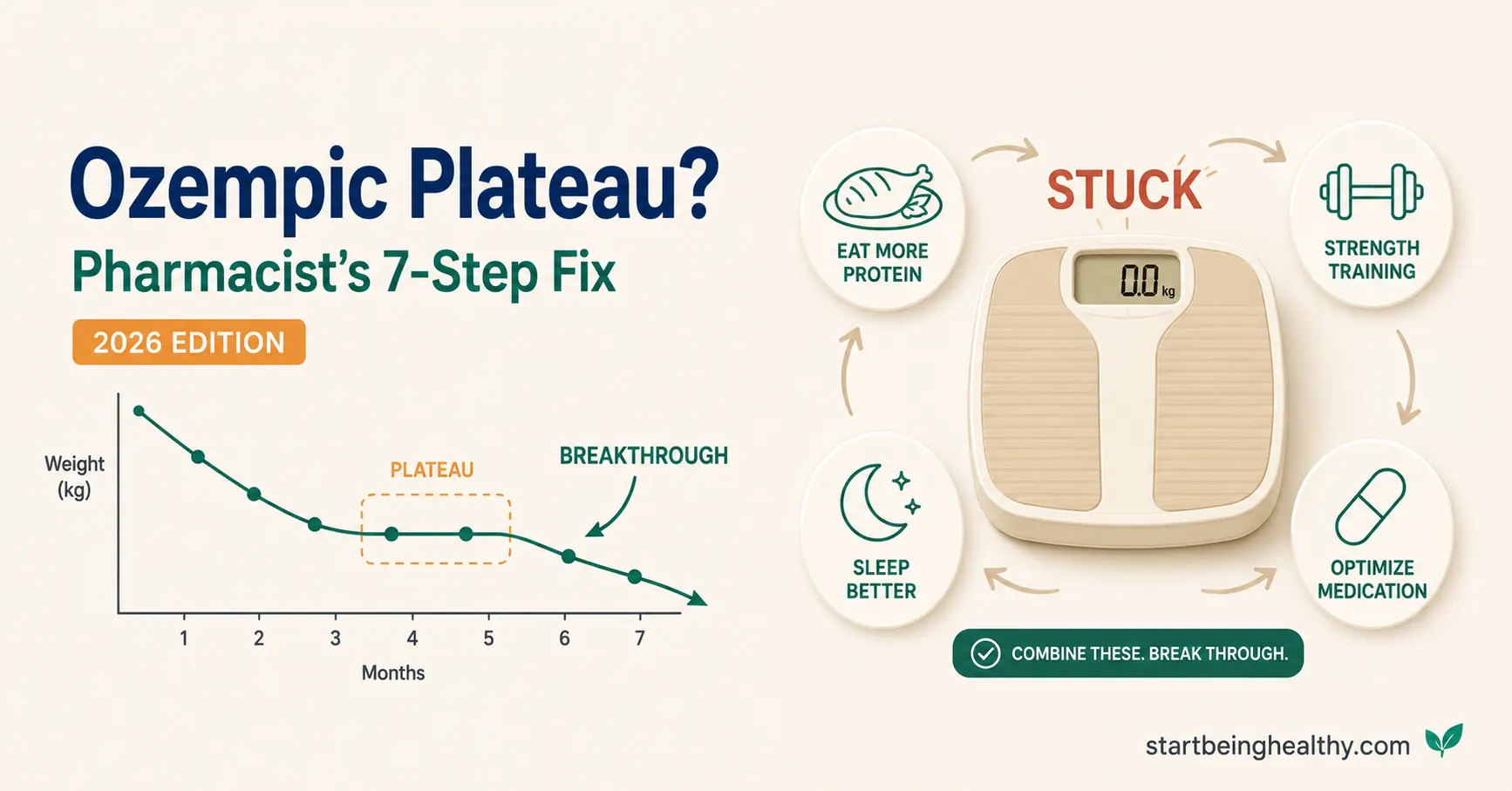
Quick answer: An Ozempic weight loss plateau usually occurs 3-6 months into treatment as your body adapts to the medication. To break through, ensure you’re at the optimal dose (1-2mg), hit 0.8-1g protein per pound of goal weight, add resistance training 2-3 times weekly, prioritize 7-8 hours of sleep, and reduce chronic stress. If plateau persists 8+ weeks, discuss switching to Wegovy or tirzepatide with your prescriber.
You were losing weight steadily on Ozempic — 1–2 pounds per week, appetite dramatically reduced, cravings under control. Then, somewhere between month 3 and month 6, the scale stopped moving. The frustration is real, and the panic is understandable, but the science is clear: weight loss plateaus affect 60–70% of GLP-1 patients — you are not failing, and the medication has not stopped working.
This pharmacist-written guide covers exactly why Ozempic plateaus happen, when they typically occur, the 7-step evidence-based protocol to break through them, and when it is time to consider switching to a different GLP-1 medication like Wegovy, Zepbound, or Mounjaro.
Pharmacist’s Perspective — Faryal Faisal, PharmD
The single most damaging myth about Ozempic plateaus is that they mean the medication has stopped working. In pharmacy practice, this is the #1 reason patients discontinue therapy — and it is almost always the wrong decision. Plateaus are a physiological response your body mounts against further weight loss. They are expected, they are temporary, and they are reversible with the right adjustments.
What actually stops working is not the medication — it is the caloric deficit. You are eating the same amount you were 3 months ago, but you now weigh 15–20 pounds less, so those same calories now match your new metabolic rate instead of exceeding it. The fix is almost never “more medication.” It is usually a combination of protein optimization, resistance training, sleep quality, and — occasionally — a dose review with your prescriber.
What Is an Ozempic Weight Loss Plateau?
Clinically, an Ozempic plateau is defined as no measurable weight loss for at least 4 consecutive weeks despite continued medication adherence and reasonable dietary compliance. That specific definition matters — it distinguishes a genuine plateau from normal week-to-week weight fluctuation, which can hide progress for 1–2 weeks at a time.
A plateau is different from three other patterns that people often mistake for one:
- Weight fluctuation: Normal 2–4 pound swings from water, sodium, and glycogen. Not a plateau.
- Slower progress: Losing 0.25–0.5 pound per week instead of 1–2 pounds. Slower, but still progress. Not a plateau.
- Approaching goal weight: Weight loss naturally decelerates as you approach a healthy BMI. Not a plateau — it is your body reaching equilibrium.
- Muscle gain masking fat loss: If you have added resistance training, muscle gains can offset fat losses on the scale. Not a plateau — take body measurements instead.
When Plateaus Typically Happen
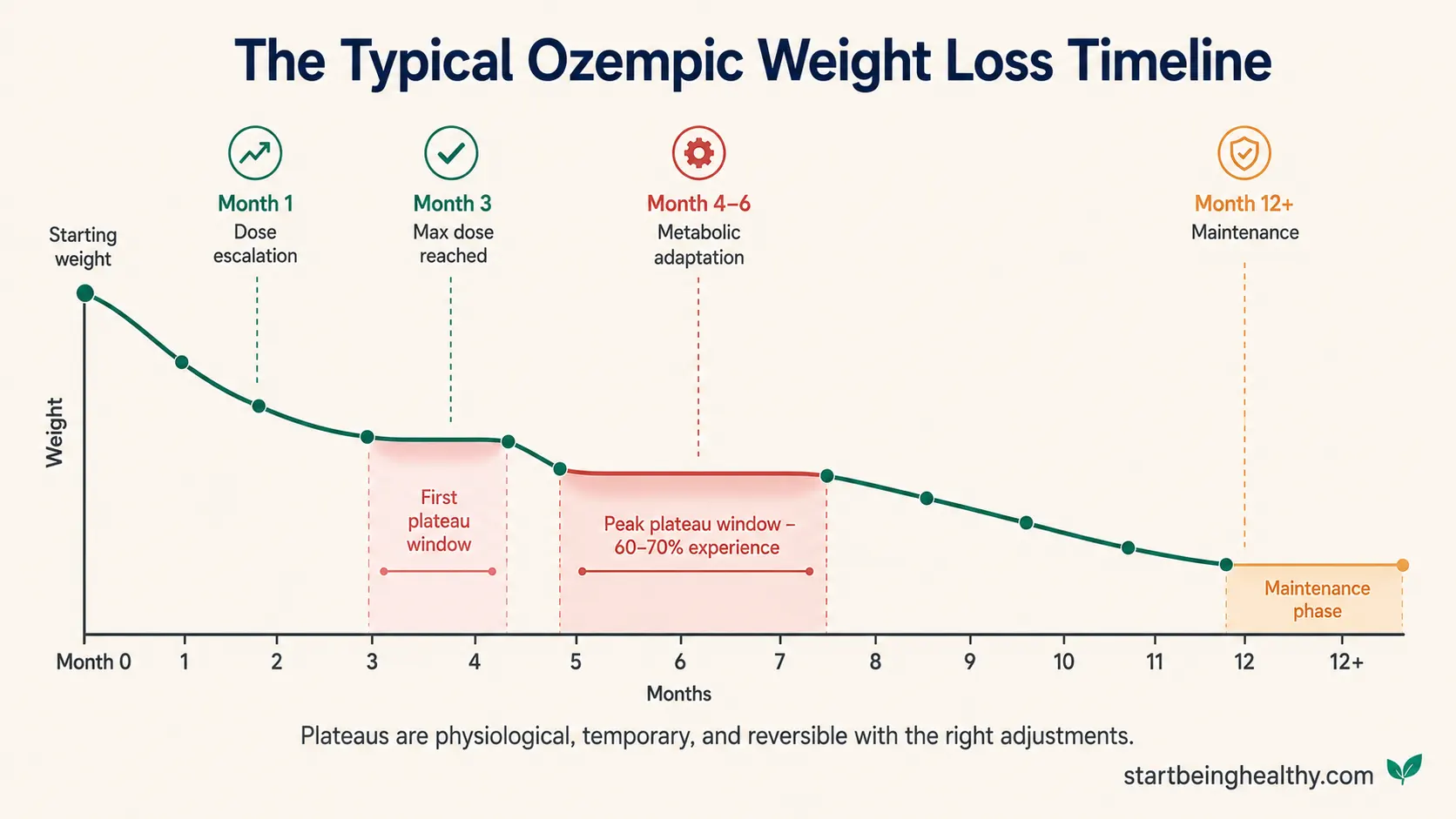
Based on clinical trial data and real-world evidence, plateaus follow predictable patterns:
| Timeframe | What Typically Happens |
|---|---|
| Month 1–3 | Rapid initial loss (5–8% of body weight). Plateaus rare in this phase. Appetite suppression at its peak. |
| Month 3–4 | First plateau window. Metabolic rate begins measurably slowing. Some patients experience partial ghrelin rebound. |
| Month 4–6 | Second and most common plateau window. Coincides with reaching maximum tolerated dose in many patients. 60–70% of patients experience at least one plateau in this window. |
| Month 6–12 | Late-phase plateau. Often related to approaching set-point weight, adherence drift, or genuine dose ceiling. Some patients require medication switching at this stage. |
| Beyond month 12 | Maintenance phase. Weight loss slows naturally. Focus shifts from continued loss to preventing regain (the medication continues to work here even without visible scale movement). |
Why Ozempic Plateaus Happen — The Five Mechanisms
Plateaus are not one thing — they are multiple physiological adaptations happening at once. Understanding which mechanisms are driving your specific plateau determines which fix will work.
1. Metabolic Adaptation (Adaptive Thermogenesis)
As you lose weight, your basal metabolic rate (BMR) drops — but by more than your smaller body size alone would predict. A 200-pound person at rest burns roughly 2,000 calories per day; at 170 pounds, that same person burns closer to 1,700 calories. Your body actively defends against further weight loss by downregulating metabolism, reducing spontaneous movement, and increasing appetite hormones. This adaptation can account for a 10–15% drop in your daily calorie needs — more than enough to eliminate a small caloric deficit.
2. Ghrelin Rebound and Appetite Regulation Shift
Ozempic’s dramatic appetite suppression in months 1–3 is real, but partial adaptation is normal by months 4–6. Ghrelin — the primary hunger hormone — partially rebounds as your body attempts to defend its previous weight. Approximately 20–30% of patients report diminished appetite suppression after 6–12 months of continuous GLP-1 therapy. The medication is still working — but the appetite feels less dramatically suppressed than it did initially.
3. Muscle Mass Loss
Weight loss on GLP-1 medications is not exclusively fat loss. Research presented at ENDO 2025 found that approximately 40% of weight lost on semaglutide comes from lean mass, including muscle. Because muscle burns more calories at rest than fat, losing muscle further slows your metabolism — creating a compounding effect that accelerates plateaus. Older adults and women are particularly susceptible.
4. Dose Ceiling
Ozempic’s maximum FDA-approved dose is 2.0 mg weekly. Wegovy (the same molecule at a higher dose) tops out at 2.4 mg weekly. If you have been at maximum dose for 8+ weeks and hit a plateau, further increases within the same medication are not possible. This is a common but often unrecognized cause of persistent plateaus.
5. Adherence Drift
Adherence drift is the honest one nobody wants to discuss. Over 3–6 months, the daily discipline of the early phase — smaller portions, careful food choices, consistent hydration — often relaxes. Extra bites, larger portions, “just this once” alcohol, and eating around appetite suppression accumulate into a caloric intake that quietly climbs back up. This is not moral failure — it is human. But it is worth honestly assessing before assuming the medication is the issue.
Signs That This Is Actually a Plateau (Not Just a Slow Week)
Before applying plateau-breaking interventions, confirm you are actually plateaued:
- No net weight loss for at least 4 consecutive weeks
- Waist circumference has not decreased in the same period
- Clothing fit has not improved
- You are consistently taking your medication as prescribed
- You have not just started resistance training (which can mask fat loss with muscle gain on the scale)
- You are not just approaching a healthy BMI (natural slowing is not a plateau)
If fewer than 4 weeks have passed, wait before making changes. Random weight fluctuations from sodium, water, glycogen, and hormonal cycling can hide progress for 10–14 days.
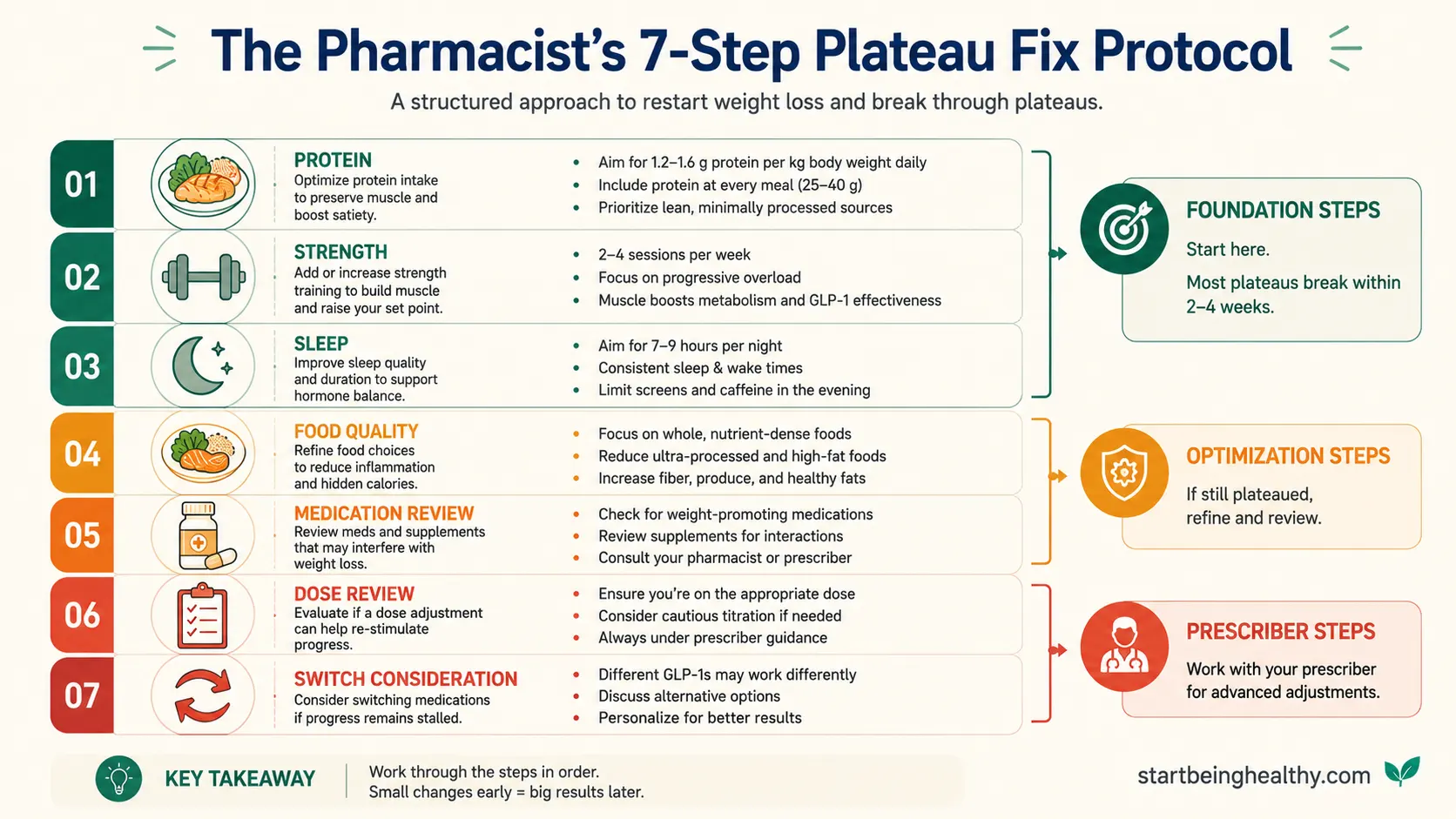
The Pharmacist’s 7-Step Ozempic Plateau Fix Protocol
Once you have confirmed a genuine plateau, work through these steps in order. Most patients see the scale move again within 2–4 weeks of implementing the first 3 steps.
Step 1 — Verify Protein Intake (Most Patients Are Under-Eating It)
Because Ozempic dramatically reduces appetite, most patients unintentionally eat far less protein than they need. The minimum target for GLP-1 patients is 0.8–1.0 grams of protein per kilogram of body weight per day. For a 180-pound (82 kg) person, that is roughly 65–82 grams daily. Many GLP-1 patients are eating half that.
Track your protein for 7 days honestly. If you are below the target, protein optimization alone often breaks plateaus within 2–3 weeks by:
- Preserving muscle mass (protecting your metabolic rate)
- Increasing satiety (further reducing caloric intake without effort)
- Boosting thermic effect of food (protein burns more calories to digest than fat or carbs)
For specific meal ideas that hit protein targets without triggering GLP-1 side effects, see our pharmacist-approved Ozempic meal plan.
Step 2 — Add Resistance Training 2–3 Times per Week
Cardio has diminishing returns during weight loss on a GLP-1 because your body adapts to the energy expenditure. Resistance training, in contrast, directly counteracts the two biggest plateau drivers: muscle loss and metabolic adaptation. Even 20–30 minute sessions 2–3 times per week produce measurable improvements in preserving lean mass during medication-assisted weight loss.
Start with bodyweight exercises (squats, push-ups, planks, lunges), progress to resistance bands, then dumbbells if accessible. Perfect form matters far more than heavy weight, particularly for beginners.
Step 3 — Fix Sleep and Cortisol
Poor sleep is one of the most under-recognized plateau causes. Sleep restriction of even one week increases ghrelin by 15–20% in otherwise healthy adults and directly opposes GLP-1’s appetite-suppressing mechanism. Chronic elevated cortisol from stress or poor sleep also drives visceral fat accumulation and insulin resistance.
Priorities: aim for 7–8 hours nightly, keep a consistent bedtime and wake time (even on weekends), avoid screens 60 minutes before bed, and address chronic stress through whatever intervention works for you.
Step 4 — Audit Foods That Extend Plateaus
Certain foods actively undermine GLP-1 mechanisms even when calorie count seems reasonable. Highly engineered ultra-processed foods can partially bypass the satiety signals semaglutide creates, sugary foods and alcohol trigger blood sugar swings that disrupt appetite regulation, and high-fat foods produce prolonged nausea that leads to compensatory grazing later. For the complete pharmacist’s list of foods that extend plateaus and worsen side effects, see our guide to foods to avoid on GLP-1 medications.
Step 5 — Review Medications That Block Weight Loss
Several common medications directly interfere with weight loss on Ozempic. If you take any of the following, have a pharmacist review whether alternatives exist:
- Corticosteroids (prednisone, methylprednisolone) — even short courses cause weight regain
- Certain antidepressants — mirtazapine, paroxetine, some tricyclics
- Beta-blockers — particularly propranolol and metoprolol
- Certain diabetes medications — insulin, sulfonylureas, thiazolidinediones
- Antipsychotics — olanzapine, quetiapine, risperidone
- Some blood pressure medications — particularly older-generation drugs
- Hormonal contraceptives — some formulations more than others
Never stop a prescribed medication without discussing with your prescriber first. But medication review is often overlooked as a plateau cause.
Step 6 — Discuss Dose Review With Your Prescriber
If Steps 1–5 have been optimized for 4+ weeks and the plateau persists, a dose review is appropriate. Not every patient reaches the maximum tolerated dose. If you are still at 1.0 mg or 1.7 mg Ozempic, moving to 2.0 mg may restart progress. According to Ozempic’s prescribing information, the 2.0 mg dose was specifically added to the label because a subset of patients require it for continued response.
If you are already at 2.0 mg Ozempic and plateaued, the next step is not a higher Ozempic dose — that dose does not exist. See Step 7.
Step 7 — Consider Switching to Wegovy, Mounjaro, or Zepbound
If you have been at maximum Ozempic dose for 8+ weeks, optimized Steps 1–6, and remained plateaued, discussing a medication switch with your prescriber is reasonable.
Options in order of typical clinical progression:
- Wegovy (semaglutide 2.4 mg): Same molecule as Ozempic but a higher FDA-approved dose. The switch is pharmacologically straightforward. See our Zepbound vs Wegovy guide for details.
- Mounjaro or Zepbound (tirzepatide): Different molecule (dual GIP/GLP-1) that often produces continued response when semaglutide has plateaued. Head-to-head trial data shows tirzepatide produces greater weight loss than semaglutide. See our Mounjaro vs Ozempic comparison.
- Foundayo (orforglipron): Oral GLP-1 option; typically not chosen for plateaued patients (produces less weight loss than injectables), but relevant if injection tolerance has become an issue. See our Foundayo pharmacist guide.
What Happens If You Stop Ozempic During a Plateau?
This is one of the most consequential decisions a patient can make, so the evidence is worth quoting directly. The STEP 4 withdrawal trial followed patients who had reached target weight loss on semaglutide and then either continued or stopped the medication. Patients who continued maintained 17.3% total body weight loss at 68 weeks. Patients who stopped regained 11.6% of body weight within 48 weeks — meaning most of the weight lost on the medication returned.
The clinical implication: a plateau is not a signal to stop the medication. If anything, discontinuation during a plateau produces the worst outcomes — you get the caloric deficit stress without the ongoing appetite regulation to protect against regain.
Pharmacist’s Perspective — Faryal Faisal, PharmD
The patients I see who successfully break through plateaus almost always share three characteristics: they measure protein intake honestly for 1–2 weeks, they add resistance training even if they hated exercise before, and they refuse to panic when the scale doesn’t move for 3–4 weeks. Patients who react to plateaus with more restriction — cutting calories drastically, adding cardio to exhaustion — almost always end up worse: more muscle loss, slower metabolism, and deeper plateaus that eventually cause them to quit.
The counterintuitive truth is that most plateau breakthroughs come from eating more protein, not less food overall. Combined with resistance training, this addresses the exact mechanisms driving the plateau. If you have been trying to “eat less to lose more” and the scale still won’t move, this is the shift that changes the trajectory.
Frequently Asked Questions
How long does an Ozempic plateau last?
Most plateaus resolve within 2–6 weeks once corrective steps are implemented. Plateaus that persist longer than 8 weeks despite protein optimization, resistance training, and dose review usually indicate the need for a medication switch. Very few plateaus are truly permanent — they are almost always caused by a fixable mechanism.
Should I increase my Ozempic dose if I’m plateaued?
Not without prescriber review. If you are below the maximum 2.0 mg dose, moving up may restart progress — but this decision should be made in consultation with your prescriber based on side effects, response history, and clinical context. If you are already at 2.0 mg, higher doses within Ozempic don’t exist; a switch to Wegovy (2.4 mg semaglutide) or tirzepatide would be the next step.
Does Ozempic stop working over time?
The medication itself does not stop working — but appetite suppression can partially adapt over 6–12 months as ghrelin partially rebounds. This is different from the medication becoming ineffective. Ozempic continues to prevent weight regain and support blood sugar control even after appetite suppression moderates.
Will intermittent fasting break my Ozempic plateau?
For some patients, yes. Time-restricted eating (particularly 14:10 or 16:8) can enhance GLP-1 sensitivity and create metabolic variation that resets adaptation. But caution: combining fasting with GLP-1 appetite suppression can drive caloric intake dangerously low and accelerate muscle loss. If you attempt this, ensure adequate protein and calories during your eating window (minimum 1,400 daily calories for most women; 1,600 for most men).
Can I take a break from Ozempic to reset a plateau?
No — the STEP 4 evidence shows that stopping semaglutide leads to 11.6% weight regain within 48 weeks. Plateaus should be broken through, not escaped by discontinuation. A brief medication holiday almost always results in significant weight regain that is then difficult to recover.
What if I’ve plateaued at 2.0 mg Ozempic for months?
After 8+ weeks at maximum dose with optimized diet, exercise, and sleep, the next step is discussing a switch to Wegovy (higher-dose semaglutide) or tirzepatide (Mounjaro or Zepbound). Continuing at 2.0 mg Ozempic indefinitely without response is not a strategy — it accumulates side effect risk without weight loss benefit.
If you’re considering the switch to tirzepatide, review the Mounjaro side effects week by week timeline first so you know exactly what the first 12 weeks of the new dose escalation will feel like.
Are plateaus more common in women than men?
Yes — because women have naturally lower muscle mass and higher susceptibility to muscle loss during weight loss, women tend to plateau earlier than men. Menopausal women in particular experience compounded plateaus because estrogen decline independently accelerates muscle loss. If you are menopausal and plateaued on Ozempic, see our pharmacist’s menopause diet plan for specific dietary adjustments.
Do I need to see my doctor for every plateau?
For a first plateau, work through Steps 1–5 (protein, resistance training, sleep, food quality, medication review) for 4–6 weeks before scheduling with your prescriber. For a persistent plateau longer than 6–8 weeks despite these interventions, or if you are at maximum dose, a prescriber appointment is warranted.
Can stress cause an Ozempic plateau?
Yes. Chronic stress elevates cortisol, which directly opposes GLP-1 mechanisms by increasing ghrelin, driving visceral fat storage, and worsening insulin sensitivity. Poor sleep amplifies this effect. Cortisol-driven plateaus are common but often unrecognized — if you have had major stress in the same window as your plateau, this may be the primary driver.
How do I know if it’s a plateau versus my new set point?
If you are within 5–10% of a healthy BMI, weight loss naturally slows regardless of medication. This is not a plateau — it is your body reaching equilibrium at a healthier weight. Continue the medication for maintenance and shift focus to body composition (waist circumference, muscle tone, clothing fit) rather than the scale.
Key Takeaways
- Ozempic weight loss plateaus affect 60–70% of patients and typically occur between months 3–6 of treatment
- A true plateau is defined as no weight loss for at least 4 consecutive weeks — shorter periods are usually normal fluctuation
- The five main drivers are metabolic adaptation, ghrelin rebound, muscle loss, dose ceiling, and adherence drift
- Most plateaus break within 2–4 weeks with the pharmacist’s 7-step protocol — starting with protein optimization and resistance training
- Do not stop Ozempic during a plateau — STEP 4 trial data shows 11.6% weight regain within 48 weeks of discontinuation
- Dose review is appropriate at 4–6 weeks of persistent plateau; medication switch (Wegovy, Mounjaro, Zepbound) is appropriate at 8+ weeks at maximum dose
- Sleep, cortisol, and hidden weight-gain medications are common but under-recognized plateau causes
- Women, older adults, and menopausal patients plateau earlier due to greater susceptibility to muscle loss
- Plateau at or near goal weight is often your body reaching set point equilibrium — shift focus from scale to body composition
References
- Wilding JPH, et al. Once-weekly semaglutide in adults with overweight or obesity (STEP 1). N Engl J Med. 2021;384:989-1002. https://www.nejm.org/doi/full/10.1056/NEJMoa2032183
- Rubino D, et al. Effect of continued weekly subcutaneous semaglutide vs placebo on weight loss maintenance (STEP 4). JAMA. 2021;325(14):1414-1425. https://www.nejm.org/doi/full/10.1056/NEJMoa2107519
- Garvey WT, et al. Two-year effects of semaglutide in adults with overweight or obesity: the STEP 5 trial. Nat Med. 2022;28:2083-2091. https://www.nature.com/articles/s41591-022-02026-4
- Fothergill E, et al. Persistent metabolic adaptation 6 years after “The Biggest Loser” competition. Obesity. 2016;24(8):1612-1619. https://www.ncbi.nlm.nih.gov/pmc/articles/PMC4854911/
- Spiegel K, et al. Brief communication: Sleep curtailment in healthy young men is associated with decreased leptin levels, elevated ghrelin levels, and increased hunger and appetite. Ann Intern Med. 2004;141:846-850. https://www.ncbi.nlm.nih.gov/pmc/articles/PMC1892801/
- Novo Nordisk. Ozempic (semaglutide) Prescribing Information. Updated 2024. https://www.novo-nordisk.com/content/dam/nncorp/global/en/investors/irmaterial/quarterly_financials/2024/q1/Ozempic_pi.pdf
- Jastreboff AM, et al. Tirzepatide once weekly for the treatment of obesity (SURMOUNT-1). N Engl J Med. 2022;387:205-216.
- Rosenstock J, et al. Tirzepatide vs semaglutide once weekly in patients with type 2 diabetes (SURPASS-2). N Engl J Med. 2021;385:503-515.
- ENDO 2025 Conference Proceedings. Body composition changes with semaglutide therapy. https://www.endocrine.org/news-and-advocacy/news-room/2025/endo-2025-semaglutide-lean-mass
- American Diabetes Association. Obesity and weight management for the prevention and treatment of type 2 diabetes: standards of care in diabetes 2024. Diabetes Care. 2024;47(Suppl 1):S145-S157. https://diabetesjournals.org/care/article/47/Supplement_1/S145