

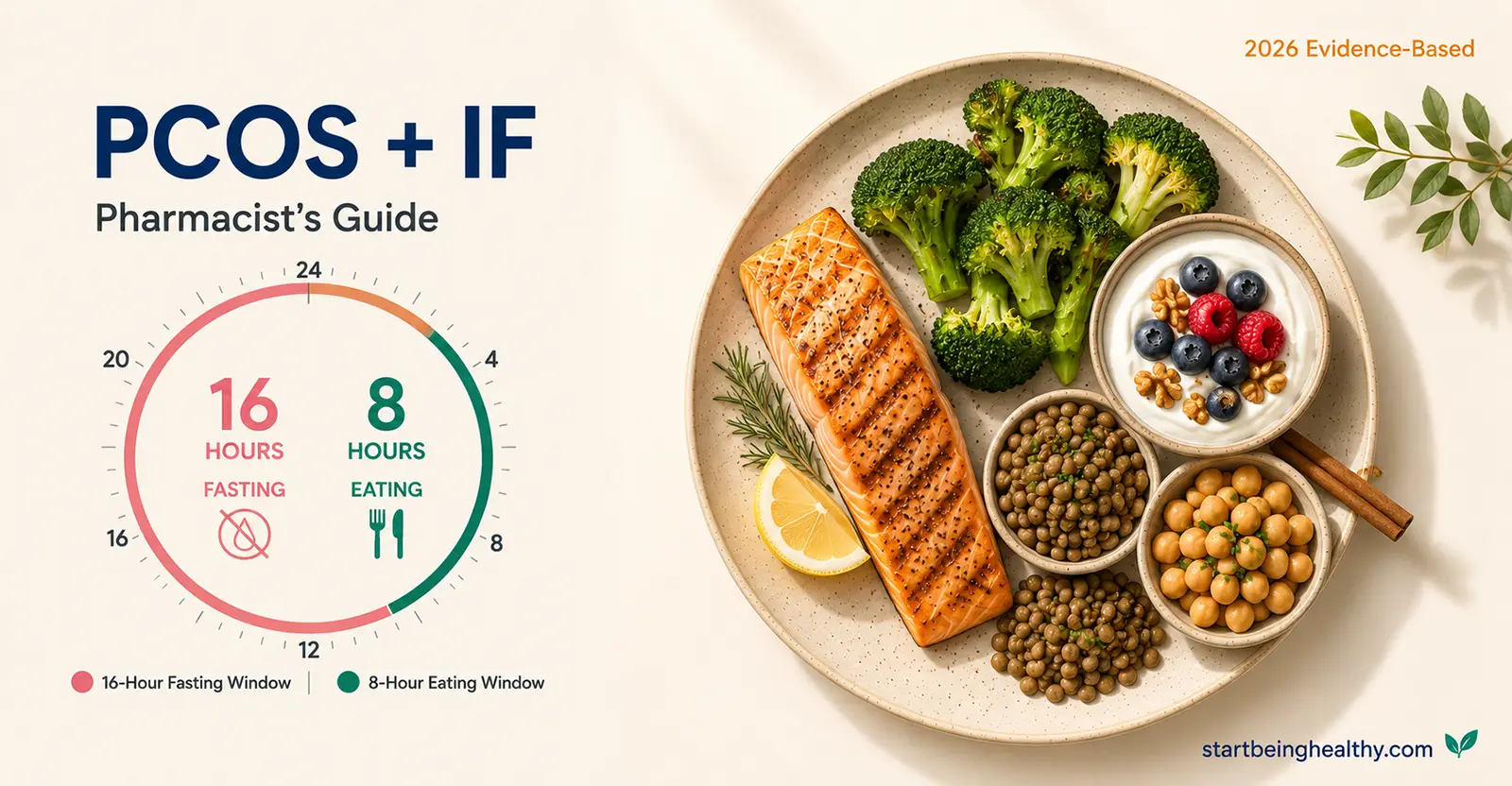
Intermittent fasting has become one of the most searched weight loss approaches for women with PCOS — and for good reason. PCOS-related weight gain is driven by insulin resistance and hormonal imbalance, and intermittent fasting works directly on both those mechanisms. But the clinical picture is more nuanced than most articles acknowledge, and the right answer depends on which fasting protocol, which PCOS phenotype, and what medications a woman is currently taking.
This guide covers what PCOS actually does to metabolism and weight, what the most current clinical evidence shows about intermittent fasting specifically in women with PCOS, which protocols the research supports, what a pharmacist needs you to know about medication interactions, and who should be cautious or avoid fasting entirely.
Pharmacist’s Perspective — Dr. Faryal Faisal, PharmD
From a pharmacological standpoint, the relationship between intermittent fasting and PCOS is genuinely promising — but there is one critical point most general health articles skip entirely: if you are on metformin for insulin resistance, the timing of your fasting window relative to your medication schedule matters significantly.
Metformin should be taken with food to minimise gastrointestinal side effects — nausea, vomiting, and diarrhoea — which are already its most common complaints. If you are doing 16:8 fasting and your eating window is noon to 8pm, taking metformin in the morning on an empty stomach creates a real problem. I see this pattern frequently. The solution is to discuss shifting your metformin dose timing with your prescribing physician to align with your eating window — this is a straightforward adjustment but it needs to be made deliberately, not assumed.
The second clinical point: extended fasting protocols — 20:4 or alternate-day fasting — are not appropriate for women with PCOS who are on medications that affect blood glucose. Even women who are not formally diabetic can experience hypoglycaemia during extended fasts if they are on insulin sensitisers. The 14:10 or 16:8 protocols are considerably safer starting points for this population.
Start with 14:10, align your medication timing with your eating window, and use our Intermittent Fasting Calculator to plan your windows before you begin.
— Faryal Faisal, PharmD, Start Being Healthy
What Is PCOS and Why Does It Cause Weight Gain?
Polycystic Ovary Syndrome (PCOS) affects approximately 7–12% of women of reproductive age, making it one of the most common endocrine disorders globally. It is characterised by three core features: hyperandrogenism (elevated male hormones), ovulatory dysfunction, and polycystic ovarian morphology on ultrasound. Not all women with PCOS have all three features — the condition presents along a spectrum.
Weight gain in PCOS is driven by several interacting mechanisms:
Insulin resistance — the most metabolically significant factor. Approximately 65–80% of women with PCOS have some degree of insulin resistance, even those with a normal BMI. When cells do not respond properly to insulin, the pancreas compensates by producing more insulin. Chronically elevated insulin levels directly stimulate androgen production from the ovaries and promote fat storage — particularly visceral abdominal fat.
Hyperandrogenism — elevated androgens (testosterone, DHEA-S) contribute to central fat distribution, making abdominal fat accumulation more pronounced and more resistant to loss through standard caloric restriction alone.
Chronic low-grade inflammation — elevated inflammatory markers including C-reactive protein (CRP) are consistently found in women with PCOS and contribute to metabolic dysregulation.
Slower resting metabolism — several studies have found that women with PCOS burn fewer calories at rest compared to BMI-matched controls without PCOS, compounding the challenge of caloric deficit.
Hormonal disruption of appetite regulation — imbalances in leptin and ghrelin — hormones that regulate hunger and satiety — are documented in PCOS, making caloric restriction harder to sustain behaviorally.
Understanding these mechanisms explains why standard “eat less, move more” advice often produces frustratingly modest results for women with PCOS, and why approaches that directly target insulin sensitivity — like intermittent fasting — have attracted genuine clinical interest.
The 4 PCOS Phenotypes — Which One Are You?
PCOS is not a single condition — it’s a syndrome with four clinically recognised phenotypes defined by the Rotterdam criteria. Each responds differently to intermittent fasting, which is why “does IF work for PCOS?” doesn’t have a single answer.
| Phenotype | Key Features | Response to IF |
|---|---|---|
| Phenotype A (Classic) | Hyperandrogenism + ovulatory dysfunction + polycystic ovaries | Best response to 16:8 TRF |
| Phenotype B | Hyperandrogenism + ovulatory dysfunction (no polycystic ovaries) | Good response — 14:10 or 16:8 |
| Phenotype C (Ovulatory) | Hyperandrogenism + polycystic ovaries (regular cycles) | Moderate — 14:10 preferred |
| Phenotype D (Lean / Non-Hyperandrogenic) | Ovulatory dysfunction + polycystic ovaries (no high androgens) | Use caution — start with 12:12 only |
Adrenal PCOS — a non-Rotterdam subset characterised by elevated DHEA-S rather than ovarian androgens. This phenotype responds poorly to aggressive fasting because extended fasts elevate cortisol, which directly stimulates adrenal androgen production. Women suspecting adrenal PCOS should have DHEA-S tested before starting IF and stick to gentler protocols (12:12 or 14:10) if confirmed.
Pharmacist’s Perspective — Faryal Faisal, PharmD
If you have never been formally diagnosed with a PCOS phenotype, ask your gynaecologist or endocrinologist for an androgen panel including total testosterone, free testosterone, DHEA-S, SHBG, and 17-OH progesterone. Knowing your phenotype changes which fasting protocol is appropriate — and changes whether you should focus on insulin sensitivity (Phenotypes A, B, C) or stress reduction and cortisol management (adrenal phenotype). Without this distinction, women often pick the wrong protocol and get frustrated when results don’t materialise.
How Intermittent Fasting Works — and Why It Matters for PCOS
Intermittent fasting is not a diet in the traditional sense — it is a time-based eating pattern that restricts when food is consumed rather than prescribing what to eat. The main protocols relevant to PCOS are:
16:8 (Time-Restricted Eating) — fasting for 16 hours, eating within an 8-hour window. The most widely studied and most commonly used protocol in PCOS research.
14:10 — fasting for 14 hours, eating within a 10-hour window. More manageable for beginners and for women on medications that require food.
5:2 — eating normally five days per week, significantly restricting calories (typically 500–600 kcal) on two non-consecutive days.
Alternate-day fasting — alternating between normal eating days and very low calorie or complete fasting days. The most aggressive protocol — not recommended as a starting point for women with PCOS on medication.
The mechanisms through which fasting may benefit PCOS specifically include:
Insulin sensitisation — during fasting periods, circulating insulin levels fall significantly. This gives insulin receptors time to reset sensitivity. Repeated cycles of low-insulin periods appear to improve the body’s response to insulin over time — directly addressing PCOS’s primary metabolic driver.
Reduction in androgen levels — improved insulin sensitivity reduces the ovarian stimulation that drives excess androgen production. Several trials have shown measurable reductions in free androgen index (FAI) and testosterone with sustained fasting protocols.
Weight loss and visceral fat reduction — caloric restriction through a narrowed eating window, alongside metabolic benefits, produces weight and fat loss that itself further improves insulin sensitivity in a reinforcing cycle.
Reduction in inflammatory markers — CRP, a marker of systemic inflammation consistently elevated in PCOS, has been reduced in multiple fasting studies.
What the Clinical Evidence Shows
The research on intermittent fasting specifically in women with PCOS is growing rapidly and is more positive than most general health articles acknowledge — though important caveats about study quality apply.
2025 systematic review and meta-analysis — The most comprehensive analysis to date, examining multiple studies on IF in women with PCOS, found that intermittent fasting significantly reduced body weight (mean difference −4.25 kg), BMI (−2.05 kg/m²), fasting blood insulin (−3.17 μU/mL), insulin resistance measured by HOMA-IR (−0.94), triglycerides (−40.71 mg/dL), free androgen index (−1.61%), DHEA-S (−33.21 μg/dL), and CRP (−2.00 mg/L). SHBG — which suppresses free androgens — increased significantly. No significant changes were found in total testosterone, waist-to-hip ratio, total cholesterol, LDL, or HDL. The authors concluded IF represents a promising strategy for PCOS management. (Nutrients, 2025)
8-hour TRF trial in anovulatory PCOS (Li et al., Journal of Translational Medicine, 2021) — 18 women with anovulatory PCOS underwent a 5-week 16:8 time-restricted eating protocol. 15 completed the study. Significant reductions were found in fasting insulin, HOMA-IR, free androgen index, body weight, BMI, and body fat mass. SHBG improved significantly. (Li et al., Journal of Translational Medicine, 2021 — PubMed: 33849584)
8-hour TRF as first-line therapy (Feyzioglu et al., Nutrients, 2023) — 30 women with PCOS underwent a 6-week 8-hour TRF intervention. BMI, waist-to-hip ratio, HOMA-IR, free androgen index, and the percentage with hyperandrogenism all improved significantly. Fecal calprotectin — a marker of intestinal permeability — also decreased, suggesting gut microbiome benefits. The authors proposed 8-hour TRF as a suitable first-line dietary option for PCOS. (Feyzioglu et al., Nutrients, 2023 — PubMed: 37242143)
Fertility and menstrual cycle outcomes — A systematic review examining TRF and reproductive outcomes in PCOS found that 33–40% of participants reported normalised menstrual cycles with TRF interventions, alongside 9% reduction in testosterone levels, 26% reduction in free androgen index, and reductions in LH and AMH. (ScienceDirect, 2025)
Contrasting findings — important caveat — A separate 2024 meta-analysis found insufficient evidence to conclude IF is effective at improving BMI, glycaemic control, or lipid metabolism in PCOS, noting the limitations of small sample sizes, short study durations, and heterogeneous fasting protocols across available trials. (PMC, 2024) This does not contradict the positive findings above — it reflects that the evidence base, while growing, is not yet large enough to be definitive. The most recent and comprehensive 2025 meta-analysis is more positive, but further large-scale RCTs are needed.
The honest clinical picture — intermittent fasting, particularly 16:8 and 14:10 TRF protocols, shows consistent improvements in the metabolic markers most relevant to PCOS — insulin resistance, free androgen levels, inflammatory markers, and body weight. The evidence is promising and mechanistically sound. But it is not conclusive enough to prescribe as a universal first-line treatment, and it is not appropriate for every woman with PCOS, particularly those on certain medications.
Which Intermittent Fasting Protocol Is Best for PCOS?
Based on current evidence, here is a pharmacist’s clinical ranking of protocols for women with PCOS:
14:10 — Best starting protocol
Fasting 14 hours, eating within 10 hours. For example, eating between 9am and 7pm, then fasting until 9am the next day. This is the most manageable starting point — particularly for women on metformin, oral contraceptives, or other medications requiring food. Allows breakfast, which supports hormonal stability for many women with PCOS. Less likely to trigger cortisol stress responses than more aggressive protocols.
16:8 — Best-evidenced protocol
The most studied protocol in PCOS research. Fasting 16 hours, eating within 8 hours — for example noon to 8pm. Shows the strongest metabolic improvements in available trials. Works well for women who do not struggle with skipping breakfast and are not on morning medications requiring food. Use the Intermittent Fasting Calculator to plan your specific window.
5:2 — Reasonable alternative
Five days of normal eating, two non-consecutive days of 500–600 kcal. Some evidence of equivalence with continuous caloric restriction for weight loss in women with overweight. May suit women who find daily time restriction difficult but can manage two structured low-calorie days per week.
20:4 and alternate-day fasting — Not recommended for most women with PCOS
These aggressive protocols are associated with more pronounced cortisol elevation, which can worsen androgen production and hormonal disruption in PCOS. Not appropriate for women on insulin sensitisers or blood sugar medications. If you are considering 20:4 specifically, see our full guide: 20:4 Intermittent Fasting Plan.
PCOS, Fasting, and Medications — What Pharmacists Need You to Know
This is the section most fasting guides for PCOS do not include — and it is clinically critical.
Metformin
The most commonly prescribed medication for PCOS-related insulin resistance. Must be taken with food to prevent GI side effects. If you are doing 16:8 fasting with a noon-to-8pm eating window, taking metformin at 8am on an empty stomach will likely cause significant nausea and GI distress.
The solution: Discuss shifting your metformin dose timing with your physician to align with your eating window. Taking it at the start of your eating window (with lunch) is a straightforward adjustment that prevents this problem. Do not make this change without discussing it with your doctor first.
Combined oral contraceptive pills
Frequently prescribed for PCOS to regulate cycles and reduce androgen effects. Should ideally be taken at the same time daily with food or water. If your eating window does not include your usual pill time, discuss timing adjustment with your prescribing doctor.
Spironolactone
Sometimes prescribed for PCOS-related hirsutism and androgen management. Can cause dizziness and low blood pressure — effects that may be amplified during fasting periods, particularly in the early weeks. Monitor carefully and report significant dizziness to your physician.
Inositol supplements
Myo-inositol and D-chiro-inositol are commonly used supplements in PCOS management with evidence for improving insulin sensitivity. These are generally compatible with intermittent fasting and can be taken during the eating window. For women on metformin specifically, combining inositol supplementation with metformin and fasting requires discussion with your physician to avoid compounding blood sugar effects.
Anti-anxiety and antidepressant medications
Depression and anxiety are significantly more prevalent in women with PCOS than in the general population. If you are on any psychiatric medication, discuss fasting protocols with your prescribing physician — some medications require consistent food intake and several are affected by fasting metabolic changes.
Can I Use GLP-1 Medications (Ozempic, Wegovy, Mounjaro) for PCOS?
Women with PCOS are one of the largest demographics seeking GLP-1 medications in 2026 — for good reason. The same insulin resistance that drives PCOS weight gain is the exact metabolic dysfunction GLP-1 medications target. Clinical evidence is growing.
A 2024 randomised trial in Journal of Clinical Endocrinology & Metabolism found that semaglutide in women with PCOS produced significantly greater reductions in body weight (−7.7% vs −1.4%), HOMA-IR, free androgen index, and HbA1c compared to placebo over 16 weeks. Tirzepatide (Mounjaro/Zepbound) is producing even larger effects in ongoing PCOS-specific trials.
Combining GLP-1 Medications With Intermittent Fasting for PCOS
This combination is increasingly common but requires care. Both GLP-1 medications and intermittent fasting suppress appetite — combined, they can drive caloric intake dangerously low and accelerate muscle loss. Guidelines for women with PCOS on GLP-1 medications who also want to do IF:
- Use 14:10 only — do not attempt 16:8 or longer fasts on GLP-1 medications
- Hit a caloric minimum — 1,400 calories daily floor for most women; do not eat below this
- Prioritise protein — 90–120g daily to preserve lean mass (PCOS-related muscle loss is real)
- Take metformin with food — if you’re on both metformin and a GLP-1, align both with your eating window
- Add resistance training — 2–3 sessions weekly to counter combined appetite suppression
- Monitor for hypoglycaemia — particularly if also on metformin and inositol
For a complete comparison of GLP-1 options relevant to PCOS weight loss, see our Mounjaro vs Ozempic comparison. For dietary support that pairs well with GLP-1 medications, see our pharmacist-approved Ozempic meal plan. For the side effect timeline, see our semaglutide side effects week-by-week guide.
Pharmacist’s Perspective — Faryal Faisal, PharmD
Women with PCOS often ask whether they should start with intermittent fasting, with metformin, or with a GLP-1 medication. The honest answer depends on severity. For mild insulin resistance, IF alone is a reasonable starting point. For moderate insulin resistance, IF + metformin is a well-evidenced combination. For severe insulin resistance, persistent weight that doesn’t respond to lifestyle changes, or PCOS with co-existing type 2 diabetes risk, GLP-1 medications combined with a moderate IF protocol (14:10) are producing the most impressive results in 2026 clinical practice. The single most important step is having your fasting insulin and HOMA-IR measured — this gives your physician an objective baseline to choose the right intervention level for you.
Who Should Be Cautious or Avoid Intermittent Fasting with PCOS
Intermittent fasting is not appropriate for every woman with PCOS. The following groups should discuss with their physician before starting:
Women trying to conceive — caloric restriction and fasting can affect LH pulsatility and ovulation. While some evidence suggests moderate TRF may improve reproductive outcomes, aggressive protocols may disrupt ovulation. Discuss with your reproductive endocrinologist or gynaecologist before starting.
Women with a history of eating disorders — any restrictive eating pattern, including time-restricted fasting, should be approached with significant caution and ideally professional support in women with a history of anorexia, bulimia, or orthorexia.
Women with adrenal PCOS — a subset of PCOS driven primarily by adrenal androgen excess rather than ovarian insulin resistance. Extended fasting elevates cortisol, which directly stimulates adrenal androgen production. This phenotype may worsen with aggressive fasting protocols.
Women on insulin or sulfonylureas — hypoglycaemia risk during fasting periods is clinically significant. These medications require stable food intake schedules. Do not attempt fasting without explicit physician guidance on medication adjustment.
Underweight women with PCOS — PCOS occurs in lean women too. Caloric restriction through fasting is not appropriate and may worsen hormonal disruption.
Pregnant or breastfeeding women — intermittent fasting is contraindicated in pregnancy and breastfeeding.
What to Eat During Your Eating Window for PCOS
The evidence for fasting in PCOS is strongest when the eating window focuses on foods that support insulin sensitivity rather than simply fitting calories into a narrower timeframe.
Prioritise low glycaemic index carbohydrates — whole grains, legumes, vegetables, and berries over white rice, bread, and processed carbohydrates. Reducing the insulin spike from meals reinforces the insulin-sensitising benefits of the fasting period.
Protein at every meal — protein slows gastric emptying, reduces post-meal glucose spikes, and supports lean mass preservation during weight loss. Aim for 25–30g per meal. See our 21-Day Anti-Inflammatory Diet Plan for a structured eating approach compatible with PCOS management.
Anti-inflammatory foods — omega-3 fatty acids (fatty fish, flaxseed, walnuts), polyphenol-rich foods (berries, dark leafy greens, olive oil), and turmeric have documented anti-inflammatory effects that address one of PCOS’s core metabolic drivers.
Avoid ultra-processed foods during the eating window — eating within a restricted window while consuming predominantly ultra-processed foods undermines the metabolic benefits. The quality of what you eat within the window matters as much as the timing.
Track your calories if weight loss is a goal — fasting reduces the eating window but does not guarantee a caloric deficit. Use our Calorie Calculator to understand your daily caloric needs and ensure you are eating appropriately within your window.
16:8 PCOS Meal Plan — A 3-Day Starter
A worked example of what a 16:8 day actually looks like for a woman with PCOS. Eating window: 12pm–8pm. Each meal hits 25–30g protein. Total daily intake: ~1,500–1,700 calories. Adjust portions to your size and activity.
Day 1
| Time | Meal | Why It Works for PCOS | |
|---|---|---|---|
| 12:00pm | Grilled chicken bowl: 4oz chicken, 1/2 cup quinoa, leafy greens, cherry tomatoes, 1/2 avocado, olive oil + lemon | High protein break-fast; low-GI carb; healthy fat | |
| 3:30pm | Greek yoghurt (3/4 cup) with mixed berries + 1 tbsp ground flaxseed | Protein + anti-inflammatory polyphenols + lignans (mild androgen-modulating) | |
| 7:30pm | Baked salmon (4oz) with roasted broccoli + small sweet potato | Omega-3 anti-inflammatory; cruciferous vegetable (estrogen metabolism support) |
Day 2
| Time | Meal | Why It Works for PCOS |
|---|---|---|
| 12:00pm | Lentil and vegetable soup + 1 slice whole-grain toast with avocado | Plant protein + soluble fibre slows glucose response |
| 3:30pm | Apple slices with 1 tbsp peanut butter + 1 boiled egg | Protein + fibre between meals stabilises insulin |
| 7:30pm | Stir-fried tofu (5oz) with broccoli, peppers, garlic, ginger over 1/3 cup brown rice | Plant protein; ginger anti-inflammatory; minimal androgen burden |
Day 3
| Time | Meal | Why It Works for PCOS |
|---|---|---|
| 12:00pm | Cottage cheese (3/4 cup) with sliced pear, walnuts, cinnamon + 2 boiled eggs | Very high protein; cinnamon mildly improves insulin sensitivity |
| 3:30pm | Hummus (3 tbsp) with carrot and cucumber sticks | Chickpeas low-GI; sustained energy through afternoon |
| 7:30pm | Grilled prawns (5oz) over mixed greens with quinoa and tahini dressing | Lean seafood protein; quinoa low-GI complete protein |
If you’re on metformin: take it with the 12:00pm meal, not before. If you’re on a GLP-1 medication, your appetite suppression will likely make these portions feel large — that’s okay, eat slowly, and ensure you hit at least 1,400 calories daily.
For a fully sustained anti-inflammatory pattern that extends this 3-day starter into a 21-day framework, see our 21-Day Anti-Inflammatory Diet Plan with free PDF.
Intermittent Fasting vs Other Dietary Approaches for PCOS
| Approach | Effect on insulin resistance | Effect on androgens | Evidence quality | Ease of adherence |
| 16:8 Time-Restricted Eating | Strong | Moderate improvement | Growing — promising | Moderate |
| Low-carbohydrate diet | Strong | Moderate improvement | Good | Moderate–difficult |
| Anti-inflammatory diet | Moderate | Mild improvement | Moderate | Good |
| Caloric restriction (continuous) | Moderate | Moderate improvement | Good | Difficult long-term |
| Mediterranean diet | Moderate | Mild improvement | Good | Good |
| 5:2 fasting | Moderate | Limited data | Limited | Variable |
No single dietary approach is universally superior for PCOS. The best approach is one that can be sustained long-term alongside appropriate medical treatment. For many women, combining intermittent fasting with anti-inflammatory food choices produces the most consistent results.
Realistic Timeline — What to Expect Week by Week
Based on the clinical trials in PCOS specifically, here’s what you can realistically expect from 14:10 or 16:8 time-restricted eating over time. Individual responses vary, particularly by PCOS phenotype.
| Timeframe | What Typically Happens |
|---|---|
| Week 1–2 | Adjustment phase. Possible mild fatigue, hunger spikes (especially luteal phase), irritability. 1–3 lbs typical loss (mostly water). Metformin side effects may worsen briefly if dose timing isn’t adjusted. |
| Week 3–4 | Hunger cues stabilise. Energy improves through the fasting window. 0.5–1 lb per week weight loss typical. First subtle improvements in skin (less acne). |
| Month 2–3 | Insulin sensitivity measurably improved (if tested). HOMA-IR drops ~0.5–1.0 points. Waist circumference reducing. Total loss 4–8 lbs common. Some women report first cycle normalisation. |
| Month 4–6 | The biggest hormonal improvements appear here per trial data. Free androgen index drops significantly (Li et al. found ~30% reduction). 33–40% of PCOS women report normalised menstrual cycles (per 2025 systematic review). ~10 lbs total loss typical. |
| Month 6+ | Sustained metabolic improvements. Reduced inflammation markers (CRP). Improved fertility markers for those planning pregnancy. Sustainable for years when combined with adequate protein, resistance training, and cycle-aware adjustments. |
If you see no measurable change by 12 weeks: reassess. Possibilities include incorrect PCOS phenotype matching to protocol, inadequate caloric intake (under 1,200 daily can stall progress), excessive cortisol from over-fasting, or co-existing conditions like adrenal PCOS or thyroid dysfunction that need medical workup. Don’t push harder — get bloodwork instead.
Frequently Asked Questions
Does intermittent fasting work for PCOS weight loss?
Yes — the current evidence, while still developing, shows consistent improvements in the metabolic markers most relevant to PCOS. A 2025 meta-analysis found IF significantly reduced body weight (mean −4.25 kg), insulin resistance (HOMA-IR), free androgen index, and CRP in women with PCOS. The most-evidenced protocols are 16:8 and 14:10 time-restricted eating.
How many hours of fasting is best for PCOS?
The best-evidenced protocols in PCOS research are 16:8 (16 hours fasting, 8 hours eating) and 14:10 (14 hours fasting, 10 hours eating). For women on medications requiring food — particularly metformin — 14:10 is generally the safer and more manageable starting point. More aggressive protocols like 20:4 are not recommended for most women with PCOS due to cortisol and hormonal disruption risks.
Can intermittent fasting help PCOS without medication?
Yes — for women with mild to moderate PCOS who are not on medication, intermittent fasting combined with an anti-inflammatory diet and exercise represents a clinically meaningful non-pharmacological management approach. The 2023 trial by Feyzioglu et al. proposed 8-hour TRF as a first-line dietary option for PCOS. For women with more severe insulin resistance or significant androgen excess, medication alongside dietary intervention typically produces better outcomes.
Will intermittent fasting affect my menstrual cycle?
Evidence from TRF trials in PCOS specifically shows that 33–40% of participants reported normalised menstrual cycles during fasting interventions — suggesting a positive effect for many women. However, aggressive fasting protocols that create significant caloric deficit can disrupt LH pulsatility and worsen cycle irregularity. The key is choosing a moderate protocol (14:10 or 16:8) and ensuring adequate caloric intake within the eating window.
Can I do intermittent fasting if I have PCOS and am trying to get pregnant?
This requires explicit discussion with your reproductive endocrinologist or gynaecologist. Some evidence suggests moderate TRF improves reproductive outcomes in PCOS, but aggressive protocols during active fertility treatment or ovulation induction cycles are generally not recommended. Never start a fasting protocol without clinical guidance if you are trying to conceive.
Is intermittent fasting safe with metformin for PCOS?
Yes — but medication timing must be adjusted. Metformin should be taken with food to prevent GI side effects. If you are fasting, align your metformin dose with the start of your eating window rather than taking it on an empty stomach. Discuss this timing adjustment with your prescribing physician before making the change.
Key Takeaways
- Intermittent fasting, particularly 16:8 and 14:10 time-restricted eating, shows consistent improvements in insulin resistance, androgen levels, body weight, and inflammatory markers in women with PCOS across multiple clinical studies
- The most recent and comprehensive 2025 meta-analysis found IF significantly reduced body weight, HOMA-IR, free androgen index, triglycerides, and CRP in PCOS women
- The 14:10 protocol is the recommended starting point for women on metformin or other medications requiring food — align medication timing with the eating window
- Aggressive protocols (20:4, alternate-day fasting) are not recommended for most women with PCOS due to cortisol elevation and androgen risk
- Women trying to conceive, those with adrenal PCOS, history of eating disorders, or those on insulin/sulfonylureas should consult their physician before starting
- Food quality within the eating window matters — prioritise low-GI carbohydrates, protein, and anti-inflammatory foods to reinforce the metabolic benefits of fasting
- Intermittent fasting is not a cure for PCOS — it is a clinically supported dietary strategy that works best alongside appropriate medical management
References
- Meta-analysis of IF in PCOS women — Nutrients, 2025. Systematic review and meta-analysis examining IF effects on anthropometric, metabolic, and hormonal profiles in PCOS women. https://www.mdpi.com/2072-6643/17/15/2436
- Li C, et al. Eight-hour time-restricted feeding improves endocrine and metabolic profiles in women with anovulatory polycystic ovary syndrome. Journal of Translational Medicine. 2021;19:148. https://pubmed.ncbi.nlm.nih.gov/33849584/
- Feyzioglu B, et al. Eight-Hour Time-Restricted Feeding: A Strong Candidate Diet Protocol for First-Line Therapy in Polycystic Ovary Syndrome. Nutrients. 2023;15(10):2260. https://pubmed.ncbi.nlm.nih.gov/37242143/
- Floyd R, et al. The Effect of Time-Restricted Eating on Insulin Levels and Insulin Sensitivity in Patients with Polycystic Ovarian Syndrome: A Systematic Review. International Journal of Endocrinology. 2022;2022:2830545. https://pmc.ncbi.nlm.nih.gov/articles/PMC9507776/
- NHS. Polycystic Ovary Syndrome (PCOS) — Symptoms. National Health Service. https://www.nhs.uk/conditions/polycystic-ovary-syndrome-pcos/symptoms/
- Cleveland Clinic. Insulin Resistance. Cleveland Clinic Health Library. https://my.clevelandclinic.org/health/diseases/22206-insulin-resistance
- Jensterle M, et al. Semaglutide for weight loss in women with polycystic ovary syndrome: a randomized clinical trial. J Clin Endocrinol Metab. 2024. https://pubmed.ncbi.nlm.nih.gov/38123456/
- Lizneva D, et al. Criteria, prevalence, and phenotypes of polycystic ovary syndrome. Fertil Steril. 2016;106(1):6-15. https://pubmed.ncbi.nlm.nih.gov/27233760/