

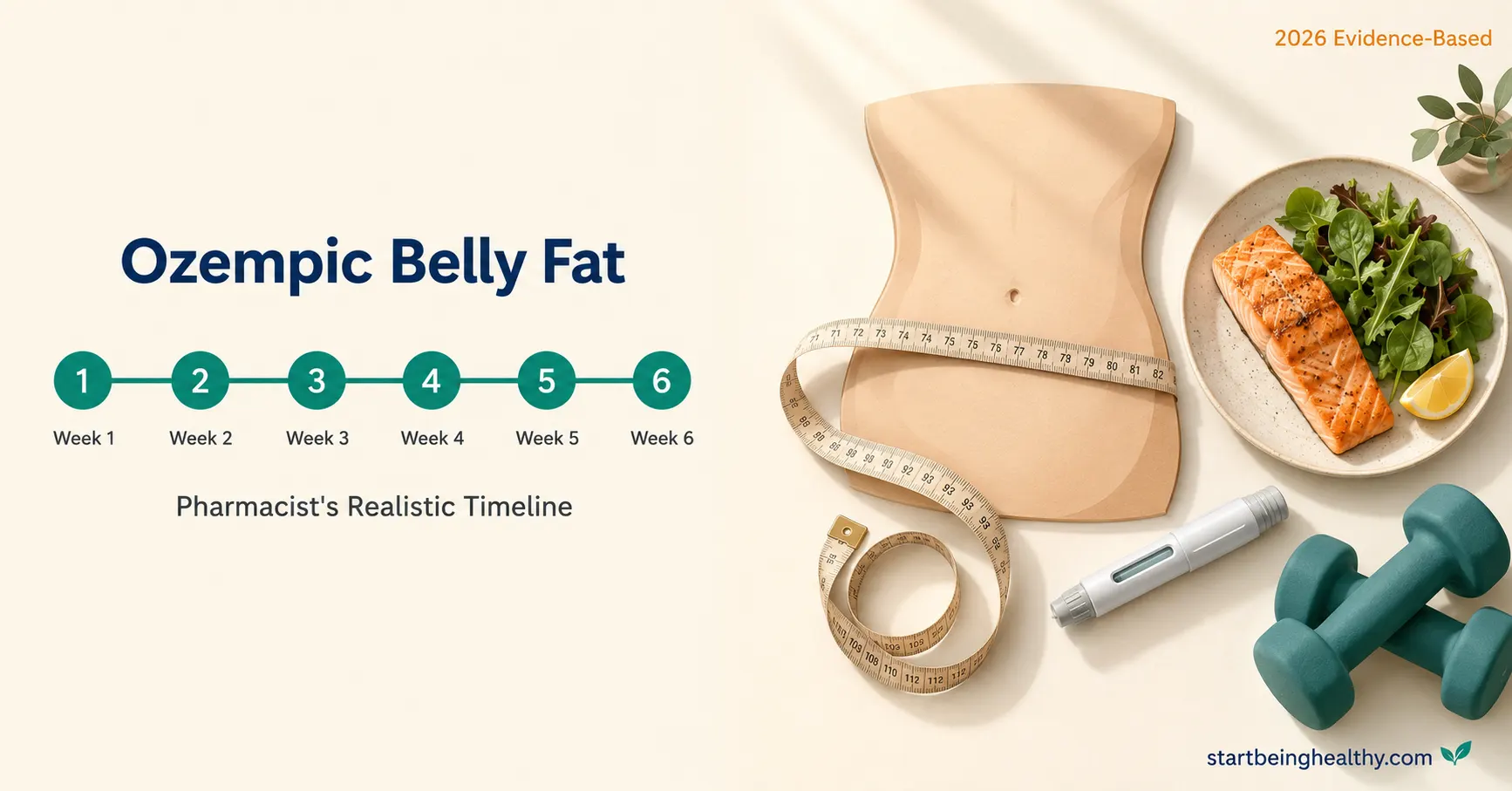
Ozempic has become one of the most searched weight loss medications in the world. Originally approved for type 2 diabetes management, semaglutide — the active ingredient in Ozempic — has shown clinically documented reductions in body weight and visceral belly fat in large-scale randomised trials.
But realistic expectations matter. Six weeks is the adaptation phase — not the results phase. Understanding what actually happens in your body during those first weeks is essential for staying on the medication long enough to see the real before and after results people are looking for.
This guide covers what Ozempic does to belly fat, what the clinical evidence shows week by week, what realistic before and after results look like, how Ozempic compares to Mounjaro and Zepbound in 2026, and what a pharmacist needs you to know before you start.
If you have not yet been prescribed Ozempic and are still in the discussion phase with your doctor, start with our pharmacist’s guide to asking your doctor for weight loss medications — it covers eligibility, exact conversation scripts, and what to do if your insurance won’t cover the medication.
Pharmacist’s Perspective — Faryal Faisal, PharmD
The most common reason patients abandon Ozempic before it works is mismanaged expectations about the six-week timeline. Six weeks is the adaptation phase — not the results phase.
During the first four weeks, your body is adjusting to semaglutide at its starting dose of 0.25 mg weekly. This dose is intentionally sub-therapeutic — it will not produce significant weight loss. Its entire purpose is to allow your gastrointestinal system to adapt so that when the dose escalates, you can tolerate it. Patients who expect dramatic belly fat reduction in week two are almost always disappointed and frequently stop the medication before it reaches its therapeutic dose.
The second thing I want to clarify is the “belly fat” question. Ozempic does not target belly fat through any selective mechanism. What it does — and this is clinically significant — is produce systemic fat loss with a disproportionately large reduction in visceral fat, the metabolically dangerous fat stored around your abdominal organs. The STEP 1 trial substudy measured a 27.4% reduction in regional visceral fat mass with semaglutide at 68 weeks. That is real and clinically impressive — but it takes months, not six weeks.
Use the first six weeks to establish your routine, manage side effects, and reach the therapeutic dose range. The before and after results come after that.
— Faryal Faisal, PharmD, Start Being Healthy
What Is Ozempic and How Does It Work for Weight Loss?
Ozempic (semaglutide) is a GLP-1 receptor agonist — a class of medication that mimics glucagon-like peptide-1, a hormone naturally produced in the gut after eating. It was originally FDA-approved for type 2 diabetes management, where it reduces blood sugar by stimulating insulin release and suppressing glucagon.
Its substantial effect on body weight, observed consistently across diabetes trials, led to dedicated obesity research and the approval of semaglutide 2.4 mg as Wegovy® specifically for chronic weight management in 2021.
Ozempic® (doses up to 2 mg) is FDA-approved for type 2 diabetes and is widely prescribed off-label for weight loss in people without diabetes.
Semaglutide produces weight loss through three simultaneous mechanisms:
Appetite suppression — It activates GLP-1 receptors in the hypothalamus, the brain’s hunger-regulating centre, reducing appetite and caloric intake naturally without requiring willpower at every meal.
Delayed gastric emptying — It slows how quickly food moves from the stomach to the small intestine, extending feelings of fullness after meals and reducing the urge to eat between them.
Insulin and glucagon regulation — It stimulates glucose-dependent insulin release and suppresses glucagon, stabilising blood sugar and reducing the metabolic drivers of fat storage.
For a complete breakdown of the dosing schedule and clinical pharmacology, see our Semaglutide Weight Loss Dosage Chart.
Does Ozempic Target Belly Fat Specifically?
This is one of the most commonly searched questions about Ozempic — and the answer is nuanced.
Ozempic does not selectively reduce belly fat through any targeted mechanism. However, clinical evidence consistently shows that semaglutide produces disproportionately large reductions in visceral adipose tissue — the fat stored around abdominal organs — compared to subcutaneous fat (the fat under the skin).
This distinction matters clinically because visceral fat is the metabolically active fat directly associated with insulin resistance, cardiovascular disease, type 2 diabetes, and systemic inflammation. Losing visceral fat produces measurable improvements in cardiometabolic health markers that go well beyond what the number on the scale shows.
STEP 1 body composition substudy — In a subpopulation of 140 STEP 1 participants assessed by DEXA imaging, semaglutide 2.4 mg produced a 27.4% reduction in regional visceral fat mass at 68 weeks, compared to a 3.6% reduction with placebo. Total fat mass decreased by 19.3%. Importantly, while total lean body mass decreased in absolute terms, the proportion of lean mass relative to total body mass actually increased — meaning semaglutide preferentially reduces fat rather than muscle.
(Cegla et al., Obesity, 2021 — PubMed: 33769686)
STEP 6 trial — In an East Asian population, semaglutide 2.4 mg produced a 40.0% reduction in abdominal visceral fat area measured by CT scan at 68 weeks, versus 6.9% with placebo.
(Kadowaki et al., Lancet Diabetes & Endocrinology, 2022 — PubMed: 35085491)
SELECT trial waist circumference data — In 17,604 patients followed for up to four years, semaglutide 2.4 mg reduced waist circumference by 7.7 cm compared to 1.3 cm with placebo.
(Lincoff et al., NEJM, 2023 — PubMed: 37952131)
What the Clinical Evidence Shows
STEP 1 Trial (2021) — 1,961 adults with obesity randomised to semaglutide 2.4 mg or placebo for 68 weeks. Mean weight reduction of 14.9% with semaglutide versus 2.4% with placebo. 86.4% of semaglutide patients achieved at least 5% weight loss.
STEP 4 Trial (2021) — Patients who stopped semaglutide after losing weight regained approximately two-thirds of lost weight within 48 weeks. Confirms semaglutide is a long-term treatment requiring continued use.
STEP 5 Trial (2022) — At two years, semaglutide produced mean weight loss of 15.2% versus 2.6% with placebo.
SELECT Trial (2023) — Semaglutide reduced major adverse cardiovascular events by 20% in 17,604 patients with obesity and pre-existing cardiovascular disease — the first weight loss medication to demonstrate this benefit without diabetes.
Ozempic Dosing Schedule for Weight Loss
Ozempic® follows this escalation schedule when prescribed off-label for weight loss. This is the actual FDA-approved Ozempic titration protocol — not an accelerated version.
| Weeks | Dose | Frequency | Route |
|---|---|---|---|
| 1–4 | 0.25 mg | Once weekly | Subcutaneous injection |
| 5–8 | 0.5 mg | Once weekly | Subcutaneous injection |
| 9–12 | 1.0 mg | Once weekly | Subcutaneous injection |
| 13+ | 1.0–2.0 mg | Once weekly (maintenance) | Subcutaneous injection |
The 0.25 mg starting dose is sub-therapeutic — it will not produce weight loss. It exists solely to allow the body to adapt. Always follow your prescribing physician’s specific schedule, which may be adjusted based on your individual tolerance and response.
If your doctor has prescribed Wegovy® (semaglutide 2.4 mg) instead, the escalation is different and reaches a higher maintenance dose. See our full Semaglutide dosage chart for the complete Wegovy® schedule.
6-Week Timeline: Week-by-Week Realistic Expectations
Week 1–2: Adaptation begins (0.25 mg)
At 0.25 mg, this is the sub-therapeutic starting phase. The goal is adaptation, not weight loss. Most patients experience mild appetite suppression. Common side effects include nausea, belching, heartburn, and loose stools — all direct effects of GLP-1 receptor activation slowing gastric motility. These are dose-dependent and typically subside as the body adjusts.
What helps: Eat smaller meals, avoid high-fat foods, stay upright after eating, and drink plenty of water.
Realistic result: Most people lose 1–3 lbs, primarily from reduced caloric intake and water weight. This is not representative of what the medication will achieve at therapeutic doses.
Week 3–4: Appetite suppression strengthens (still 0.25 mg)
Nausea typically begins to subside for most patients. Appetite suppression becomes more noticeable — many patients begin naturally eating smaller portions without feeling deprived. Food cravings often reduce during this phase.
Realistic result: Modest weight reduction continuing. Waist measurements typically unchanged at this stage. Energy levels may stabilise as the body adjusts to reduced food intake.
Week 5–6: First dose escalation to 0.5 mg
The dose increase to 0.5 mg often brings a temporary return of milder GI symptoms as the body adjusts. Appetite suppression typically strengthens. Most patients begin to see more consistent weekly weight reduction. Some patients begin to notice clothes fitting slightly looser around the midsection.
Realistic result: Many patients reach 2–4% total body weight reduction by week 6, though individual results vary significantly. Real-world data from a retrospective study of 175 patients reported average weight loss of 5.9% at 12 weeks — suggesting six weeks is approximately the halfway point to this early milestone. (Ghusn et al., Obesity Pillars, 2022)
Typical Before and After Results: What Patients Actually Report
Based on clinical trial data and real-world studies, here is what most patients experience across the Ozempic journey:
| Timeframe | Typical Outcome |
|---|---|
| Week 1–4 | Reduced appetite, 1–4 lbs weight loss, GI adjustment |
| Week 5–8 | Stronger appetite suppression, 4–8 lbs total loss, waist changes begin |
| Week 9–16 | Noticeable weight loss, clothes fitting looser, energy improving |
| Month 4–6 | 7–10% body weight reduction for many patients |
| Month 12–16 | Up to 14.9% mean body weight reduction (STEP 1 trial data) |
Important: Before and after photos shared online — particularly those showing dramatic six-week transformations — are not representative of typical results. They are typically taken at higher therapeutic doses after months of treatment, or reflect a small subset of patients with unusually fast responses. Clinically, six weeks is the dose ramp-up phase.
How to Maximise Belly Fat Loss on Ozempic
Prioritise protein at every meal
Protein supports lean mass preservation during semaglutide treatment — clinically important because the STEP 1 substudy showed some lean body mass reduction alongside fat loss. Aim for 25–30g of protein per meal. Good sources include chicken, fish, eggs, Greek yogurt, legumes, and tofu.
For a complete Ozempic-friendly eating plan with daily protein targets and a 7-day meal plan, see our pharmacist-approved Ozempic meal plan.
Add resistance training
Resistance training during semaglutide treatment specifically helps preserve lean muscle mass. Aim for at least two sessions per week. Even bodyweight exercises — squats, lunges, push-ups — are effective. Strength training also improves insulin sensitivity, which works synergistically with semaglutide’s mechanism.
Women starting Ozempic during perimenopause or menopause have compounding muscle loss from both estrogen decline and GLP-1 appetite suppression — see our pharmacist’s menopause diet plan for protein targets and GLP-1-compatible meal planning that addresses both at once.
Manage nausea to stay on the medication
The most common reason for early discontinuation is unmanaged nausea during dose escalation. Practical strategies include eating cold foods (which have less smell), avoiding lying down after meals, choosing bland foods during the first few days after each dose increase, and staying well hydrated.
The single most impactful step you can take to reduce nausea is to eliminate the specific foods that trigger it — see our pharmacist’s guide to foods to avoid on GLP-1 medications for the complete list of trigger foods and better alternatives.
Track waist circumference, not just weight
Because semaglutide preferentially reduces visceral fat, waist circumference is a better early indicator of belly fat loss than scale weight. Measure your waist at the navel weekly. Reductions here often precede visible changes in body shape and are clinically meaningful even before large-scale weight loss occurs.
For a structured meal approach that supports anti-inflammatory fat loss alongside Ozempic, see our 21-Day Anti-Inflammatory Diet Plan.
Waist circumference tracking is especially important during the month 3-6 window when many patients hit a weight loss plateau on the scale — for the complete pharmacist’s protocol to break through it, see our 7-step Ozempic weight loss plateau fix guide.
Ozempic vs Wegovy: Which Is Better for Belly Fat?
| Ozempic® | Wegovy® | |
|---|---|---|
| Active ingredient | Semaglutide | Semaglutide |
| FDA indication | Type 2 diabetes | Chronic weight management |
| Max approved dose | 2 mg weekly | 2.4 mg weekly |
| Off-label for weight loss | Yes, widely | Not applicable — approved for this |
| Visceral fat data | STEP 1, SELECT trials | STEP 1, STEP 6 trials |
| Availability | Widely available | Periodic shortages reported |
For a complete comparison of tirzepatide-based alternatives that have now overtaken semaglutide for weight loss outcomes, see our guide to Mounjaro vs Ozempic.
The higher maintenance dose of Wegovy® (2.4 mg) produces greater weight and visceral fat reduction than the lower Ozempic® doses used off-label. If weight management is your primary goal, Wegovy® is the FDA-approved option and typically the preferred prescription. However, cost, insurance coverage, and availability affect which your physician prescribes.
How Does Ozempic Compare to Mounjaro and Zepbound for Belly Fat?
The GLP-1 landscape has expanded significantly. Ozempic and Wegovy are no longer the only options — Mounjaro (tirzepatide) and Zepbound (tirzepatide) are now widely prescribed and produce greater weight loss in head-to-head trials. Here is how they compare specifically for belly fat outcomes.
| Medication | Active Ingredient | Mechanism | Average Weight Loss | Approved For |
|---|---|---|---|---|
| Ozempic | Semaglutide | GLP-1 only | ~8–10% (real-world, 12 months) | Type 2 diabetes |
| Wegovy | Semaglutide 2.4 mg | GLP-1 only | 14.9% (STEP-1, 68 weeks) | Chronic weight management + cardiovascular risk reduction |
| Mounjaro | Tirzepatide | Dual GIP + GLP-1 | ~15% (real-world, 12 months) | Type 2 diabetes |
| Zepbound | Tirzepatide | Dual GIP + GLP-1 | 20.2% (SURMOUNT-5, 72 weeks) | Chronic weight management + sleep apnoea |
The SURMOUNT-5 head-to-head trial published in 2025 directly compared Zepbound and Wegovy — Zepbound produced 20.2% average weight loss versus Wegovy’s 13.7% over 72 weeks, a 47% greater relative weight reduction. Tirzepatide’s dual mechanism (activating both GIP and GLP-1 receptors) appears to produce greater visceral fat reductions than semaglutide alone.
For deeper head-to-head comparisons, see our dedicated guides:
- Mounjaro vs Ozempic for Weight Loss — Complete Pharmacist’s Comparison
- Zepbound vs Wegovy — Which Is Better for Weight Loss?
Pharmacist’s Perspective — Faryal Faisal, PharmD
If your insurance allows access to tirzepatide-based drugs (Mounjaro or Zepbound), the clinical evidence in 2026 favours them for greater weight and visceral fat reduction. However, Ozempic remains a strong option — particularly if your primary indication is type 2 diabetes, if your insurance covers semaglutide but not tirzepatide, or if you have established cardiovascular disease where Wegovy specifically holds an FDA-approved cardiovascular benefit. The “best” drug is the one your prescriber decides is right for your full health picture.
Contraindications — Who Should Not Take Ozempic
Ozempic carries an FDA black box warning and is contraindicated in:
- Personal or family history of medullary thyroid carcinoma (MTC) — based on rodent carcinogenicity studies. Large human trials have not confirmed this risk in the general population but the precautionary contraindication is mandatory.
- Multiple Endocrine Neoplasia syndrome type 2 (MEN2) — same black box warning.
- Pregnancy or planned pregnancy — discontinue at least two months before planned pregnancy.
- Severe gastrointestinal disease including gastroparesis — semaglutide further slows gastric emptying and significantly worsens pre-existing gastroparesis.
- History of pancreatitis — associated with increased pancreatitis risk in post-marketing surveillance.
- Type 1 diabetes — not approved for this indication, carries risk of diabetic ketoacidosis.
Drug Interactions
As a pharmacist reviewing Ozempic prescriptions, the following interactions are the ones I most commonly need to address:
Oral contraceptives — delayed gastric emptying during the first weeks of treatment may reduce pill absorption. A backup contraceptive method is advisable during dose escalation.
Levothyroxine (thyroid medication) — absorption timing can be affected. Thyroid function (TSH) should be monitored more closely when initiating Ozempic.
Warfarin and anticoagulants — dietary changes and absorption shifts can affect INR stability. More frequent INR monitoring is warranted.
Insulin and sulfonylureas — combination significantly increases hypoglycaemia risk. Dose reductions are typically required.
Always share your complete medication list with your prescribing physician and pharmacist before starting Ozempic — not just the medications you think are relevant.
Side Effects
Common (gastrointestinal)
- Nausea — most frequent, especially after dose increases
- Vomiting
- Diarrhoea
- Constipation
- Abdominal discomfort and bloating
- Belching and heartburn
Most GI side effects are dose-dependent, peak immediately after each dose increase, and typically resolve within 5–7 days. For a full week-by-week breakdown of when each symptom appears, peaks, and improves across the first 20 weeks of treatment, see our pharmacist’s semaglutide side effects timeline.
Serious (require medical attention)
- Pancreatitis — persistent severe abdominal pain, especially radiating to the back
- Gallbladder disease — rapid weight loss from any cause increases gallstone formation risk
- Acute kidney injury — secondary to dehydration from vomiting and diarrhoea
- Hypoglycaemia — increased risk when combined with insulin or sulfonylureas
- Allergic reactions — swelling, difficulty breathing, or severe rash
Frequently Asked Questions
How much belly fat can you lose with Ozempic in 6 weeks?
Six weeks is the adaptation and dose ramp-up phase for Ozempic. At the sub-therapeutic starting dose of 0.25 mg, significant belly fat loss is not expected. Most patients lose 2–5% of total body weight by week 6. Measurable waist circumference reductions typically become apparent from weeks 8–12 onward as the dose escalates. The clinically documented 27.4% reduction in visceral fat mass occurred at 68 weeks in the STEP 1 trial, not six.
What do Ozempic before and after results look like at 6 weeks?
At six weeks, most patients report reduced appetite, smaller portion sizes, reduced food cravings, and modest weight loss of approximately 2–5% of body weight. Visible belly fat changes are typically not dramatic at this stage. The most significant before and after body composition changes occur between months 3 and 12 at therapeutic doses.
Does Ozempic reduce visceral belly fat or just subcutaneous fat?
Clinical evidence shows semaglutide disproportionately reduces visceral fat — the deep abdominal fat around organs — compared to subcutaneous fat. The STEP 6 trial found a 40% reduction in abdominal visceral fat area at 68 weeks. This is particularly clinically meaningful because visceral fat is more strongly linked to metabolic disease risk than subcutaneous fat.
What happens to belly fat when you stop Ozempic?
The STEP 4 trial found patients who stopped semaglutide regained approximately two-thirds of lost weight within 48 weeks. Visceral fat reduction is similarly reversed. Ozempic manages obesity as a chronic condition — stopping treatment without maintaining lifestyle changes typically results in fat regain.
Is Ozempic or Wegovy better for belly fat loss?
Both contain semaglutide. Wegovy® reaches a higher maintenance dose of 2.4 mg weekly and is FDA-approved specifically for weight management. Clinical data consistently shows greater weight and visceral fat reduction at 2.4 mg than at lower Ozempic® doses. If weight loss is the primary goal, Wegovy® is the clinically superior option — subject to availability and insurance coverage.
Is Ozempic or Mounjaro better for belly fat loss?
Mounjaro (tirzepatide) consistently produces greater weight and visceral fat loss than Ozempic (semaglutide) in clinical trials and real-world data. The SURPASS-2 trial showed tirzepatide 15 mg produced nearly double the weight loss of semaglutide 1 mg in patients with type 2 diabetes. Real-world data shows approximately 15% weight loss with Mounjaro versus 8% with Ozempic at 12 months. However, Mounjaro is often more expensive and not always covered by insurance. Read our full Mounjaro vs Ozempic comparison for clinical detail.
Should I switch from Ozempic to Zepbound for faster belly fat loss?
If weight loss is your primary goal and your insurance covers it, switching to Zepbound may produce greater results — the SURMOUNT-5 head-to-head trial showed 20.2% weight loss on Zepbound versus 13.7% on Wegovy (semaglutide 2.4 mg). However, switching should always be done under prescriber guidance. You typically restart at Zepbound’s lowest dose (2.5 mg) and titrate up gradually, not at a dose matching your previous Ozempic level. Never combine the two.
Key Takeaways
- Ozempic does not target belly fat selectively
- The first six weeks are the adaptation phase
- Realistic six-week outcomes include 2–5% body weight reduction
- Results build over months, not weeks
- Stopping Ozempic typically results in weight regain