

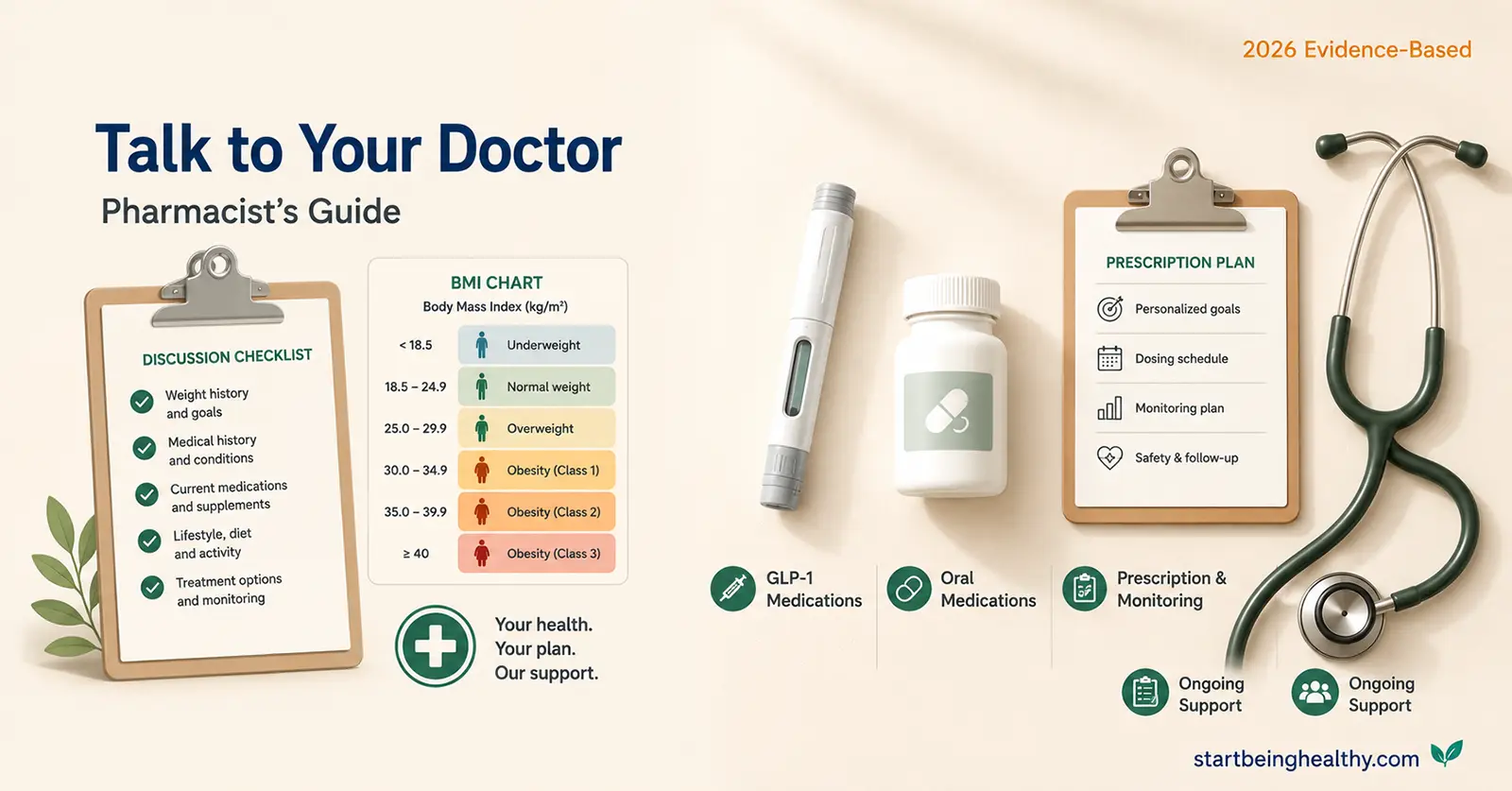
Asking your doctor about weight loss pills can feel uncomfortable — many patients worry about being judged, dismissed, or told simply to “eat less and exercise more.” But weight loss medications are legitimate, FDA-approved medical treatments for obesity, and knowing how to have this conversation effectively can make the difference between getting the help you need and leaving the appointment empty-handed.
This guide covers exactly what your doctor assesses when considering weight loss medications, how to prepare for the conversation, what medications are currently available and who qualifies for each, what questions to ask, and what to do if your doctor says no.
Pharmacist’s Perspective — Faryal Faisal, PharmD
In my experience dispensing weight loss medications, the patients who get the most out of these treatments are the ones who arrive at the appointment prepared. They know their BMI, they have a list of everything they are currently taking — prescription medications, supplements, vitamins — and they have a clear summary of what they have already tried.
The single most important thing to disclose is your complete medication list. This is not just about avoiding interactions — it is about your doctor understanding whether certain medications you are already taking may be contributing to weight gain. Antidepressants including paroxetine and mirtazapine, antipsychotics, corticosteroids, beta-blockers, and insulin are all well-documented causes of weight gain. If you are on any of these, your doctor needs to know before prescribing anything new. In some cases, switching to a weight-neutral alternative is more effective than adding a weight loss drug on top.
Also — bring your blood test results if you have recent ones. Thyroid function, fasting glucose, HbA1c, and lipid panel all inform which medication is most appropriate for your situation. A doctor who sees your full clinical picture can prescribe far more precisely than one working from a BMI alone.
— Faryal Faisal, PharmD, Start Being Healthy
Who Qualifies for Prescription Weight Loss Pills?
Before your appointment, knowing whether you are likely to qualify saves time and sets realistic expectations. Current clinical guidelines from the FDA and NIDDK state that prescription weight loss medications are considered for:
BMI of 30 or above — classified as obesity. No additional conditions required.
BMI of 27 or above with at least one weight-related health condition — including type 2 diabetes, high blood pressure, high cholesterol, obstructive sleep apnea, fatty liver disease, or cardiovascular disease.
BMI alone is not the full picture. Your doctor will also consider your weight history, previous weight loss attempts, current medications, mental health history, and any eating disorder history. Doctors look for evidence that you have made genuine lifestyle efforts before recommending pharmacotherapy — typically several months of documented diet and exercise changes with insufficient results. (Endotext, Pharmacologic Treatment of Overweight and Obesity in Adults, 2024 — NCBI: NBK279038)
You can estimate your BMI quickly using our Calorie Calculator — while not a clinical BMI tool, it helps you understand your daily caloric needs in context of your current weight and goals before your appointment.
Who does NOT qualify:
- Pregnant, breastfeeding, or trying to conceive
- History of eating disorders (anorexia, bulimia) — most medications are contraindicated
- Certain cardiac conditions — stimulant-based medications like phentermine are not appropriate
- Specific medication contraindications — your doctor will review these based on your list
How to Prepare Before Your Appointment
Preparation is the difference between a productive appointment and a vague conversation that ends with “let’s try diet and exercise first.”
What to bring
- Your complete medication list Include every prescription medication, over-the-counter drug, supplement, and vitamin you take with dosages. As noted above, several common medications directly cause weight gain — your doctor needs the full picture to assess whether medication changes might help alongside any new prescription.
- Your weight history Note your highest adult weight, your current weight, how long you have been at your current weight, and any significant periods of weight gain. If you can identify triggers — a medication change, pregnancy, a stressful period — note those too.
- What you have already tried Be specific. “I have tried dieting” is less useful than “I followed a 1,500 calorie deficit for six months, lost 8 lbs, then regained it.” Document previous diet programmes, exercise regimens, and any prior weight loss medications or supplements.
- Your recent blood tests if available Thyroid function (TSH), fasting glucose or HbA1c, lipid panel, liver function. If you do not have recent results, your doctor will likely order them before prescribing.
- Your weight-related health conditions If you have been diagnosed with type 2 diabetes, hypertension, high cholesterol, sleep apnea, or PCOS, bring documentation. These conditions strengthen your clinical case for medication and determine which drug is most appropriate.
How to Start the Conversation
Many patients feel embarrassed raising this topic. The framing matters. Instead of asking vaguely whether you “should lose weight,” be direct and clinical:
Opening statements that work:
“I have a BMI of [X] and I have been managing my weight for [Y] years with diet and exercise. I have not been able to achieve or maintain meaningful weight loss. I would like to discuss whether prescription weight loss medication is appropriate for me.”
“I have type 2 diabetes and my BMI is [X]. I understand there are GLP-1 medications now approved for both blood sugar management and weight loss. I would like to discuss whether semaglutide or tirzepatide might be appropriate given my situation.”
“I have read about the STEP clinical trials showing 15% mean weight loss with semaglutide at 68 weeks. I would like to understand whether I am a candidate and what the process looks like.”
Being specific shows your doctor you have done genuine research and are approaching this as a medical decision, not a quick fix. This changes the dynamic of the conversation entirely.
Questions to Ask Your Doctor
Go into the appointment with these questions prepared. Write them down — it is easy to forget in the moment.
About eligibility:
- Am I a candidate for prescription weight loss medication based on my BMI and health history?
- Are any of my current medications contributing to my weight gain?
- Are there any contraindications given my medical history?
About the specific medication:
- Which medication are you recommending and why this one over others?
- Is it FDA-approved for weight management specifically, or is this off-label use?
- What does the clinical trial evidence show for this medication — what weight loss can I realistically expect?
- What are the most common side effects and how are they managed?
- Are there any serious risks I should know about?
About the practical process:
- How long will it take to see results?
- How often will we follow up to monitor progress?
- What happens if the medication is not working after three to six months?
- Will my insurance cover this? If not, what are the out-of-pocket costs?
- If the medication is not covered, is there a generic or a patient assistance programme?
About lifestyle alongside medication:
- What dietary changes should I make to support this medication?
- Should I work with a dietitian or specialist alongside this treatment?
- What happens to my weight if I stop the medication?
Current FDA-Approved Weight Loss Medications
Understanding what is available helps you have a more informed conversation with your doctor. Here is a pharmacist-reviewed overview of currently approved options. (Mayo Clinic, Prescription weight-loss drugs, 2026)
GLP-1 Receptor Agonists — current first-line options
Semaglutide 2.4 mg (Wegovy®) FDA-approved specifically for chronic weight management in 2021. The STEP 1 trial demonstrated mean weight loss of 14.9% at 68 weeks in adults with obesity without diabetes. The SELECT trial (2023) additionally demonstrated 20% reduction in major cardiovascular events in patients with obesity and pre-existing cardiovascular disease — making Wegovy the only weight loss medication with proven cardiovascular event reduction. (Wilding et al., NEJM, 2021 — PubMed: 33567185) Our complete pharmacist-reviewed dosing guide: Semaglutide Weight Loss Dosage Chart.
Tirzepatide 15 mg (Zepbound®) FDA-approved for weight management in 2023. A dual GIP/GLP-1 receptor agonist — targets two hormonal pathways versus semaglutide’s one. SURMOUNT-1 trial showed mean weight loss of 20.9% at 72 weeks at the highest dose — the largest weight loss seen in any approved pharmacotherapy to date. Under the brand name Mounjaro, it treats type 2 diabetes.
Liraglutide 3 mg (Saxenda®) FDA-approved for weight management. Daily injection (versus weekly for semaglutide and tirzepatide). Older GLP-1 medication with a more established long-term safety record. Produces approximately 5–8% mean weight loss — less than newer agents but still clinically meaningful.
Combination medications
Phentermine/Topiramate (Qsymia®) FDA-approved for long-term obesity treatment. Phentermine suppresses appetite by increasing norepinephrine; topiramate reduces caloric intake through multiple mechanisms. Produces approximately 8–10% weight loss. Not appropriate for patients with cardiovascular disease or those planning pregnancy — topiramate is teratogenic.
Bupropion/Naltrexone (Contrave®) FDA-approved combination. Bupropion is an antidepressant and smoking cessation aid; naltrexone is used for alcohol and opioid dependence. Together they reduce appetite and cravings through central nervous system pathways. Produces approximately 5–6% weight loss. Not appropriate for patients with seizure disorders or those taking opioids.
Older agents
Orlistat (Xenical®, Alli®) The only weight loss medication available both by prescription (Xenical) and over the counter (Alli). Works by blocking approximately 30% of dietary fat absorption in the intestine. Produces modest weight loss of approximately 3–5%. Significant gastrointestinal side effects including oily stools and faecal urgency — most pronounced when high-fat meals are consumed. Often poorly tolerated.
Phentermine alone (Adipex-P®, Lomaira®) FDA-approved for short-term use only (less than 12 weeks). Stimulant-based appetite suppressant. Not appropriate for patients with cardiovascular disease, hyperthyroidism, or history of substance misuse.
Important — Lorcaserin (Belviq®) was withdrawn from the US market in 2020 due to an increased cancer risk identified in post-marketing surveillance. The current article’s mention of it as an option is outdated — it is no longer available in the US.
Newest option
Orforglipron (Foundayo) — FDA approved April 1, 2026. A non-injectable, once-daily oral GLP-1 receptor agonist manufactured by Eli Lilly. The first oral GLP-1 that can be taken any time of day without food or water restrictions. Average weight loss was 11.2% at 72 weeks in the ATTAIN-1 trial — less than injectable GLP-1s but with far greater daily convenience. See our complete pharmacist’s Foundayo guide for dosing, side effects, cost, and honest comparison with injectable options.
What Information Your Doctor Uses to Choose a Medication
Your doctor does not pick randomly from this list. Here is how clinical decisions are made:
Type 2 diabetes present → GLP-1 medications (semaglutide, tirzepatide, liraglutide) are preferred because they address both blood sugar and weight simultaneously.
Cardiovascular disease present → Wegovy is now the only weight loss medication with an FDA indication specifically for cardiovascular risk reduction alongside weight management.
PCOS → GLP-1 medications are increasingly used given their insulin-sensitising effects. See our dedicated guide: Intermittent Fasting for PCOS Weight Loss for the lifestyle component.
Depression or anxiety → Bupropion/naltrexone (Contrave) may be considered since bupropion has antidepressant properties, but it is not appropriate for all patients. GLP-1 medications are generally safe alongside most antidepressants.
On metformin → Metformin depletes B12. If semaglutide or another GLP-1 is added, ensure B12 levels are monitored — see our guide on Weight Loss Shots with B12 for context.
Needle aversion → Orlistat (oral) or Contrave (oral) are alternatives. Phentermine/topiramate is oral but has significant contraindications. Orforglipron (oral GLP-1) may become available in 2026.
Insurance and cost → This is a real clinical factor. Wegovy and Zepbound can cost $1,000+ monthly without insurance. Your doctor may choose a medication based partly on what your insurance covers. Always ask about prior authorisation requirements and patient assistance programmes.
What to Do If Your Doctor Says No
A refusal to prescribe is not necessarily the end. Understanding why and what to do next matters.
Common reasons for refusal and how to respond:
“Your BMI is below 30” If you have a BMI of 27–29 with a weight-related health condition (diabetes, hypertension, sleep apnea), you still qualify under clinical guidelines. Ask your doctor specifically about the BMI 27+ with comorbidity pathway.
“Try diet and exercise first” Ask what specific timeline and outcome measures they want to see. Request a referral to a registered dietitian for structured support. Document your efforts — a specific plan with measurable targets makes a follow-up prescription conversation much easier.
“I don’t think you need medication” Ask your doctor to explain the clinical criteria they are using. You can request a referral to an obesity medicine specialist — a physician with specific training in obesity pharmacotherapy who may take a different view.
“The medication is too expensive” Ask about patient assistance programmes — Novo Nordisk (Wegovy) and Eli Lilly (Zepbound) both have programmes for eligible patients. Ask whether a lower-cost alternative like phentermine/topiramate or orlistat is appropriate. Ask your pharmacist — we sometimes know about savings options your doctor may not.
Seek a second opinion If you believe your concerns are being dismissed, you are entitled to a second opinion from another physician or an obesity medicine specialist. The Obesity Medicine Association has a provider finder at obesitymedicine.org.
Special Consideration: Menopausal Women and Weight Loss Medications
Women in perimenopause and menopause are now one of the largest demographics seeking weight loss medications. The hormonal weight gain that begins around age 45–55 is driven by estrogen decline, accelerated muscle loss, insulin resistance, and visceral fat redistribution — factors that traditional diet and exercise alone often cannot fully address. If you are approaching or in menopause and considering weight loss medications:
- Discuss with your doctor whether HRT might be appropriate alongside or instead of weight loss medications
- If prescribed a GLP-1 medication, pair it with a higher-protein dietary framework to prevent muscle loss
- Ask about resistance training recommendations to preserve lean mass during medication-assisted weight loss
For a complete dietary framework built specifically around menopausal weight gain that pairs well with weight loss medications, see our pharmacist’s menopause diet 5-day plan.
Medications That Cause Weight Gain — What to Discuss With Your Doctor
This is the section most weight loss articles do not include — and it is one of the most clinically important points. Several commonly prescribed medications directly cause weight gain, and your doctor should review your full regimen as part of any weight management consultation.
Antidepressants — paroxetine (Paxil), mirtazapine (Remeron), and amitriptyline are among the most weight-positive. SSRIs vary — sertraline and fluoxetine are generally more weight-neutral. If you are on a weight-positive antidepressant, ask your psychiatrist or GP whether a weight-neutral alternative is appropriate for your situation.
Antipsychotics — olanzapine, quetiapine, and clozapine are strongly associated with significant weight gain. Aripiprazole and lurasidone are more weight-neutral alternatives in many cases.
Corticosteroids — long-term use of prednisone or prednisolone causes significant weight gain through multiple mechanisms. If you are on corticosteroids for a chronic condition, discuss whether dose reduction or alternative anti-inflammatory treatments are possible.
Beta-blockers — particularly propranolol and atenolol. If you are on a beta-blocker for hypertension, newer agents like nebivolol or switching to an ACE inhibitor or ARB may be more weight-neutral options worth discussing with your cardiologist.
Insulin — all insulin regimens cause some weight gain. GLP-1 medications like semaglutide work particularly well in this context because they reduce insulin requirements while producing weight loss — a genuinely synergistic combination in type 2 diabetes.
Gabapentin and pregabalin — commonly prescribed for nerve pain and anxiety. Associated with meaningful weight gain in long-term use.
Identifying and addressing medication-caused weight gain is sometimes more effective than adding a new weight loss drug on top. Your pharmacist can review your complete medication list and flag weight-positive agents — this is exactly the kind of clinical review a PharmD is trained for.
Insurance and Cost — Practical Guidance
Weight loss medications are expensive and coverage is inconsistent. Here is what to know before your appointment.
Wegovy (semaglutide 2.4 mg) — list price approximately $1,350/month in the US. Covered by some commercial insurance plans; generally not covered by Medicare Part D currently, though proposed CMS rules may change this. Novo Nordisk offers a savings card reducing out-of-pocket cost for eligible commercially insured patients.
Zepbound (tirzepatide) — list price approximately $1,060/month. Eli Lilly offers a savings card. Some plans cover it; others exclude anti-obesity medications specifically.
Contrave, Qsymia — generally less expensive than GLP-1 medications. Generic versions of some components (bupropion, naltrexone) are available though not as the combination pill specifically.
Orlistat (Alli) — available over the counter at approximately $50–70/month. Lower cost but also lower efficacy and significant side effects.
Prior authorisation — most insurers require prior authorisation for GLP-1 weight loss medications. Your doctor’s office handles this process, but it can take 2–4 weeks and may require documentation of BMI, comorbidities, and previous weight loss attempts. Ask your doctor’s office about their PA experience with these medications.
Frequently Asked Questions
Can any doctor prescribe weight loss pills?
Yes — your primary care physician, internist, family doctor, or an obesity medicine specialist can all prescribe FDA-approved weight loss medications. You do not need a referral to a specialist, though an obesity medicine specialist may have more experience with complex cases or newer medications.
What BMI do you need for weight loss pills?
Most FDA-approved weight loss medications are prescribed for a BMI of 30 or above, or a BMI of 27 or above with at least one weight-related health condition such as type 2 diabetes, high blood pressure, high cholesterol, or obstructive sleep apnea.
What is the most effective prescription weight loss pill currently available?
Based on current clinical trial data, tirzepatide (Zepbound) produced the largest mean weight loss — 20.9% at 72 weeks at the highest dose in the SURMOUNT-1 trial. Semaglutide (Wegovy) produced 14.9% at 68 weeks in STEP 1. Both are GLP-1-based injections. Among oral options, phentermine/topiramate (Qsymia) and bupropion/naltrexone (Contrave) produce more modest results of approximately 8–10% and 5–6% respectively.
Will my doctor judge me for asking about weight loss pills?
Most physicians who work with patients managing obesity understand that weight is influenced by genetics, medications, hormones, and metabolic factors — not simply willpower. A prepared, specific request framed as a clinical question is received very differently from a vague request for “diet pills.” If you feel judged or dismissed, requesting a referral to an obesity medicine specialist is a reasonable next step.
What happens when you stop weight loss pills?
Weight regain after stopping is expected for most medications — particularly GLP-1 medications like semaglutide. The STEP 4 trial found patients who stopped semaglutide regained approximately two-thirds of lost weight within 48 weeks. Weight loss medications manage obesity as a chronic condition — similar to how antihypertensives manage blood pressure. Long-term or indefinite use is often appropriate depending on individual circumstances.
Can you get weight loss pills online without seeing a doctor?
Some telehealth platforms provide prescriptions following virtual consultations. These are legitimate medical prescriptions requiring physician evaluation — not purchases without a prescription. Be cautious of websites selling “weight loss pills” without a prescription, as these are unregulated supplements, not FDA-approved medications.
Key Takeaways
- You qualify for prescription weight loss medication if your BMI is 30 or above, or 27 or above with a weight-related health condition
- Prepare for your appointment with your complete medication list, weight history, and documentation of previous weight loss attempts
- Several common medications including certain antidepressants, antipsychotics, corticosteroids, and beta-blockers cause weight gain — your doctor should review your full regimen
- Current first-line options are GLP-1 medications: semaglutide (Wegovy) and tirzepatide (Zepbound) — with the strongest clinical evidence for significant weight loss
- Lorcaserin (Belviq) is no longer available in the US — it was withdrawn in 2020 due to cancer risk
- If your doctor says no, ask specifically which criteria you do not meet and what the pathway forward looks like — a second opinion from an obesity medicine specialist is always an option
- Insurance coverage for weight loss medications varies significantly — ask about prior authorisation requirements and patient assistance programmes before your appointment
References
- Wilding JPH, et al. Once-Weekly Semaglutide in Adults with Overweight or Obesity (STEP 1). NEJM. 2021;384:989–1002. https://pubmed.ncbi.nlm.nih.gov/33567185/
- Jastreboff AM, et al. Tirzepatide Once Weekly for the Treatment of Obesity (SURMOUNT-1). NEJM. 2022;387:205–216. https://pubmed.ncbi.nlm.nih.gov/35658024/
- Lincoff AM, et al. Semaglutide and Cardiovascular Outcomes in Obesity without Diabetes (SELECT). NEJM. 2023;389:2221–2232. https://pubmed.ncbi.nlm.nih.gov/37952131/
- Bray GA, et al. Pharmacologic Treatment of Overweight and Obesity in Adults. Endotext [Internet]. Updated 2024. https://www.ncbi.nlm.nih.gov/books/NBK279038/
- NIDDK. Prescription Medications to Treat Overweight and Obesity. National Institute of Diabetes and Digestive and Kidney Diseases. Updated 2026. https://www.niddk.nih.gov/health-information/weight-management/prescription-medications-treat-overweight-obesity
- Mayo Clinic. Prescription weight-loss drugs. Updated January 2026. https://www.mayoclinic.org/healthy-lifestyle/weight-loss/in-depth/weight-loss-drugs/art-20044832
- Obesity Medicine Association. Top Weight Loss Medications. Updated 2025. https://obesitymedicine.org/blog/weight-loss-medications/